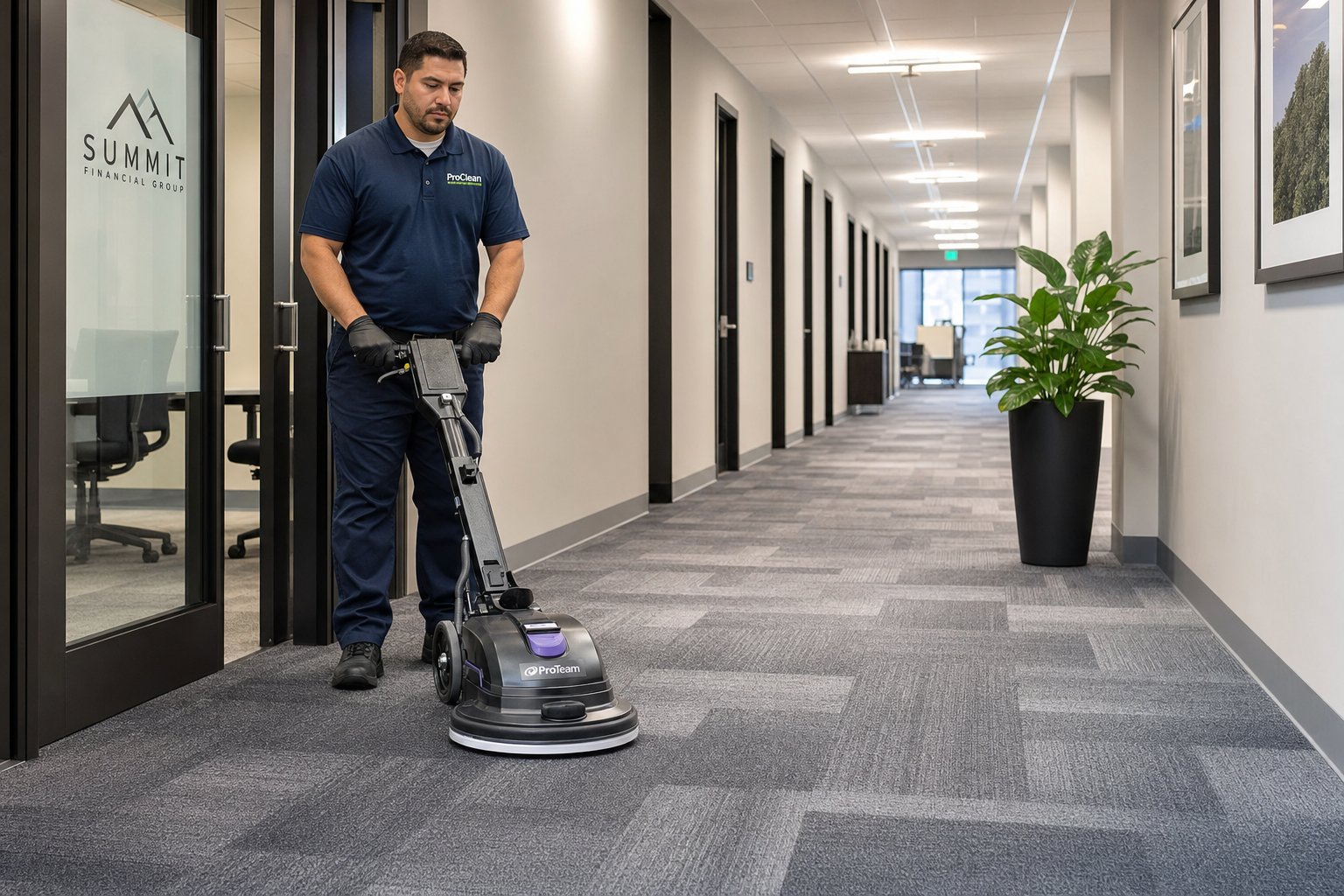
When office carpets look dull, many facility managers default to “steam cleaning,” but commercial carpet care is more nuanced. The right method depends on soil load, drying-time constraints, and how the carpet is constructed. GreenPoint Maintenance Services helps NYC and tri-state offices choose between hot-water extraction and encapsulation (low-moisture) using a proof-driven plan: defined cadence, measurable results, and documented verification. For a walkthrough and fixed-price quote, call 844-814-0810.
The buyer problem: appearance complaints, odor, and traffic patterns
Most carpet complaints come from predictable zones: entries near elevators, reception paths, pantry approaches, and corridors to conference rooms. In NYC offices near Penn Station, Grand Central, and PATH stations, tracked-in grit increases abrasion and rapid re-soiling. Before selecting a method, map where soil enters and where traffic concentrates; then choose a maintenance plan that targets those zones at a higher frequency than low-traffic offices.
GreenPoint’s first step is usually a walkthrough with a soil-load assessment and a plan to reduce re-soiling (entry matting, targeted spot cleaning, and vacuum standards). For broader frequency standards by facility type, see [cleaning frequency standards by facility type](/blog/cleaning-frequency-standards-by-facility-type/).
Hot-water extraction (HWE): when it’s the right tool
Hot-water extraction (often called “steam cleaning”) flushes carpet fibers with solution and then extracts it, removing embedded soils that vacuuming cannot. Extraction is most valuable when carpets have heavy embedded soil, sticky residues (spills), or odor issues that indicate contamination below the surface. It is also useful as a periodic “reset” before seasonal occupancy spikes.
The tradeoff is drying time. In occupied offices, extraction should be scheduled to allow adequate dry-down to prevent slip risk and minimize re-soiling. GreenPoint uses airflow and scheduling controls to manage dry times and can coordinate after-hours work for Midtown and Downtown Manhattan tenants. Call 844-814-0810 to schedule an assessment.
Encapsulation: low-moisture maintenance that fits busy offices
Encapsulation uses a low-moisture detergent that crystallizes soil for removal through post-vacuuming. It’s popular in high-traffic offices because it dries faster and can be done more frequently without disrupting operations. Encapsulation is often ideal for routine maintenance when carpets are primarily “traffic gray” rather than heavily contaminated.
In practice, GreenPoint often recommends encapsulation monthly or quarterly for high-traffic zones, with extraction as a less frequent deep reset. This combination keeps carpets presentable while controlling downtime. For a detailed comparison of methods, see [carpet cleaning methods compared](/blog/carpet-cleaning-methods-compared/).
Drying time and risk control: preventing slip hazards and rapid re-soiling
Drying matters because damp carpet attracts soil and can create odor. Extraction projects should include: controlled water flow, thorough extraction passes, air movers, and a defined “no foot traffic” window. Encapsulation usually has shorter dry times, but still requires a plan for safe transitions in corridors and entry zones. GreenPoint documents drying controls and coordinates with building rules for after-hours HVAC operation where available.
A practical approach is to schedule corridor work in segments so tenants always have a safe path. In multi-tenant towers, we coordinate with property teams to avoid conflicts with nighttime deliveries and security patrols. If you want a walkthrough and operational plan, call 844-814-0810.
Cost and budgeting: what drives commercial carpet pricing
Commercial carpet pricing is driven by square footage, soil level, furniture density (how much has to be moved), spot treatment needs, and method selection. Extraction typically costs more per visit because it is slower and uses more water management, while encapsulation can be more efficient for maintenance passes. The best budget approach is a cadence plan: spend less per visit more often, then reset periodically to avoid “replacement by neglect.”
GreenPoint uses fixed pricing and defines the scope so you can budget predictably. If you want broader context on cleaning cost drivers, read [calculating true cleaning cost TCO](/blog/calculating-true-cleaning-cost-tco/) and call 844-814-0810 for a building-specific quote.
Verification and standards: how to prove carpet work was done right
Carpet work is easy to “check off” without delivering results unless you define acceptance criteria. GreenPoint uses pre/post photos (including close-ups of traffic lanes), inspection scoring, and where relevant StockPoint verification with timestamped records. For clients managing multiple sites, this reporting makes it easier to compare outcomes and enforce consistency.
We also align carpet care with broader appearance standards so expectations are objective. If you are building a QA program, see [quality assurance commercial cleaning programs](/blog/quality-assurance-commercial-cleaning-program/).
Recommended cadence for high-traffic NYC offices (a simple rule-of-thumb plan)
A simple cadence for high-traffic NYC offices is: daily thorough vacuuming of entries and main corridors, weekly spot treatment, monthly or quarterly encapsulation for traffic lanes, and semiannual or annual extraction depending on soil load. If your office hosts frequent events or has heavy visitor traffic, increase traffic-lane maintenance. Pair this with entry matting and periodic deep cleaning to extend carpet life.
GreenPoint Maintenance Services will tailor cadence to your square footage, furniture density, and tenant schedule, then document execution with verification. To set up a program and quote, call 844-814-0810 for a walkthrough.
FAQ: Extraction vs encapsulation for office carpets
Q: Which method cleans deeper—extraction or encapsulation? A: Extraction generally removes more embedded soil, while encapsulation is excellent for frequent maintenance of traffic-lane appearance with faster dry times.
Q: How long does carpet take to dry after extraction? A: Dry time varies by airflow and soil level; scheduling after-hours with air movers helps reduce downtime and re-soiling risk.
Q: Can we do encapsulation during business hours? A: Often yes, because moisture is low and dry times are shorter—segment the work to maintain safe paths and coordinate with occupants.
Q: Will extraction ruin carpet? A: When performed correctly, extraction is safe; over-wetting and inadequate extraction are the main risks—vendor method statements and training matter.
Q: How do we prevent rapid re-soiling? A: Improve vacuum standards, use proper entry matting, treat spots quickly, and follow a cadence plan rather than reactive deep cleans only.
Not sure whether extraction or encapsulation fits your office? GreenPoint Maintenance Services will assess soil load, recommend a cadence, and deliver fixed pricing with verification you can audit. Call 844-814-0810 to schedule a walkthrough and carpet-care quote for NYC and the tri-state area.