Veterinary facilities are one of the most demanding environments for commercial cleaning: higher organic load, odor challenges, fur and dander, frequent spills, and the ever-present need to avoid cross-contamination between species and treatment areas. If you’re searching "veterinary clinic cleaning Queens" or "animal hospital cleaning Jersey City", you need a vendor that can treat your space like a healthcare-adjacent facility while respecting what must remain with clinical staff. GreenPoint Maintenance Services supports tri-state veterinary clinics with fixed-scope cleaning, Green Seal–aligned product options, and StockPoint verification (timestamped, GPS-tagged photos) so practice owners can see proof—not promises. For a walkthrough and quote, call 844-814-0810.
What makes veterinary clinics uniquely hard to keep clean
Compared with standard office suites, vet clinics have more bodily fluids, more odor-generating waste, and more porous or textured finishes that trap soil. You also have higher foot traffic variability: appointment spikes, emergency walk-ins, and grooming or boarding-related surges. GreenPoint starts by mapping the facility into zones—public areas, exam rooms, treatment rooms, isolation areas (if applicable), restrooms, and back-of-house—and then assigns tools and procedures so a mop from a lobby never touches a treatment zone. This color-coded, zone-driven method reduces cross-contamination risk and makes training much simpler.
In NYC and North Jersey, many clinics are in retail corridors or mixed-use buildings where entry debris is constant—think: Flatbush Avenue, Northern Boulevard, or busy stretches near the LIRR and subway hubs. That means the cleaning program has to control tracked-in soil and odor at the front door before it travels through the entire suite. GreenPoint often recommends an entry mat plan plus mid-week spot attention in lobbies, especially for practices that run six or seven days a week.
Biohazard boundaries: what the cleaning vendor should (and should not) touch
A high-performing vet clinic cleaning plan starts with boundaries. Regulated medical waste, sharps containers, and any clinical instruments should remain under clinical team control unless you have a specific licensed waste vendor arrangement. GreenPoint’s scopes clearly separate routine environmental cleaning from regulated tasks. We coordinate with your hospital manager on where waste staging occurs, how isolation rooms are handled, and what "no-go" areas exist at different times of day. That clarity protects your staff and ours, and it prevents a well-meaning cleaner from creating a compliance or safety incident.
We also standardize chemical safety practices: labeled secondary bottles, SDS access, and storage that aligns with common HazCom expectations. For teams that want to formalize this, our guide on [OSHA cleaning chemical safety (GHS & SDS)](/blog/osha-cleaning-chemical-safety-ghs-sds/) is a useful reference when auditing your current closet and labeling practices. If you want GreenPoint to assess your current setup and build a safer routine, call 844-814-0810 to schedule a walkthrough.
Odor control: the difference between masking smells and removing causes
Odor is one of the top reasons vet clinic owners switch vendors. The fix isn’t stronger fragrance—it’s source control: removing organic residue from the right surfaces on the right cadence. GreenPoint’s approach focuses on floors (especially grout lines and transitions), trash handling, drains (where in scope), and porous surfaces that absorb odors. We also look at air movement: if a clinic’s HVAC return is near litter or waste staging, odors spread more easily, and cleaning frequency has to adjust accordingly.
For restrooms and mop sinks, consistent disinfection and detail work is essential because those areas become odor amplifiers in warm months. Some clinics also benefit from HEPA filtration support in high-traffic waiting areas; if indoor air concerns are part of your decision, see our explainer on [indoor air quality and commercial cleaning](/blog/indoor-air-quality-commercial-cleaning/). GreenPoint can review odor pain points during a site walk and propose specific corrective actions rather than a generic "deep clean" upsell.
Exam rooms and treatment rooms: high-touch cleaning that protects workflows
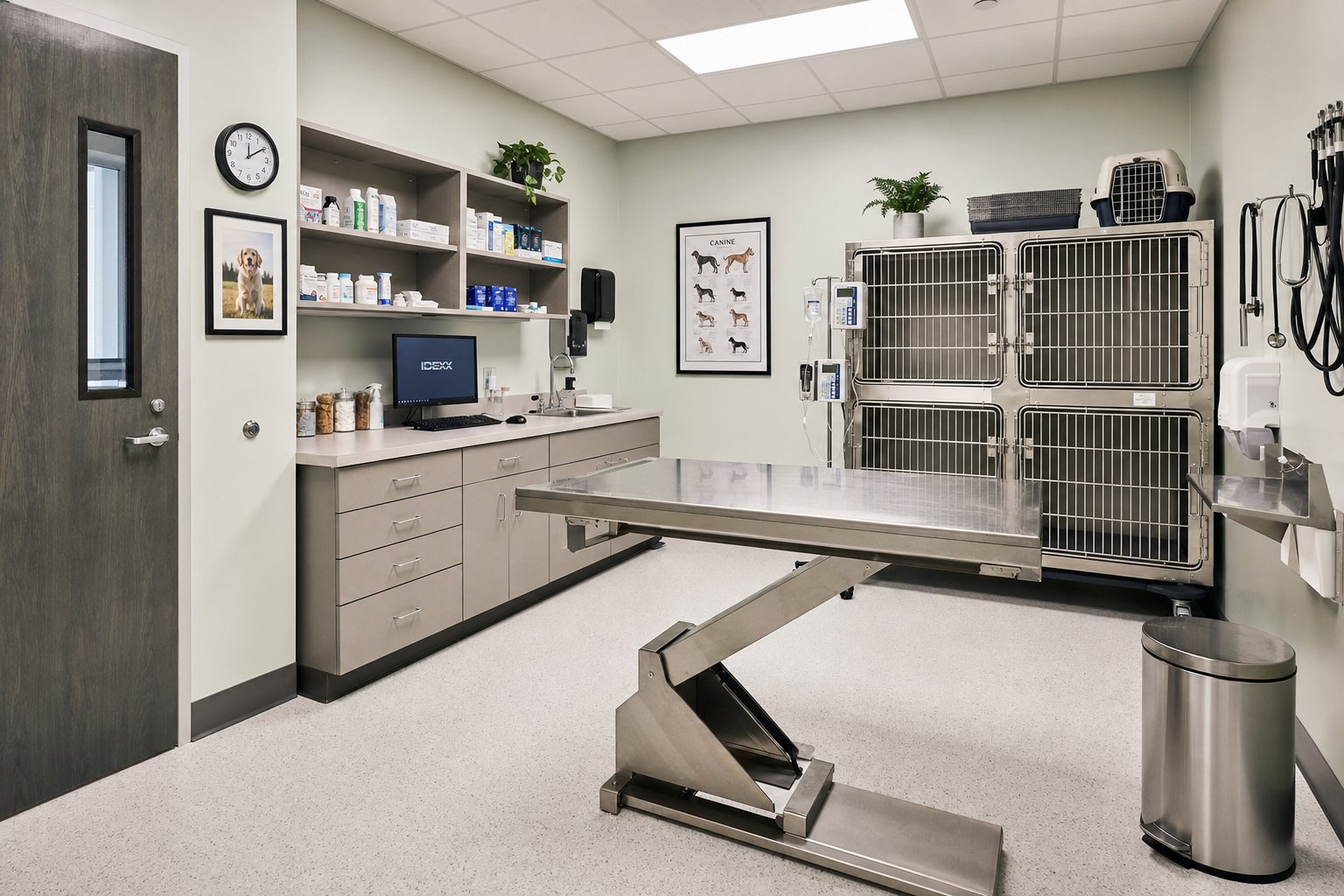
Vet clinic rooms turn over quickly, which means touchpoints accumulate fast: door hardware, exam tables, scale platforms, cabinet faces, and light switches. GreenPoint scopes these items as high-touch and applies a process designed to minimize recontamination: clean to remove soil, then disinfect per label contact time on designated surfaces. We also coordinate which equipment is handled by clinical staff versus environmental services—this keeps your clinical workflow intact and reduces misunderstandings.
Because many clinics operate late, the best schedule is often a split: end-of-day full clean plus targeted mid-week attention to lobbies and restrooms. If you have multiple locations across NYC boroughs and North Jersey, GreenPoint standardizes the scope so every site receives the same baseline while allowing location-specific adjustments (for example, higher entry debris in Downtown Brooklyn vs. a quieter Westchester location). For planning cleaning frequency, our guide on [cleaning frequency standards by facility type](/blog/cleaning-frequency-standards-by-facility-type/) can help you set expectations.
How GreenPoint verifies veterinary clinic cleaning quality (StockPoint + ATP)
Vet clinic cleaning is hard to supervise because it often happens after hours. GreenPoint uses StockPoint verification to provide timestamped, GPS-tagged photos tied to task checklists, giving owners and managers proof across multiple nights and staff rotations. For agreed clinical-adjacent touchpoints, ATP testing can provide a quantifiable indicator that the cleaning process is reducing organic residue. ATP is particularly useful when a clinic has recurring complaints in the same area (front desk counters, restroom handles, break room tables) and wants objective measurement instead of subjective debates.
We also use standardized inspection checklists so performance can be reviewed weekly. For facility managers who like detailed QA programs, you may also want our framework on [quality assurance programs for commercial cleaning](/blog/quality-assurance-commercial-cleaning-program/) and how to structure inspections and corrective actions. GreenPoint’s philosophy is simple: quality you can’t verify is quality you can’t manage.
Tri-state facility realities: transit, landlords, and local expectations
In NYC, veterinary facilities often sit at ground level with constant pedestrian traffic and frequent deliveries. Near hubs like Atlantic Terminal, Jamaica Station, or Journal Square, entry debris and restroom usage can exceed what a typical nightly janitorial plan anticipates. GreenPoint scopes entry and restroom detail accordingly and can coordinate with landlords on service windows, freight access, and COI requirements. In Connecticut and Westchester, clinics may have larger footprints and parking-lot exposure, which changes the floor-care plan and seasonal maintenance needs.
The end goal is consistency: the clinic should smell neutral, look professional, and feel safe to clients at opening—without your team losing time to cleaning catch-up. If you want a fixed-price scope designed to your facility type and patient volume, call 844-814-0810 to book a walkthrough with GreenPoint Maintenance Services.
FAQ: veterinary clinic cleaning and odor control
Q: How do you control pet odors without heavy fragrances? A: GreenPoint focuses on removing the source—floors, trash handling, and high-soil surfaces—rather than masking odors. We use appropriate disinfectants and cleaners and follow dwell times and rinse/wipe steps where needed. Q: Do you clean isolation rooms? A: GreenPoint can clean isolation-room environmental surfaces if the clinic defines boundaries and provides access protocols. Regulated waste and clinical instruments typically remain with clinical staff or a licensed waste vendor. Q: How often should a busy animal hospital be cleaned? A: Many facilities benefit from nightly cleaning plus targeted attention to lobbies and restrooms multiple times per week, especially if open extended hours. We set frequency based on traffic and room function. Q: Can you verify the cleaning work? A: Yes—GreenPoint uses StockPoint verification with timestamped photos and can add ATP spot checks on agreed touchpoints for objective measurement. Q: What’s the fastest way to get a quote? A: Call 844-814-0810 to schedule a walkthrough. GreenPoint Maintenance Services provides fixed-scope pricing with clear inclusions and no hidden fees.
If you’re evaluating veterinary clinic cleaning in NYC, NJ, or CT, choose a vendor that can manage biohazard boundaries, odor control, and documentation. GreenPoint Maintenance Services provides fixed-scope proposals, Green Seal–aligned product options, and StockPoint verification for proof-driven results. Call 844-814-0810 or email info@greenpointms.com to schedule your walkthrough—GreenPoint is trusted for consistent outcomes and 98% client retention.