Commercial cleaning in Astoria and Queens is shaped by dense mixed-use blocks, restaurants, medical offices, schools, studios, and transit-driven foot traffic. A vendor that cleans a quiet suburban office may not be ready for salt at Ditmars Boulevard, food-service residue near Steinway Street, or a building sharing access with residents. This guide helps Astoria facility managers compare janitorial providers, write a practical scope, and protect quality across Queens. GreenPoint Maintenance Services serves New York facilities with fixed pricing, trained teams, and StockPoint proof rather than vague promises.
What makes Astoria commercial cleaning different
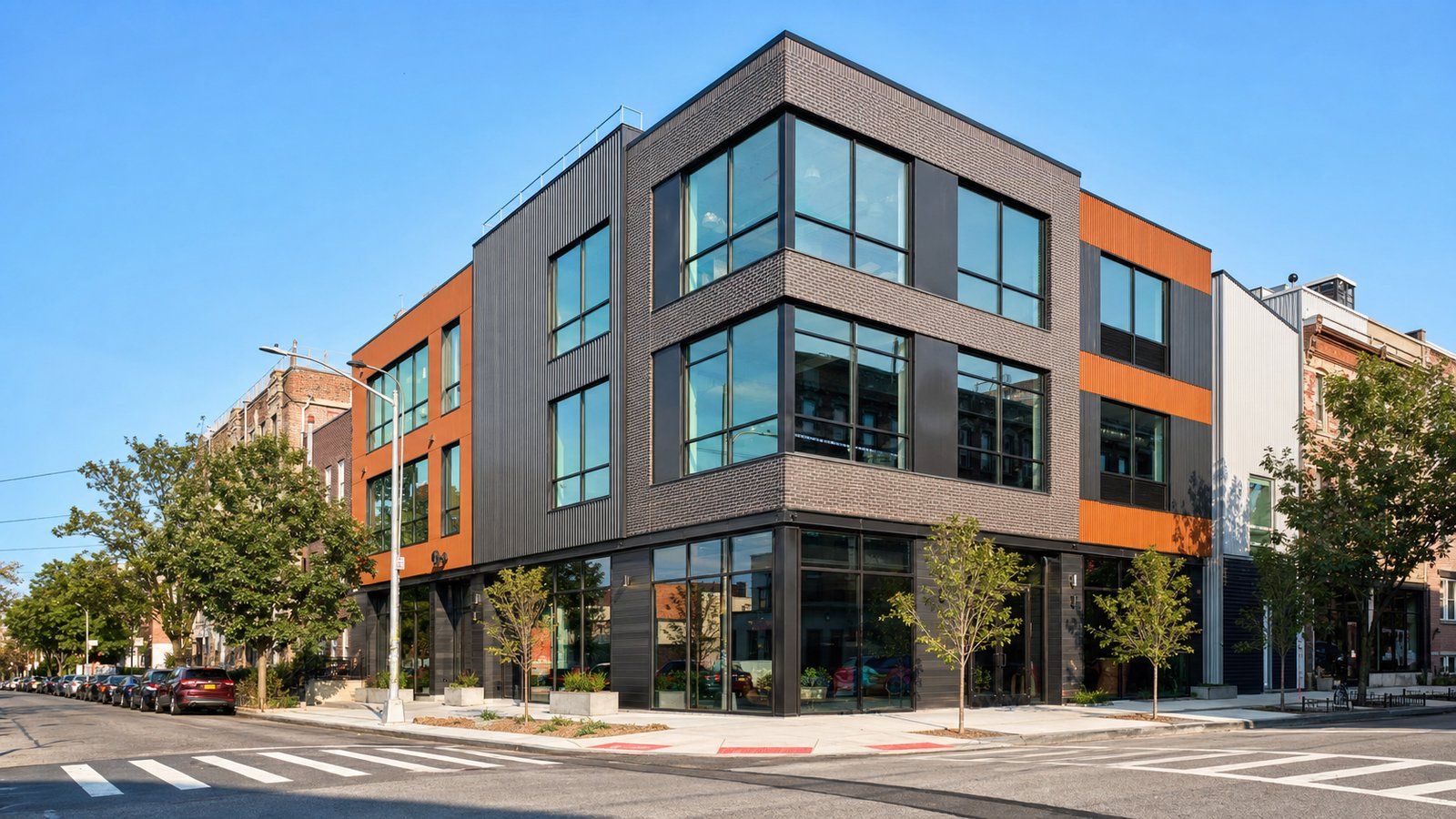
Astoria combines older masonry buildings, new residential towers, retail corridors, professional offices, and industrial pockets along the East River. Around 30th Avenue and Ditmars Boulevard, storefronts and restaurants create frequent glass, entryway, and restroom demands. Near the Kaufman Astoria Studios, office and production spaces may have irregular schedules, staging dust, and sensitive equipment. Along Steinway Street and Queens Plaza, public-facing spaces experience heavy pedestrian traffic. A realistic cleaning plan should separate routine office zones from food-service, lobby, loading, and production areas instead of using one nightly checklist.
Transit affects both soil load and scheduling. The N and W trains at Astoria Boulevard, 30th Avenue, and Ditmars Boulevard, the M/R at Steinway Street, and the E/F/M/R connections around Queens Plaza bring thousands of daily movements through nearby corridors. In winter, tracked-in salt and grit can damage VCT and stone if entry mats are undersized or not vacuumed. GreenPoint recommends a daily entryway inspection, mat rotation, spot mopping during peak weather, and a quarterly floor-care review for buildings with high foot traffic.
Facility types GreenPoint sees in Queens
Astoria offices commonly need five-day service, nightly trash removal, restroom cleaning, kitchen sanitization, carpet vacuuming, and high-touch disinfection. Medical offices near Northern Boulevard or Jackson Heights-adjacent corridors need exam-room protocols, patient-zone disinfection, and documented terminal cleaning. Restaurants and food businesses need degreasing and post-service sanitation that does not contaminate food-contact surfaces. Schools and childcare sites need frequency aligned to NYC Department of Education or local health requirements, including cafeteria and restroom touch-ups. GreenPoint Maintenance Services scopes each type differently and provides a written schedule after a walkthrough.
Landlords and property managers should also address shared spaces. A mixed-use building may require separate day porter coverage for the lobby, elevator cabs, mailroom, fitness room, and package area. Ask who handles tenant move-outs, sidewalk-adjacent glass, recycling rooms, and emergency water events. If a building has a basement, rooftop, or loading dock, include those areas in the square-footage inventory. A vendor quoting only office floors may produce an attractive number that leaves the highest-complaint zones outside the scope.
How to compare Queens cleaning prices
Astoria planning ranges for routine commercial cleaning are often about $0.08-$0.20 per cleanable square foot per visit, with medical, high-traffic, food-service, and multi-shift buildings commonly reaching $0.15-$0.35. A 12,000-square-foot office cleaned five nights weekly might budget roughly $2,000-$4,500 per month depending on restrooms, floors, consumables, and labor constraints. These are planning ranges, not a quote. GreenPoint uses fixed pricing with no hourly billing for routine scope, so the buyer sees what is included rather than absorbing hidden labor assumptions.
Request a line-item schedule for periodic work: carpet extraction, VCT strip and refinish, high dusting, interior glass, pressure washing, and post-construction cleaning. Ask whether paper products, liners, hand soap, and emergency response are included. A low base fee with every periodic task billed separately may cost more over a year. Call GreenPoint at 844-814-0810 to schedule a Queens walkthrough and receive a facility-specific proposal.
Astoria cleaning standards and quality proof
Use ISSA appearance levels to define the result. Level 2 works for general offices, Level 3 is appropriate for reception and public corridors, and Level 4 may fit medical patient areas or high-end tenant spaces. Require inspection frequencies and evidence. GreenPoint’s StockPoint system can provide timestamped GPS-tagged photos, area completion records, ATP testing in selected high-touch zones, and a live dashboard. Those records matter when a property manager has tenants in multiple Queens buildings and cannot personally inspect every evening.
Set specific targets: 95% inspection pass rate for routine areas, 98% for public-facing zones, restroom supply checks each shift, emergency spill acknowledgment within 10 minutes, and correction within 30 minutes when staffed coverage allows. Track complaints per 10,000 square feet instead of raw complaint counts. A professional vendor should explain exceptions caused by construction, locked rooms, transit delays, or storm conditions and document corrective action. See [commercial cleaning Queens facility guide](/blog/commercial-cleaning-queens-facility-guide/) and [restroom cleaning best practices for high-traffic facilities](/blog/restroom-cleaning-best-practices-high-traffic/) for deeper planning.
Local access, security, and logistics
Queens buildings often require careful key, badge, and elevator procedures. Put access windows in writing, including whether cleaners use a freight elevator, where carts may park, and who authorizes after-hours entry. Mixed-use properties should specify resident quiet hours and whether trash moves through public corridors. Near LaGuardia Airport, delivery and parking constraints can affect emergency response; near Long Island City, construction and loading activity may change weekly. GreenPoint assigns a supervisor to confirm access, protects keys and codes, and documents exceptions rather than silently skipping a task.
For medical or school facilities, define restricted areas and privacy rules. Cleaning staff should never photograph patient information, student records, or confidential displays. StockPoint evidence can be configured around compliant room views and task records. Ask vendors for background-screening, OSHA hazard communication, bloodborne-pathogen training where relevant, and insurance documentation. GreenPoint is MBE/MWBE certified in New York programs and SAM.gov registered, but the buyer should verify any procurement requirement that applies to its own organization.
Green cleaning for Queens occupants
Older buildings with limited ventilation can feel the effect of strong fragrances and over-diluted chemicals. Require Green Seal or EPA Safer Choice products, microfiber systems, closed dilution control, and HEPA-filtered vacuums where indoor air quality is a concern. GreenPoint uses Green Seal certified products and color-coded microfiber to reduce cross-contamination. A useful scope states the product standard, prohibited aerosol or fragrance types, SDS access, and a monthly chemical inventory review. ‘Green’ should be traceable to a product list and purchase record.
Entryway maintenance is also an air-quality and asset-protection issue. Vacuuming grit from mats prevents particles from migrating indoors, while damp dusting reduces resuspension on hard surfaces. For a 20,000-square-foot office, adding a second daily lobby touch-up during winter or rainy periods may prevent more floor damage than a once-a-year refinishing project. Schedule a walkthrough with GreenPoint to compare the cost of preventive frequency against replacement and tenant-complaint costs.
Choosing a vendor for Astoria and Queens
Ask for three local references with similar size, use, and access conditions. Request the vendor’s staffing plan, supervisor ratio, inspection report, insurance, training records, scope assumptions, and escalation contact. A provider serving Queens should be able to explain how it handles subway-adjacent soil, storm response, mixed-use access, and rapid coverage when a cleaner is absent. GreenPoint reports 98% client retention, uses fixed pricing with no hidden fees, and can show how StockPoint ties completed work to a time and area.
Do not select on price alone. Score technical approach, local logistics, verification, safety, staffing continuity, and price. A 30-day onboarding period should establish the baseline, correct missed areas, and confirm frequencies before a formal quarterly review. Call 844-814-0810 or email info@greenpointms.com if you want GreenPoint to review your current scope. The first step is a walkthrough, not a pressure-filled commitment.
Day porter and tenant-communication choices
A Queens property does not always need a full day porter, but it does need a decision based on traffic. If the lobby receives 600 visitors and deliveries between 8:00 a.m. and 6:00 p.m., a two-hour midday touch-up may prevent more complaints than adding an extra nightly hour. For a medical practice, a daytime restroom and waiting-room check can be more valuable than deeper cleaning in a locked office. GreenPoint compares traffic, complaint history, event schedule, and access constraints before recommending coverage. The goal is to put labor where occupants notice it and where safety risk is highest.
Communication belongs in the scope. Name the property contact, emergency number, reporting cadence, and method for approving extra work. A tenant should know whether to call the building manager, the cleaning supervisor, or a 24-hour line when a spill occurs. GreenPoint provides an escalation path and can document the result in StockPoint. Call 844-814-0810 or email info@greenpointms.com to schedule a walkthrough for an Astoria or wider Queens portfolio. For portfolios with several addresses, create one escalation tree per building and one regional contact for after-hours decisions. That small investment prevents a supervisor from losing time searching for permission while a wet floor or supply outage remains visible to tenants. Ask for a written closeout after every urgent response so the manager knows the area was reopened safely and the underlying cause was addressed. Keep the report concise, factual, and easy to share with ownership.
FAQ: commercial cleaning in Astoria Queens
Q: How often should an Astoria office be cleaned? A: Most occupied offices need five-day service, with daily restrooms, trash, kitchens, and high-touch surfaces. Restaurant, medical, and high-traffic spaces may need daytime touch-ups or multiple restroom checks.
Q: What should Queens facility managers ask about winter service? A: Ask about entry-mat capacity, salt and grit response, spot mopping during storms, floor-safe products, and how quickly a slip hazard is addressed. Put the storm protocol in the contract.
Q: Does GreenPoint serve Astoria and Long Island City? A: GreenPoint Maintenance Services serves Queens, including Astoria and Long Island City, as part of its New York service area. Call 844-814-0810 to confirm coverage and schedule a walkthrough.
Q: Are supplies included in a Queens janitorial quote? A: They may be, but never assume. Ask whether liners, paper, soap, disinfectant, equipment, and periodic floor care are included and request a fixed-fee breakdown.
Q: How can I verify the cleaning happened? A: Ask for supervisor inspections, timestamped GPS-tagged photos, task records, and corrective-action logs. GreenPoint uses StockPoint and can explain the dashboard during a walkthrough.
GreenPoint helps Astoria and Queens facility managers turn busy corridors, shared spaces, and tenant expectations into a measurable plan. GreenPoint Maintenance Services offers 98% client retention, StockPoint verification, Green Seal products, MBE/MWBE credentials, and fixed pricing with no hidden fees. Call 844-814-0810 to schedule a Queens walkthrough and receive a written scope.