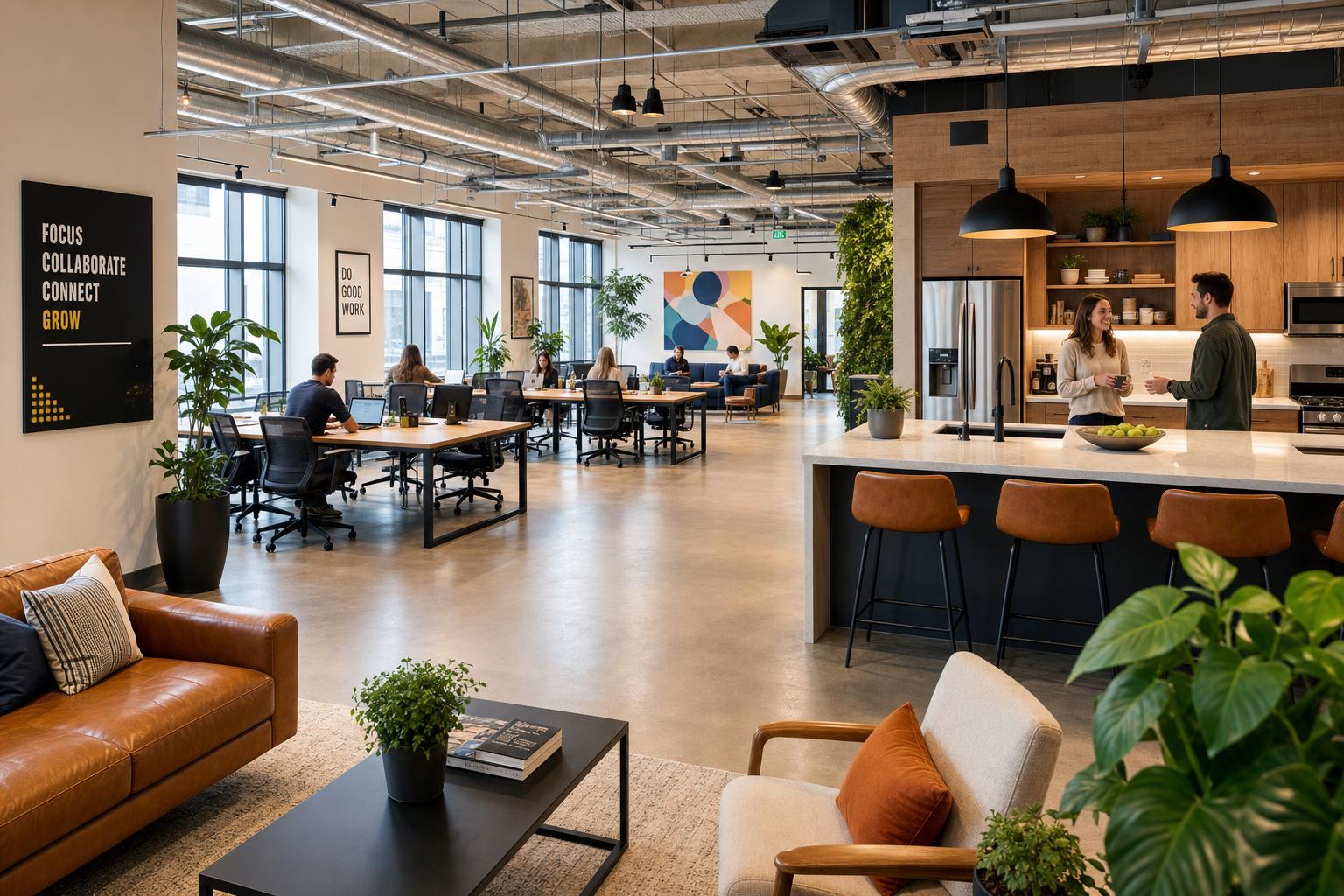
Coworking spaces in NYC are one of the hardest environments to keep consistently clean: constant turnover, shared kitchens, phone booths, multiple tenants with different expectations, and high-touch surfaces everywhere. GreenPoint Maintenance Services builds coworking cleaning programs that are engineered for shared-amenity reality—then verified through JaniTrack (timestamped, GPS-tagged photos) so operators can prove service delivery across locations. For a walkthrough and fixed-price quote, call 347-332-9348.
Why coworking cleaning is different from standard office janitorial
Traditional office cleaning assumes a stable user group and predictable hours. Coworking breaks that assumption: day passes, event nights, and hybrid schedules create unpredictable spikes in restroom use, pantry mess, and trash volume. The solution is a layered program: nightly cleaning plus daytime touch-ups (porter service) for restrooms, kitchens, and high-visibility areas. GreenPoint builds those layers so the space stays “tour-ready” for prospective members.
In NYC, coworking also intersects with building access constraints, freight-elevator schedules, and noise limits. GreenPoint plans staffing and timing so cleaning supports operations without disrupting members. To talk through your location’s constraints and schedule a walkthrough, call 347-332-9348.
NYC-specific hot spots: lobbies, elevators, and shared amenity zones
In Manhattan, Brooklyn, and Queens coworking spaces, the most visible areas are the ones that fail first: entry glass, reception desks, elevator lobbies, and shared conference rooms. In addition, the “amenity brand” (kitchens, coffee bars, lounges) drives member satisfaction—but also creates the most cleaning workload per square foot. GreenPoint scopes these areas separately so they’re not under-serviced.
We also coordinate with local traffic drivers: subway-adjacent locations (e.g., near major hubs like Grand Central, Penn Station, Atlantic Terminal) track in more debris, especially in winter. Entry mat strategies and midday floor attention prevent the “always gritty” feel that members notice instantly.
The coworking cleaning checklist that actually prevents complaints
A high-performing coworking checklist focuses on repeatable outcomes rather than long task lists. Daily priorities typically include: restroom servicing (including restock standards), touchpoint disinfection (door handles, buttons, shared devices), pantry/kitchen wipe-downs, trash removal (with a plan for recycling/compost where applicable), vacuuming of open areas, and spot cleaning of glass and high-touch walls.
We also recommend a weekly deep-detail cycle for: phone booths and acoustic pods, lounge upholstery spot checks, conference room chair arms, and breakroom appliances. For high-traffic restroom fundamentals, see [restroom cleaning best practices for high traffic](/blog/restroom-cleaning-best-practices-high-traffic/).
Verification matters in shared spaces: how JaniTrack reduces “he said / she said”
Coworking operators often receive complaints without clear context: “the bathroom was dirty” or “the kitchen is gross.” Without verification, it’s hard to know if cleaning was missed, a guest caused an issue minutes after service, or supplies ran out early. GreenPoint uses JaniTrack to verify completion with timestamped photos and a dashboard view so operators can see what was completed and when. This reduces disputes and speeds up corrective action.
If you want an overview of how a verification system works, read [digital cleaning verification systems](/blog/digital-cleaning-verification-systems/). For coworking brands running multiple sites, this is a practical way to standardize expectations across locations.
Health and disinfection: CDC-aligned practices without overusing chemicals
Since 2020, members are more sensitive to hygiene signals—especially in shared kitchens and restrooms. But “more disinfectant” isn’t always better; products must be used according to label directions, with appropriate dwell time and surface compatibility. GreenPoint aligns product use with disinfectant labeling and OSHA-aligned safety practices (SDS access, training, and proper dilution).
For a practical primer on disinfectant selection and labeling, see [EPA disinfectant registration guide](/blog/epa-disinfectant-registration-guide/). For chemical safety and documentation, use [OSHA cleaning chemical safety (GHS/SDS)](/blog/osha-cleaning-chemical-safety-ghs-sds/).
Staffing models: nightly crews vs. daytime porters (and how to price them)
Most coworking spaces need two layers: a nightly crew for full service and at least part-time daytime coverage for restrooms and kitchens. Operators often under-budget porter service and then experience constant “surface-level mess.” GreenPoint helps right-size daytime coverage using workload indicators like member count, restroom count, kitchen size, and event frequency.
To estimate staffing, review [cleaning staffing ratios square footage](/blog/cleaning-staffing-ratios-square-footage/). For budgeting, compare your scope to [commercial cleaning cost per square foot](/blog/commercial-cleaning-cost-per-square-foot/), then call 347-332-9348 for a walkthrough and fixed-price quote.
NYC operational details: freight elevators, access lists, and security coordination
In NYC multi-tenant buildings, cleaning teams often need to work around freight elevator rules, access lists, and after-hours security procedures. GreenPoint coordinates with building management to document access requirements and prevent missed shifts due to administrative friction. This is especially important for coworking, where a missed clean can show up as dozens of member complaints the next morning.
We also recommend a clear escalation plan for spills, restroom outages, or biohazard incidents—so staff know exactly who to call and what response time to expect. If you need emergency response add-ons, ask about our rapid-response options during the walkthrough.
FAQ: Coworking space cleaning in NYC
Q: How often should a coworking space in NYC be cleaned? A: Most spaces need nightly service 5–7 nights per week plus daytime porter coverage for restrooms and kitchens. The exact plan depends on membership volume and events; call 347-332-9348 for a walkthrough. Q: Can you clean and restock bathrooms multiple times per day? A: Yes. We can build mid-day and late-afternoon touch-ups with clear restock standards. Q: How do you prove cleaning was completed? A: GreenPoint uses JaniTrack timestamped, GPS-tagged photos and a live dashboard view. Q: Do you offer fixed pricing for coworking? A: Yes—fixed pricing aligned to scope, frequency, and the porter model if included. Q: Can you support multiple NYC locations? A: Yes. We standardize scope and verification across sites to keep member experience consistent.
Want your NYC coworking space to stay tour-ready every day—not just after complaints? GreenPoint Maintenance Services builds multi-tenant cleaning programs with fixed pricing and JaniTrack verification. Call 347-332-9348 to schedule a walkthrough and receive a written scope.