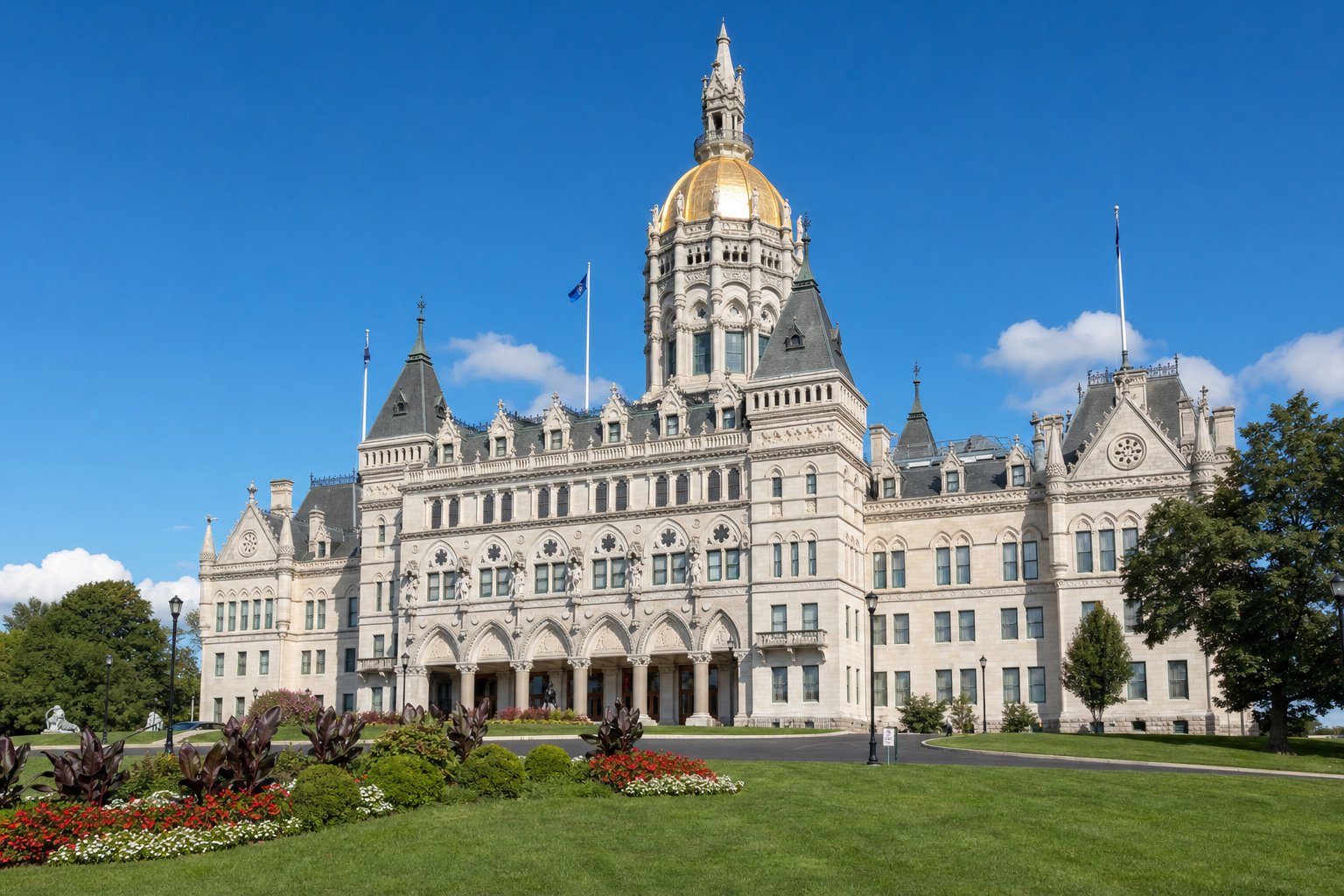
If you manage a Connecticut government facility, “clean” is not a vibe—it’s a documented outcome tied to public trust, employee health, and procurement accountability. GreenPoint Maintenance Services helps public-sector teams set clear scopes, measurable quality targets, and verification routines that stand up to audits. If you’re preparing a bid package or re-bidding a janitorial contract, call 844-814-0810 for a walkthrough and a fixed-price quote built around compliance and proof.
What makes government building cleaning different in Connecticut
Government facilities in Connecticut typically serve mixed-use traffic: employees, residents, vendors, and scheduled public meetings. That means higher touchpoint density (lobbies, security desks, elevator buttons, public counters) and more variability than a single-tenant office. GreenPoint focuses on repeatable processes—checklists, color-coded materials, and inspection routines—so quality stays stable across days with heavy public foot traffic.
In Hartford, New Haven, Stamford, Bridgeport, Waterbury, Norwalk, Danbury, and New Britain, you also see facilities near transit hubs and garages where salt, grit, and moisture are tracked in during the winter. A vendor needs a floor-care plan that anticipates slip risk and extends finish life rather than reacting after damage. GreenPoint Maintenance Services typically recommends seasonal adjustments to entry matting, daily lobby detailing, and periodic deep scrubs aligned to building use patterns.
Key facility types and how scope changes
“Government building” can mean a town hall, courthouse-adjacent administrative offices, public works admin, permitting centers, or multi-department service buildings. Each requires a different risk lens. For example, public-facing service counters need frequent disinfection of high-touch surfaces; records rooms need dust control and low-residue practices; and public meeting rooms need event-based resets (pre-meeting and post-meeting). GreenPoint helps translate these differences into a scope that bidders can price consistently.
If your facility includes medical screening areas, holding areas, or child/family services spaces, cleaning expectations can move closer to healthcare-adjacent protocols (PPE, dwell times, and documented disinfectant selection). A good scope calls out product standards, contact times, and training requirements rather than generic “sanitize” language. For foundational standards and measurable outputs, many facility managers also reference benchmarks like ISSA guidance and industry productivity norms from BLS data when calibrating staffing assumptions.
Procurement realities: what to put in the RFP so pricing is comparable
Most public-sector disappointments come from RFPs that are easy to interpret three different ways. If one bidder assumes daily restroom detailing and another assumes three times weekly, your “lowest price” comparison is not apples-to-apples. GreenPoint recommends structuring scope by space type with frequencies (daily/weekly/monthly) and clearly defining inclusions like consumable restocking, liner replacement, and event support.
Add a measurement section: what inspection method is used, how often, and what happens if quality falls below target. This is where verification systems matter. GreenPoint can provide StockPoint verification—timestamped, GPS-tagged photos and task completion logs—paired with ATP testing for objective hygiene checks in restrooms and break areas. If you want a framework to borrow, see our quality approach in [quality assurance commercial cleaning program](/blog/quality-assurance-commercial-cleaning-program/) and our overview of [digital cleaning verification systems](/blog/digital-cleaning-verification-systems/).
Compliance and safety: OSHA, chemical control, and public-facing risk
Government buildings have higher reputational risk if an incident happens—chemical exposure, slips, or improper storage. A vendor should demonstrate OSHA-aligned training for chemical handling, PPE, and hazard communication. GreenPoint’s field teams follow SDS access practices and labeling disciplines so supervisors can audit what’s in closets and carts without guesswork.
You can strengthen your bid package by requiring documented GHS/SDS processes and safe storage plans, especially if your building has public access near maintenance areas. If you need language for this section, reference our detailed primer on [osha cleaning chemical safety ghs sds](/blog/osha-cleaning-chemical-safety-ghs-sds/) and best practices for [fire code cleaning chemical storage](/blog/fire-code-cleaning-chemical-storage/).
Local CT considerations: weather, transit, and building operations
Connecticut’s winter season is a floor-care stress test. Facilities near I-84 and I-95 corridors and commuter stations see more de-icing residue and wet entry zones, which can dull finishes and increase slip risk. GreenPoint planning typically includes winter matting plans, daily edge work, and periodic machine scrubs to keep lobbies looking professional without constant strip-and-wax disruptions.
For municipal buildings with evening meetings (zoning boards, school committees, public hearings), you also need flexible staffing. Instead of paying unpredictable hourly add-ons, GreenPoint Maintenance Services prefers fixed pricing tied to defined event reset tasks, with documented completion via StockPoint so the facility manager can verify service without staying late.
How to evaluate bids: staffing, retention, and inspection cadence
Ask vendors to show their staffing model in plain language: how many hours per week, what time windows, who supervises, and what happens during call-outs. Cleaning quality often fails when turnover is high and training is inconsistent. GreenPoint operates with a proof-driven QA loop—inspections, corrective actions, and documented follow-up—so a change in personnel doesn’t mean a drop in standards. We also maintain a 98% client retention rate, which matters because stable vendor relationships reduce the “restart cost” of re-training and re-baselining your building.
Tie inspections to outcomes. For example: weekly restroom and lobby audits, monthly conference room and public counter audits, quarterly floor-care reviews, and seasonal entry strategy updates. When vendors propose inspections, ask what evidence you receive (photos, checklists, ATP readings) and whether you can see it in a live dashboard. GreenPoint’s StockPoint dashboard approach is designed for public-sector accountability and easy reporting.
Pricing model: why fixed pricing beats hourly billing for government facilities
Hourly billing often creates perverse incentives: the more time spent, the more you pay, even if outcomes don’t improve. Government teams also need budget predictability. GreenPoint uses fixed pricing with no hidden fees, based on an agreed scope and measurable service levels. That makes procurement reviews cleaner and reduces disputes during contract administration.
To stress-test pricing, ask bidders to list what would trigger a change order (new square footage, changes in occupancy, new security constraints, or special events). If the scope includes periodic projects like floor refinishing or carpet extraction, require separate line items with defined frequencies so ongoing costs remain transparent.
A simple vendor selection checklist for CT facility managers
Use this shortlist when narrowing bidders: (1) documented OSHA chemical safety and SDS processes; (2) clearly defined scope by space type and frequency; (3) inspection cadence and evidence delivery (photos, dashboards, ATP where appropriate); (4) staffing plan and supervisory coverage; (5) winter floor-care plan for entryways; and (6) references with similar government or public-facing buildings. GreenPoint Maintenance Services can support municipalities, state agencies, and public authorities across the region with MBE/MWBE credentials where relevant and operational reporting built for accountability.
If you want a second set of eyes on an RFP before it goes out, GreenPoint can review scope language and recommend measurable standards that reduce the chance of “low bid, low performance.” Schedule a walkthrough by calling 844-814-0810 or emailing info@greenpointms.com.
Need a compliant, audit-friendly janitorial scope for a Connecticut government building? Call GreenPoint Maintenance Services at 844-814-0810 to schedule a walkthrough and get a fixed-price bid with StockPoint verification (timestamped, GPS-tagged photos) and optional ATP testing for objective hygiene checks.