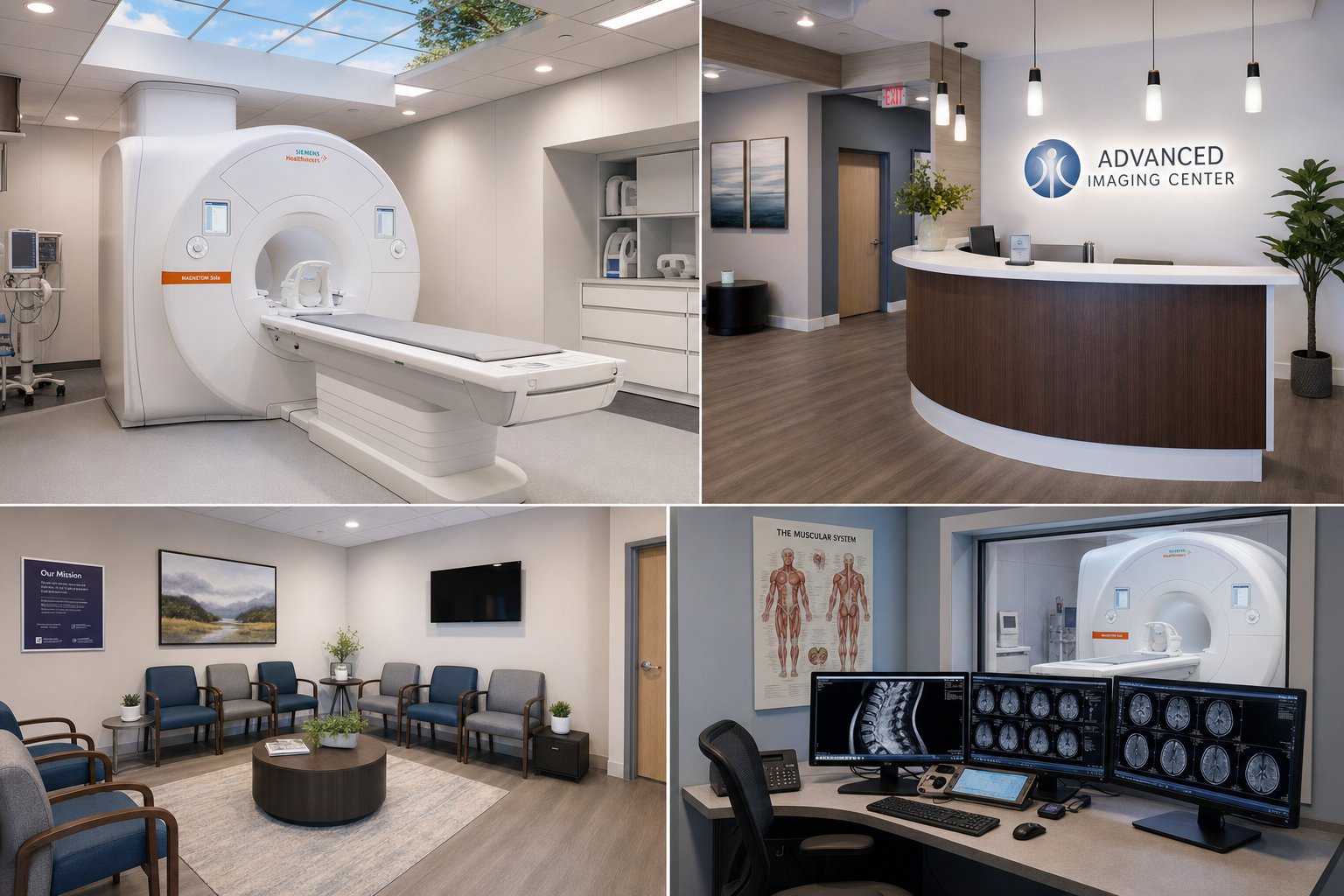
If you manage an imaging center in NYC or the tri-state, you already know the stakes are different than a standard medical office. MRI suites, CT rooms, and X-ray areas combine high patient turnover with expensive equipment, strict infection-prevention expectations, and vendor-specific restrictions on what chemicals can touch what surfaces. This guide breaks down what “good” looks like in imaging center cleaning, how to protect sensitive components, and how to document outcomes in a way that stands up to audits. GreenPoint Maintenance Services uses evidence-based processes, JaniTrack verification (timestamped, GPS-tagged photos and dashboard reporting), and optional ATP testing to prove that high-touch and high-risk areas are cleaned to standard. If you need a site walkthrough and a fixed-price proposal for imaging center cleaning in Manhattan, Brooklyn, Queens, the Bronx, Staten Island, Westchester, Long Island, Northern NJ, or CT, call 347-332-9348.
What makes radiology cleaning different (and why shortcuts show up fast)
Radiology spaces are deceptively “clean-looking” environments: smooth floors, controlled lighting, and mostly closed rooms. But patient contact is frequent, surfaces are high-touch (control panels, doors, rails, keyboards), and there’s a steady flow of wheelchairs, stretchers, and staff moving between zones. That combination increases cross-contamination risk if cleaning steps are inconsistent. GreenPoint focuses on repeatable checklists, documented dwell times, and traceable proof so the same standard is met on a quiet Tuesday and a peak Monday morning.
For local compliance, many NYC facilities also align their EVS expectations with broader healthcare guidance (CDC-aligned workflows, OSHA chemical safety and bloodborne exposure plans, and policy-ready documentation for infection control teams). A cleaning vendor should be able to explain not just “what we wipe,” but how they prevent chemical damage, handle regulated waste streams, and separate clean/dirty traffic patterns—especially in multi-modality centers where MRI, CT, ultrasound, and X-ray share corridors and waiting areas.
MRI suite constraints: magnetic safety, equipment sensitivity, and product selection
MRI areas are often divided into safety zones (commonly described as Zones I–IV). Cleaning staff must be trained to respect MRI access rules, remove ferromagnetic items, and coordinate with site leadership on what equipment can enter controlled areas. Even if your cleaning is after-hours, you still need a lockout-style routine: cart staging outside restricted zones, pre-approved tools, and a documented “nothing new enters Zone IV without approval” rule. GreenPoint Maintenance Services builds MRI-specific tool lists and uses color-coded microfiber systems to minimize cross-contact between suite components.
Chemical compatibility matters. Many imaging vendors restrict ammonia, strong solvents, and certain aerosolized products near sensitive plastics, coatings, and sensors. The right approach is to maintain an approved-product matrix: disinfectant options by surface type (tables, pads, rails, doors, touchscreens, and floor finishes), including required contact time and wipe method. GreenPoint can integrate Green Seal-certified products where appropriate while still meeting disinfection objectives, and we document the exact product/dilution used for each task when clients need audit-grade records.
CT and X-ray rooms: high-touch surfaces and patient-flow pressure points
CT rooms often have short turnover windows, which is where quality slips: staff rush, contact time isn’t met, and the same wipe touches multiple surfaces. A better model is “sequence cleaning” with separate cloths and a top-to-bottom workflow: start with high-touch non-patient-contact points (door handles, light switches), move to patient-contact surfaces (table edges, rails, positioning aids), then finish with floors and waste removal. GreenPoint trains teams to follow the same sequence every time, reducing the odds of missed areas when schedules are tight.
For tri-state locations, we tailor schedules to transit and foot-traffic patterns—Midtown imaging centers near Penn Station, Grand Central, Port Authority, and major subway hubs often see a predictable morning surge. We also plan for weather realities: rainy-day mopping plans, entry mat strategies, and additional floor attention so slip risk doesn’t rise while focusing on disinfection. If your facility needs a cleaning plan that matches real patient flow, call GreenPoint at 347-332-9348 to schedule a walkthrough.
Contrast media spills and bodily fluid response: what a cleaning vendor should (and shouldn’t) do
Contrast spills and bodily fluids require clear boundaries. Your cleaning vendor should have written procedures for spill containment, PPE selection, and surface disinfection steps, and they must align with OSHA bloodborne pathogen expectations for exposure control. But they also need to know when to stop and escalate—some incidents require clinical oversight or specialty remediation. GreenPoint’s approach is to document incident response, isolate affected zones, and restore the space safely without improvisation that could damage equipment or create liability.
Operationally, we recommend keeping a dedicated “spill kit” list in your SOP and ensuring staff know exactly where it is stored. GreenPoint can include this in onboarding so your imaging center isn’t dependent on one person’s memory. If you’re evaluating vendors, ask whether they can provide SDS access, training records, and a clear scope line between janitorial services and clinical waste handling.
Waiting rooms, restrooms, and corridors: where infections actually spread
Imaging modality rooms matter, but waiting areas and shared restrooms can be the real transmission zones because they combine mixed populations and repeated touchpoints. We focus on armrests, check-in counters, pens, chair edges, kiosk screens, restroom fixtures, and door hardware—especially in facilities serving urgent referrals and walk-ins. GreenPoint typically increases restroom servicing frequency based on patient volume, not just time-of-day, because a “once nightly” model often fails in high-throughput centers.
If your site is in NYC, also account for local constraints: older buildings with tight corridors, shared freight elevators, and lobby policies that limit cart staging. GreenPoint plans logistics so teams move efficiently without blocking life-safety routes, and we can coordinate off-hour access so cleaning is completed before morning appointments. For a tri-state cleaning plan with fixed pricing and no hidden fees, call 347-332-9348.
Verification that holds up: JaniTrack proof, ATP testing, and audit-ready reporting
In healthcare-adjacent environments, “we did it” is not enough—leaders need proof for internal audits, patient complaints, and vendor accountability. GreenPoint uses JaniTrack to capture timestamped, GPS-tagged photos and task completion data, delivering a live dashboard view of what was done and when. For clients who want higher confidence, we also offer ATP testing to measure organic residue on selected high-touch surfaces and track improvement over time.
This proof-driven model also makes vendor management easier: you can tie quality discussions to objective evidence rather than subjective impressions. If you’re comparing vendors, also review our approach to QA in [quality assurance commercial cleaning program](/blog/quality-assurance-commercial-cleaning-program/) and how digital verification works in [digital cleaning verification systems](/blog/digital-cleaning-verification-systems/).
Cost drivers and scope design: how to buy imaging center cleaning without surprises
Imaging center cleaning costs are driven by square footage, patient throughput, modality mix, and restroom volume. As a benchmark, many commercial cleaning scopes are priced by the square foot, but imaging centers often require higher-touch detail and documentation compared with general office. The most stable approach is to define scope by zones (public areas, staff areas, modality rooms, and restrooms) and set frequency by risk and traffic. GreenPoint provides fixed pricing (no hourly billing) so facilities can budget without “extra time” surprises.
If you want to understand typical pricing structures and what should be included, see [commercial cleaning cost per square foot](/blog/commercial-cleaning-cost-per-square-foot/) and how to evaluate the total cost in [calculating true cleaning cost tco](/blog/calculating-true-cleaning-cost-tco/). Then call 347-332-9348 to schedule a walkthrough and get an imaging-center-specific proposal.
FAQ: Imaging center and radiology cleaning
Q1) Can your cleaning team enter MRI restricted areas? A1) Only with site authorization and MRI-specific onboarding; we use pre-approved tools and follow your access controls to avoid introducing restricted items. Q2) Do you provide disinfectants with documented contact times? A2) Yes—our scopes include product/dwell-time alignment, and we can document which products were used where when clients need audit-grade records. Q3) How do you prove cleaning was completed? A3) GreenPoint uses JaniTrack verification with timestamped, GPS-tagged photos and dashboard reporting, plus optional ATP testing for targeted surfaces. Q4) Can you handle contrast spills or bodily fluid incidents? A4) We follow written procedures aligned to OSHA chemical and exposure controls and escalate when an incident exceeds janitorial scope. Q5) Do you serve NJ and CT imaging centers? A5) Yes—GreenPoint serves NYC, Westchester, Long Island, Northern NJ, and CT; call 347-332-9348 to confirm your exact location and schedule a walkthrough.
Need imaging center cleaning that protects equipment and proves outcomes? GreenPoint Maintenance Services delivers MRI/CT/X-ray cleaning with JaniTrack verification, optional ATP testing, and fixed pricing—no hourly billing and no hidden fees. Call 347-332-9348 or email info@greenpointms.com to schedule a walkthrough and get a proposal.