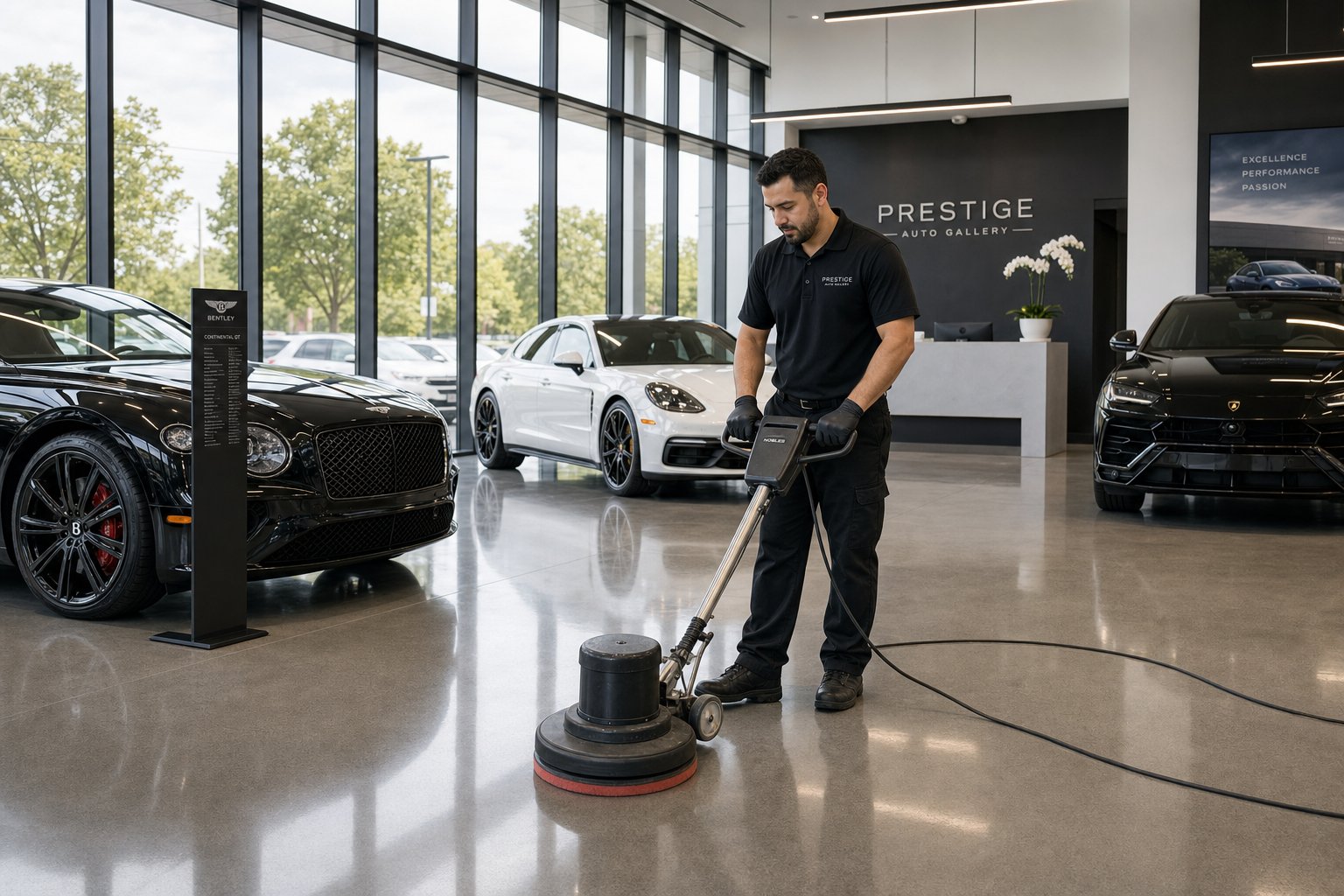
Dealership cleaning has to protect the customer impression without interfering with vehicle sales, repair work, or employee safety. A polished showroom, streak-free glass, clean customer restroom, and orderly service lane are different environments with different access and chemical controls. OSHA's general-industry walking-working-surface standard requires workplaces to be clean and orderly and floors to be kept clean and, to the extent feasible, dry. GreenPoint Maintenance Services develops a zoned plan for dealerships in New York, New Jersey, Connecticut, and surrounding markets, with fixed pricing and documented task evidence. Call 347-332-9348 to schedule a walkthrough before you compare bids.
Divide the property into showroom, service, and support zones
A dealership may combine a 20,000-square-foot showroom, customer lounge, finance offices, parts counter, service reception, technician bays, delivery area, and exterior walkways. Measure each zone separately and identify who authorizes access. Sales staff may want glass and floor touchups before opening, while technicians require control of service pits, lifts, tools, and vehicles. Janitorial staff should not move keys, adjust lifts, enter an active repair bay, or handle customer paperwork. GreenPoint Maintenance Services writes the boundaries into a room list and asks the service manager to approve the work sequence.
For a multi-rooftop dealer group around Manhattan, the Bronx, Queens, Staten Island, Westchester, Long Island, Bergen County, Newark, or Fairfield County, use one master scope with site-specific exceptions. A location near the Cross Bronx Expressway or New Jersey Turnpike may see more road salt and track-in than a waterfront showroom in Brooklyn or Jersey City. The service plan should state entry mat, glass, waiting-area, restroom, and back-office tasks separately. Review our commercial cleaning cost per square foot guide for the factors that influence a quote, then request a walkthrough at 347-332-9348.
Keep showroom floors and glass presentation-ready
Showroom floors are part of the sales environment. Dust, tire marks, footprints, and salt residue can make an otherwise clean space appear neglected. The right method depends on whether the floor is polished concrete, porcelain tile, vinyl composition tile, terrazzo, or another finish. Start with soil removal and a product compatibility check; do not assume that a gloss-restoring chemical is safe for every surface. Use clean microfiber, equipment sized for the aisle width, and a staged process that keeps customers away from wet work. Glass should be spot-checked from both sides under the lighting used during customer visits.
A practical opening checklist can include a perimeter walk, entry mat reset, visible spot-mop, customer-facing glass check, trash removal, and restroom inspection. High showroom lights can reveal streaks or haze that a quick evening glance misses, so managers should define their inspection position and standard. GreenPoint uses JaniTrack task records and timestamped photos when assigned, letting a general manager confirm that visible zones were completed before the first appointment. For floor-specific periodic work, see our VCT floor-care guide and cleaning audit checklist. Call GreenPoint at 347-332-9348 for a showroom walkthrough.
Treat service lanes as controlled work zones
Service bays create oil, coolant, tire residue, metal filings, and wet-weather hazards. The dealership should identify the active-work boundary and decide which areas a janitorial team may enter, at what time, and under whose authorization. A general floor plan should mark lifts, pits, drains, vehicle routes, electrical equipment, parts storage, and eyewash or emergency equipment. OSHA 29 CFR 1910.22 requires walking-working surfaces to be maintained in a clean, orderly, sanitary condition, with hazardous spills or leaks corrected or guarded before use. A janitorial vendor can support housekeeping but cannot take over technicians' repair-area controls.
Do not treat oil or automotive fluid like a routine lobby spill. The dealership's spill response plan should identify who is trained, what absorbent is approved, how waste is contained, and how the area is released back to employees. A cleaning worker should stop and report a release beyond the agreed scope. GreenPoint Maintenance Services can include designated non-production floor areas, staff corridors, and service reception, while excluding active repair work, hazardous-material response, and vehicle cleanup unless separately assessed and authorized. Document this boundary in the bid so fixed pricing remains transparent and staff do not improvise.
Make the customer lounge and restrooms part of the sales experience
A customer may spend an hour waiting for a service update, so the lounge, coffee station, Wi-Fi table, charging points, and restroom can shape how the visit feels. A daily route can clean seating touchpoints, empty bins, spot-clean floors, wipe approved surfaces, replenish restroom supplies, and inspect partitions, mirrors, and fixtures. A daytime porter is useful if a site has continuous service traffic or a large customer lounge, but the scope should specify the route and response triggers. Protect customer property and personal devices; staff should never move a laptop or paperwork to complete a cleaning task.
Service reception and parts counters often experience the heaviest hand traffic during morning drop-off and late-afternoon pickup. Establish which surfaces can be cleaned while customers are present and which require staff to clear papers or point-of-sale devices first. Keep separate cloths for restrooms, food areas, and customer-facing surfaces. GreenPoint offers Green Seal-certified product options where suitable, with product use subject to the dealership's approved chemical list and finish compatibility. See our green cleaning guide and cleaning verification systems article for procurement and QA questions.
Plan for weather, extended hours, and deliveries
Tri-state dealerships need a seasonal plan for salt, slush, rain, and pollen. In winter, entrance mats should be inspected, wet footprints managed promptly, and drying time protected with signs and barriers. Sidewalk and parking-lot snow work may be assigned to a separate contractor; specify where that company's responsibility ends and the building team's begins. In spring and summer, open doors and showroom deliveries can bring in dust and tire marks. Evening sales events, Saturday service, and vehicle launches may require a one-off reset outside the normal service window.
Avoid an hourly-only quote that leaves staffing and periodic work unclear. GreenPoint Maintenance Services prices the approved frequency and task list at a fixed price, then documents changes through written authorization. A 25,000-square-foot site with two shifts and several customer entrances may need more frequent spot response than a smaller store with limited hours. The walkthrough should capture showroom floor types, bay access, restroom count, service desk hours, glass height, and any restricted zones. Call GreenPoint at 347-332-9348 for a site review and a no-hidden-fees quote.
Use opening checks and JaniTrack to close the loop
A manager should be able to check opening readiness in a few minutes. Define a short list of visible outcomes: showroom entry clean, glass acceptable, customer lounge reset, restrooms stocked, waste removed, and service-reception floor safe. Add detailed periodic tasks separately so the daily route is not buried in an oversized checklist. For defects such as a loose tile, leaking dispenser, damaged mat, or blocked floor drain, the cleaner should create an exception instead of attempting an unauthorized repair.
JaniTrack supports timestamped, GPS-tagged photos and live task status for GreenPoint assignments. It can show a supervisor whether the crew visited a designated zone, while ATP testing may be separately scoped as a cleanliness check on selected surfaces. Neither creates a safety certification or proves the absence of a specific pathogen. GreenPoint reports a 98% client retention rate; buyers should still review references, insurance, staffing backup, and the contract's service levels. Use questions to ask a commercial cleaning company when you compare offers. To see the dashboard and verify the route at your dealership, call 347-332-9348.
Agree on a simple service-level table before the first shift. It can define expected completion windows for opening tasks, maximum response time for an in-scope spill, restroom inspection intervals, documentation for a blocked area, and the manager responsible for accepting a correction. Separate a routine complaint from a request that changes the contracted frequency. For instance, a product launch can require an extra glass detail and entrance reset, while a recurring Saturday rush may justify a permanent porter route. GreenPoint writes the ordinary fixed-price scope separately from one-time work so dealership leadership can approve the actual need rather than discover an unexpected hourly charge after the event.
Use a weekly sample inspection to compare the written scope with what a customer actually sees. Inspect the same entrance, showroom aisle, customer restroom, and service-reception area from the same viewpoints, then record a pass, a correctable detail, or an out-of-scope defect. If a floor finish is dull because of wear rather than soil, route that issue to a floor-care assessment instead of increasing daily mopping. If glass is streaked after a delivery, determine whether the problem is timing, technique, or an unpriced extra task. GreenPoint's supervisor can review the same evidence with the general manager, making the follow-up specific and fair to the crew. Keep the completed inspections with the service agreement so procurement can compare actual results to the original bid during renewal.
Frequently asked questions
Can the cleaning crew enter a service bay? Only under a dealership-approved access plan that defines time, vehicle status, hazards, PPE, and tasks. Active repair areas, pits, lifts, and spills outside the approved scope should remain under the service department's control.
How often should a showroom be cleaned? Many dealerships schedule a daily full reset and opening checks, with spot response during business hours. The correct cadence depends on customer volume, entrance count, floor material, weather, and event schedule.
Does a cleaning vendor remove oil spills? The contract should distinguish routine floor care from hazardous or automotive-fluid response. Use trained personnel and the dealership's spill plan for any material outside the janitorial team's written scope.
What should a dealership cleaning bid include? List square footage by zone, schedule, floor and glass requirements, customer-area frequencies, service-bay boundaries, approved products, seasonal mat work, exceptions, insurance, and pricing for periodic projects.
Can GreenPoint clean multiple rooftops under one contract? GreenPoint can assess a multi-site program and propose a master scope with site-specific schedules and fixed pricing. Service coverage, hours, and staffing are confirmed for each location during walkthroughs.
GreenPoint Maintenance Services provides fixed-price dealership cleaning with JaniTrack task evidence and a 98% client retention rate. Call 347-332-9348 to schedule a showroom and service-area walkthrough across NY, NJ, or CT.