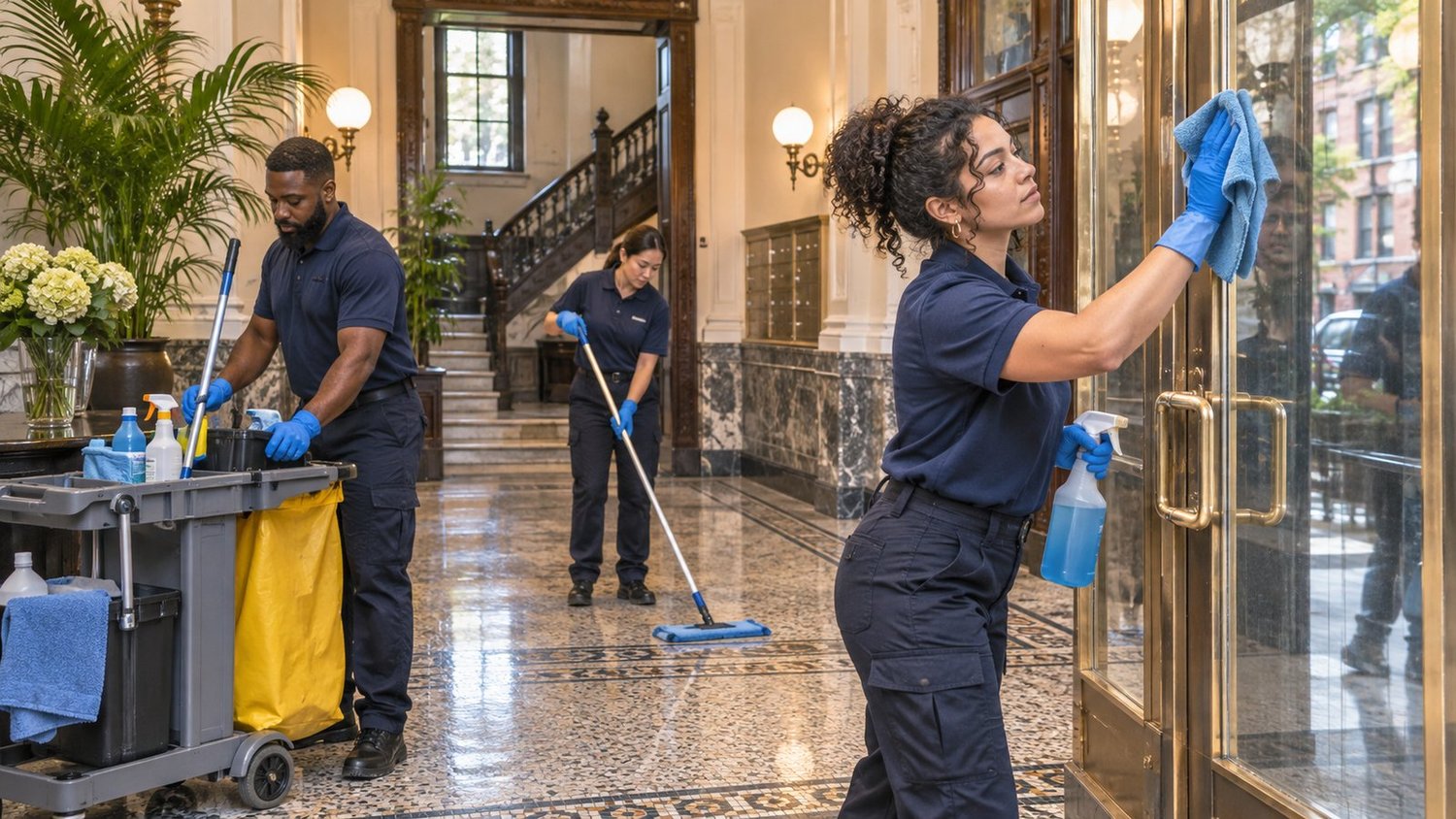
Fort Greene and Clinton Hill combine professional offices, clinics, schools, nonprofit spaces, cultural institutions, retail corridors, and historic residential buildings with commercial ground floors. A cleaning plan for a busy lobby near Atlantic Terminal is not automatically suitable for a small office off DeKalb Avenue or a campus-adjacent suite near Pratt Institute. Buyers should compare vendors on a written scope, reliable access, safe methods, documented quality, and a clear distinction between janitorial work and other building duties. GreenPoint Maintenance Services supports Brooklyn organizations with fixed-price commercial cleaning plans based on a walkthrough. This guide explains how to evaluate a Fort Greene or Clinton Hill vendor with attention to local movement, shared spaces, NYC waste rules, and practical service verification.
List every room and shared area before inviting bids
Prepare a simple floor-by-floor service map that includes entrances, reception, open workstations, conference rooms, break areas, restrooms, elevator cabs, stairwells, and shared corridors. A 3,000-square-foot nonprofit office might include two public restrooms and a multipurpose room, while a smaller medical office may have a waiting area and higher touchpoint frequency. Identify rooms that are excluded, locked, or managed by another tenant. GreenPoint Maintenance Services uses the room list to define what will be cleaned, how often, and which tasks are scheduled separately. A written scope prevents assumptions from turning into disputes after the service starts.
Specify the result instead of using broad phrases such as clean lobby. Name the observable tasks: remove loose soil, damp-mop the floor with a compatible product, wipe reachable ledges, clean approved entrance glass, empty and reline waste bins, and report damage. Separate routine work from periodic carpet extraction, floor refinishing, construction cleanup, and exterior window service. Buyers may find the commercial cleaning contract key terms guide useful when defining service levels. GreenPoint can walk a Fort Greene or Clinton Hill property and prepare a fixed-price quote; call 347-332-9348 to schedule the visit.
Set coverage for Atlantic Terminal, BAM, and neighborhood traffic
Local activity affects arrival windows and entry conditions. Atlantic Terminal and Atlantic Avenue connect a large transit hub with retail and office activity; BAM, Fort Greene Park, the Brooklyn Navy Yard edge, and the commercial corridors near Fulton Street and DeKalb Avenue create distinct patterns. The C train at Lafayette Avenue, G train stations around Fulton Street and Clinton-Washington avenues, and the A/C, 2/3, 4/5, B/D, N/R, and LIRR connections near Atlantic Avenue influence how staff and visitors move through the area. Check current service with the MTA maps and service tools, then set access expectations with the building manager.
A vendor's proposal should state the agreed arrival window, entry point, alarm procedure, elevator permissions, and response if a cultural event, school activity, or late tenant meeting extends the building's hours. Shared lobbies and older stairwells can need more frequent spot attention than private suites. Document who is responsible for cleaning the sidewalk, managing a leak, handling a tenant's food spill, and calling building maintenance. A janitorial contractor should report a hazard, not silently repair building equipment beyond its scope. GreenPoint records access instructions and escalation contacts so an unexpected condition gets to the correct manager promptly.
Choose a frequency that fits an office, clinic, or institution
Frequency depends on occupancy, room use, soil, restroom count, food activity, floor type, and the appearance standard expected by visitors. A 5,000-square-foot office with a 30-person team, three restrooms, and daily visitors may need a different plan from a larger floor that is quiet most of the week. A clinic or school should define any additional site-specific procedures with its compliance and facilities leaders rather than assume a general office checklist is enough. Use separate service intervals for daily tasks, weekly detailing, monthly inspection points, and seasonal floor care. These examples guide planning; they are not universal rules.
Use the cleaning frequency standards by facility type guide to frame a discussion, and the cleaning staffing ratios by square footage guide to identify questions about layout and labor assumptions. No single square-foot ratio captures a long stair, a heavy restroom load, or a busy meeting schedule. GreenPoint Maintenance Services prices a defined scope rather than an open-ended hourly arrangement. Ask for the planned calendar and a first-month review date, then revise frequency if the verified results do not match the agreed standard. Call 347-332-9348 to request a walkthrough.
Account for historic finishes and varied floor surfaces
Commercial spaces in older buildings can contain wood trim, terrazzo, stone, historic tile, painted stair rails, modern carpet, and resilient flooring in the same route. Provide the contractor with any available manufacturer care instructions and identify surfaces that must not be waxed, scrubbed, or exposed to acidic products. Agree on mat maintenance and entrance soil control during rain or snow. A vendor should test a new product in an inconspicuous area when compatibility is uncertain and document any damage or pre-existing condition before service. GreenPoint Maintenance trains crews to follow the approved surface plan and report issues rather than improvising on delicate finishes.
For VCT or similar resilient floors, set a separate periodic plan that states how often to scrub, recoat, or refinish based on condition and traffic. Carpet should have a documented spot-response and extraction schedule. The VCT floor-care guide and carpet cleaning methods comparison can help buyers distinguish regular vacuuming from restorative work. Do not compare proposals unless they state whether periodic equipment, labor, drying time, and after-hours access are included. GreenPoint can include a separate periodic line in a quote after inspecting flooring and confirming the building's operating hours.
Keep NYC waste compliance outside vague janitorial promises
New York City's commercial-waste program affects how many businesses arrange collection, separate materials, and use authorized carters. DSNY's business services and requirements page is the authoritative starting point for current obligations, and the applicable details depend on the address and waste setup. A cleaning contract should say whether the crew removes desk-side trash, consolidates recycling, cleans the waste room, moves bags to an approved holding point, or sets out bins. It should not imply that the janitorial vendor automatically provides regulated carting or assumes the building's compliance obligations.
For a multi-tenant property, establish who issues waste instructions and where the crew finds the current signage. Keep labeled containers for trash, mixed recycling, cardboard, and organics where the site requires them, and tell staff what to do with confidential documents, electronics, sharps, or regulated materials. Those materials may require a specialized handler and should never be folded into ordinary cleaning instructions. GreenPoint Maintenance can follow a site-approved waste map and report contamination or overflowing containers. The client or building manager should separately confirm carter eligibility, collection timing, and any current commercial waste zone arrangement.
Use worker-safety practices and low-impact products thoughtfully
Ask bidders how they label products, maintain safety data sheets, train workers, store supplies, and control wet floors in occupied areas. OSHA's Hazard Communication Standard requires employers with hazardous chemicals to communicate hazards through appropriate programs, labels, safety data sheets, and training. Buyers can verify that the crew understands product dilution, personal protective equipment, spill response, and incompatible chemicals. Written restrictions should cover stone, wood, electronics, food-preparation areas, and any spaces where occupants may return soon after the service.
GreenPoint Maintenance uses Green Seal certified products where appropriate and selects tools according to the task. A green label is not a substitute for using the right amount, following surface directions, and preventing cross-contamination between restrooms and work areas. Color-coded microfiber, clean mop heads, and labeled containers help make procedures repeatable. For schools, clinics, or nonprofit facilities, the buyer should provide its own site-specific protocols and approved-product list. Review the green cleaning commercial buildings guide when preparing procurement criteria. For a safety and product review as part of a walkthrough, call 347-332-9348.
Measure quality through inspections and documented follow-up
Choose a small scorecard that reflects what occupants actually notice: entrance readiness, restroom supply and appearance, floor edges, meeting-room reset, waste handling, and completion of scheduled periodic tasks. Inspect consistent locations rather than selecting only the easiest rooms. Record date, area, observation, assigned owner, and closeout status. GreenPoint's JaniTrack can support timestamped GPS-tagged photos, ATP checks at selected points, and a live dashboard for agreed inspections. ATP results are operational indicators of biological residue; they should not be described as proof of sterilization or a guarantee against infection.
Ask for a sample quality report and the supervisor's response standard before signing. A customer should know whether an issue is acknowledged the same day, who authorizes a return visit, and how a recurring defect changes the task plan. GreenPoint Maintenance Services reports a 98% client retention rate; request references that match your type of property and service schedule. The quality assurance commercial cleaning program guide gives buyers a framework for setting inspections. To see how JaniTrack could fit your Fort Greene or Clinton Hill facility, schedule a walkthrough at 347-332-9348.
Evaluate contracts and supplier-diversity credentials
Compare each proposal using the same area list and service calendar. Look for included consumables, periodic floor care, backup coverage, holidays, emergency response, supervision, insurance, and a written change-control process. A fixed monthly price is meaningful only when the included work is clear. GreenPoint Maintenance does not rely on hidden fees or an open-ended hourly invoice for the agreed scope; any added room or frequency should be approved through a documented update. Ask for the legal contracting entity, a current certificate of insurance, customer references, and a point of contact for operational concerns.
GreenPoint Maintenance Services Corp is MBE/MWBE certified with New York State, New York City, and NYC DOE, and is registered in SAM.gov. Buyers with public-sector, education, nonprofit, or institutional requirements can request certification documentation for their procurement file. Certification is one factor, not a substitute for validating service delivery and safety. To compare a proposal with your current program, call GreenPoint Maintenance at 347-332-9348 or email info@greenpointms.com. Provide the building address, square footage, business hours, areas used by the public, and the date you want service to begin.
Frequently asked questions for Fort Greene and Clinton Hill buyers
Q: Can one vendor clean both a Fort Greene office and a Clinton Hill common area? A: Yes, if the building owner authorizes both areas and the contract lists each one. Set separate access, task, and inspection standards for tenant space and shared property.
Q: How should I choose a cleaning schedule for a clinic or school? A: Begin with occupancy, touchpoint frequency, restrooms, floor type, and the facility's own safety and compliance policies. Have the responsible facilities or compliance lead approve site-specific procedures.
Q: What proof should I request from a vendor? A: Ask for a sample inspection report, escalation contacts, attendance or visit records, current insurance, references, and a description of how corrective work is closed.
Q: Does a cleaning company take commercial waste to the curb? A: Only if the service agreement expressly defines that task and the building's approved waste plan permits it. Verify the current DSNY requirements and carter arrangement for the property.
Q: How can I request a Fort Greene or Clinton Hill quote? A: Call GreenPoint Maintenance at 347-332-9348 or email info@greenpointms.com. Schedule a walkthrough and share your floor plan, restrooms, operating hours, and shared-space responsibilities.
Need a commercial cleaning vendor for Fort Greene or Clinton Hill? Call GreenPoint Maintenance at 347-332-9348 to schedule a walkthrough and receive a fixed-price scope. GreenPoint Maintenance Services brings MBE/MWBE certifications, JaniTrack verification options, and a reported 98% client retention rate.