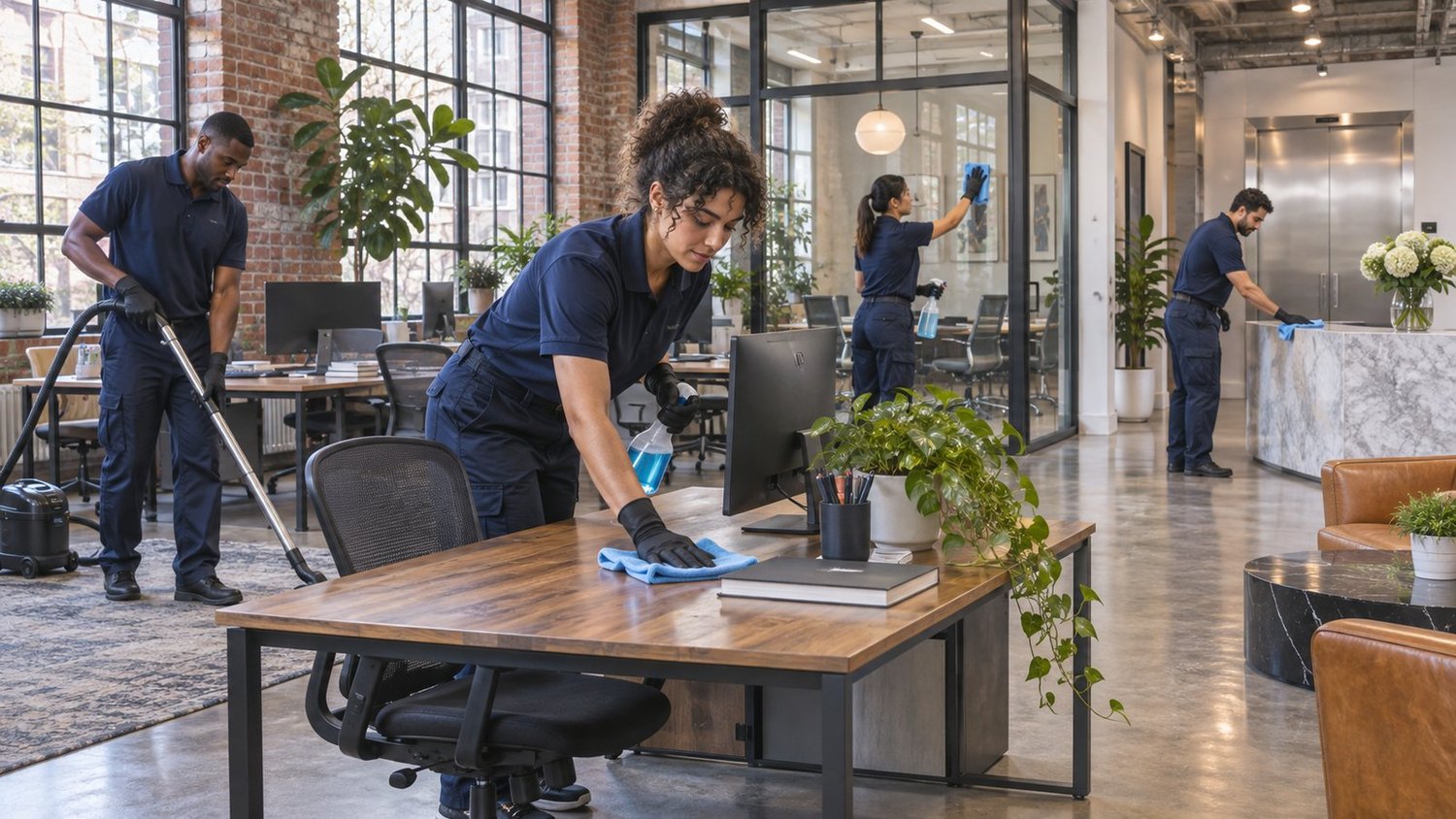
Greenpoint, Brooklyn blends creative offices, renovated industrial lofts, neighborhood retail, waterfront properties, medical suites, and small professional firms. A cleaning vendor that understands this mix can help a tenant avoid a generic checklist that misses exposed stairs, shared kitchens, freight access, or a sensitive production room. The buyer still needs to define the work precisely: which areas are included, what happens to waste, who holds keys, and how quality is demonstrated. GreenPoint Maintenance Services works with commercial clients to translate those details into a fixed-price service plan. This guide helps owners and property managers compare commercial cleaning in Greenpoint, Brooklyn, using local access realities, safety controls, NYC waste rules, and an evidence-based inspection routine.
Map the distinct zones inside a Greenpoint loft or office
Start by dividing the site into zones rather than treating the entire floor plate as one task. A 6,000-square-foot loft might contain a reception area, open desks, two meeting rooms, a pantry, a photography bay, private offices, a freight vestibule, and a shared corridor. A smaller clinic may require more attention to waiting-room seating and restroom touchpoints despite having less floor area. Mark restricted areas, equipment that should not be moved, and surfaces that require a specific care method. GreenPoint Maintenance Services uses a site walk and written room list so the monthly quote reflects actual rooms and operating patterns.
Ask for clear boundaries between recurring janitorial work and special projects. Routine dusting and trash removal do not automatically include cleaning production equipment, washing exterior windows, post-renovation dust removal, carpet extraction, or restoring a concrete floor. List high-level dusting by reachable height, and specify whether interior glass, stair rails, and elevator details are included. For a small team, three weekly visits may be more appropriate than nightly service; for a busy shared office, restrooms and kitchens may need attention every service day. These are examples only, so GreenPoint will confirm the right cadence in a walkthrough. Call 347-332-9348 to discuss a Greenpoint office, clinic, or loft.
Account for the G train, waterfront routes, and freight access
Greenpoint's G train stops at Greenpoint Avenue and Nassau Avenue, while bus corridors and the East River waterfront connect to adjacent parts of Brooklyn and Queens. Manhattan Avenue, Franklin Street, Greenpoint Avenue, McGuinness Boulevard, West Street, and the blocks near Transmitter Park or the India Street ferry landing create different arrival and loading conditions. The MTA's G line station map is a useful reference for general route planning. A building manager should still provide approved entrances, freight-elevator hours, loading restrictions, alarm instructions, and the time a cleaning crew may enter.
Older loft conversions and multi-tenant properties may have long corridors, shared stairways, freight elevators, and different rules for each tenant. Include those shared areas in the service agreement only when the owner or managing agent authorizes them. State who signs off when the elevator is unavailable and how the crew reports a blocked path, leak, or unsecured door. A vendor should not assume that an accessible loading bay is open late or that a tenant's key grants entry to the entire floor. GreenPoint documents an escalation contact and approved route so that access problems do not become silent missed visits. For a site-specific quote, call 347-332-9348.
Set service frequency using traffic, soil, and business hours
An effective schedule reflects people and tasks, not just a total square-foot number. Track daily occupancy, visitor volume, food and beverage use, restroom count, floor type, and the number of entrances exposed to rain or construction dust. A 3,500-square-foot design studio with a shared kitchen may benefit from frequent kitchen and waste attention, while its open desk area needs periodic detailing. A 12,000-square-foot commercial floor with low attendance can have a different task mix. List daily, weekly, monthly, and seasonal tasks separately so that a client can tell whether detail work is included or has been deferred.
The cleaning frequency standards by facility type guide offers questions for setting a defensible baseline, while the commercial cleaning cost per square foot guide explains how restroom density, floor care, access, and scope affect bids. ISSA resources can help buyers think about appearance and cleaning outcomes, but no industry chart replaces a walkthrough of the actual Greenpoint property. GreenPoint Maintenance Services can quote a specific calendar and fixed monthly fee with no hidden charges. Share the floor plan and a desired start date when you call 347-332-9348.
Write down who handles trash, recycling, and the waste room
New York City businesses have commercial waste responsibilities that are distinct from janitorial service. DSNY's commercial waste program explains the Commercial Waste Zones framework and the need to use an authorized carter when an address is subject to the program. Building operators should verify the current zone rollout and approved provider for their specific address. In a mixed-use Greenpoint property, also identify whether a tenant is covered by a building arrangement or has a separate collection contract. Avoid relying on a cleaner's verbal promise to handle curbside placement without a written description of the task and authority.
Use a map to show the janitorial closet, labeled recycling stations, food waste containers, cardboard holding area, and the approved point where the crew leaves bagged refuse. State whether the cleaner sanitizes the waste room, wipes container lids, or only moves bags to a collection area. If local policy requires a tenant to separate materials, the client must provide signs and training; the contractor should follow the site's instructions and report contamination. GreenPoint Maintenance can make waste-room tasks visible on a service checklist, but the customer remains responsible for confirming carter arrangements and applicable DSNY requirements.
Protect equipment and workers with a documented chemical plan
Greenpoint offices may contain computers, photographic equipment, artwork, printers, shared fabrication tools, or specialized flooring that should not be treated like a conventional corridor. Give the contractor a list of surfaces and equipment that must not be sprayed or moved. Agree on cloth color use, dusting tools, floor-product compatibility, and whether the site requires low-odor products during evening work. OSHA's Hazard Communication Standard covers labels, safety data sheets, and worker training for workplace hazardous chemicals. Ask how workers can identify products and get hazard information on each shift.
GreenPoint Maintenance uses Green Seal certified products when appropriate, but product selection still depends on the surface, soil, and manufacturer guidance. The site orientation should explain ventilation, wet-floor signs, chemical storage, key handling, and how a spill or damaged item is reported. Do not ask a cleaning crew to handle unknown liquids, process waste, or equipment that requires specialized training without a separate risk review. A written protocol protects both the tenant and the contractor and makes onboarding faster when the scope changes. Buyers can also review the green cleaning commercial buildings guide and the OSHA chemical safety guide.
Make quality visible without confusing evidence with health claims
A practical quality plan can inspect the same 8 to 12 representative checkpoints every week: entry glass, front desk, one open-office zone, a kitchen, two restroom touchpoints, floor edges, waste room, and a shared stair. Record pass, exception, corrective owner, and completion date. GreenPoint's JaniTrack can add timestamped GPS-tagged photos, a live dashboard, and ATP testing at agreed checkpoints. ATP readings can indicate biological residue and help evaluate a surface-cleaning process; they do not diagnose disease, demonstrate sterility, or prove the absence of specific pathogens.
Ask the vendor how an exception is assigned and how long correction normally takes, then test the communication path during the first month. A dashboard without review or a named supervisor is just a data display. GreenPoint Maintenance Services reports 98% client retention, and buyers should ask for references from comparable loft, office, or mixed-use accounts. The digital cleaning verification systems guide explains what to evaluate in reporting tools. If your building wants photographic evidence or recurring inspections, call 347-332-9348 to include those requirements in the scope.
Compare proposals, certifications, and service continuity
Review bids against an identical service map. Compare room coverage, frequency, consumables, periodic floor work, holiday service, after-hours access, supervisor visits, and the process for adding a tenant area. Ask who covers a scheduled visit when a regular cleaner is absent and how the client is told when a service exception occurs. GreenPoint Maintenance offers fixed pricing for the approved scope rather than hidden fees or hourly billing. A sound agreement still identifies how pricing changes if square footage, attendance, or frequency changes, and it names the people authorized to approve the change.
GreenPoint Maintenance Services Corp is MBE/MWBE certified with New York State, NYC, and NYC DOE and registered in SAM.gov. Those credentials can support supplier-diversity and institutional procurement goals, but the bid should also include insurance, references, a written scope, safety training, and a quality plan. Ask for the contracting entity name, current certificate of insurance, supervisor contact, and first-month review date. To schedule a Greenpoint walkthrough, call 347-332-9348 or email info@greenpointms.com with the building address, approximate area, restrooms, and preferred service window.
Frequently asked questions about Greenpoint cleaning vendors
Q: What should a Greenpoint loft cleaning quote include? A: A room-by-room list, task frequencies, floor-care assumptions, restroom and kitchen coverage, consumables, access limits, periodic work, quality checks, exclusions, and a fixed monthly price for the stated scope.
Q: Are Greenpoint offices required to use a DSNY-authorized carter? A: Commercial waste rules depend on the current program and address. Confirm the applicable Commercial Waste Zone and collection arrangement directly with DSNY or the building manager; do not treat routine cleaning as waste hauling.
Q: Can cleaners work around computers and creative equipment? A: Yes, when the scope identifies restricted items, approved methods, no-spray zones, and who may move equipment. Have the site manager orient the crew before the first shift.
Q: Does ATP testing prove an office is pathogen-free? A: No. ATP is an operational indicator of biological residue and can support a process check; it is not a sterility test or pathogen-specific result.
Q: How do I get a commercial cleaning quote in Greenpoint, Brooklyn? A: Call GreenPoint Maintenance at 347-332-9348 or email info@greenpointms.com. Provide the address, estimated square footage, restrooms, access window, and any sensitive work areas, then request a walkthrough.
Looking for a Greenpoint, Brooklyn commercial cleaning vendor? Call GreenPoint Maintenance at 347-332-9348 to arrange a walkthrough and fixed-price quote. GreenPoint Maintenance Services offers JaniTrack verification options, Green Seal certified products where appropriate, and a reported 98% client retention rate.