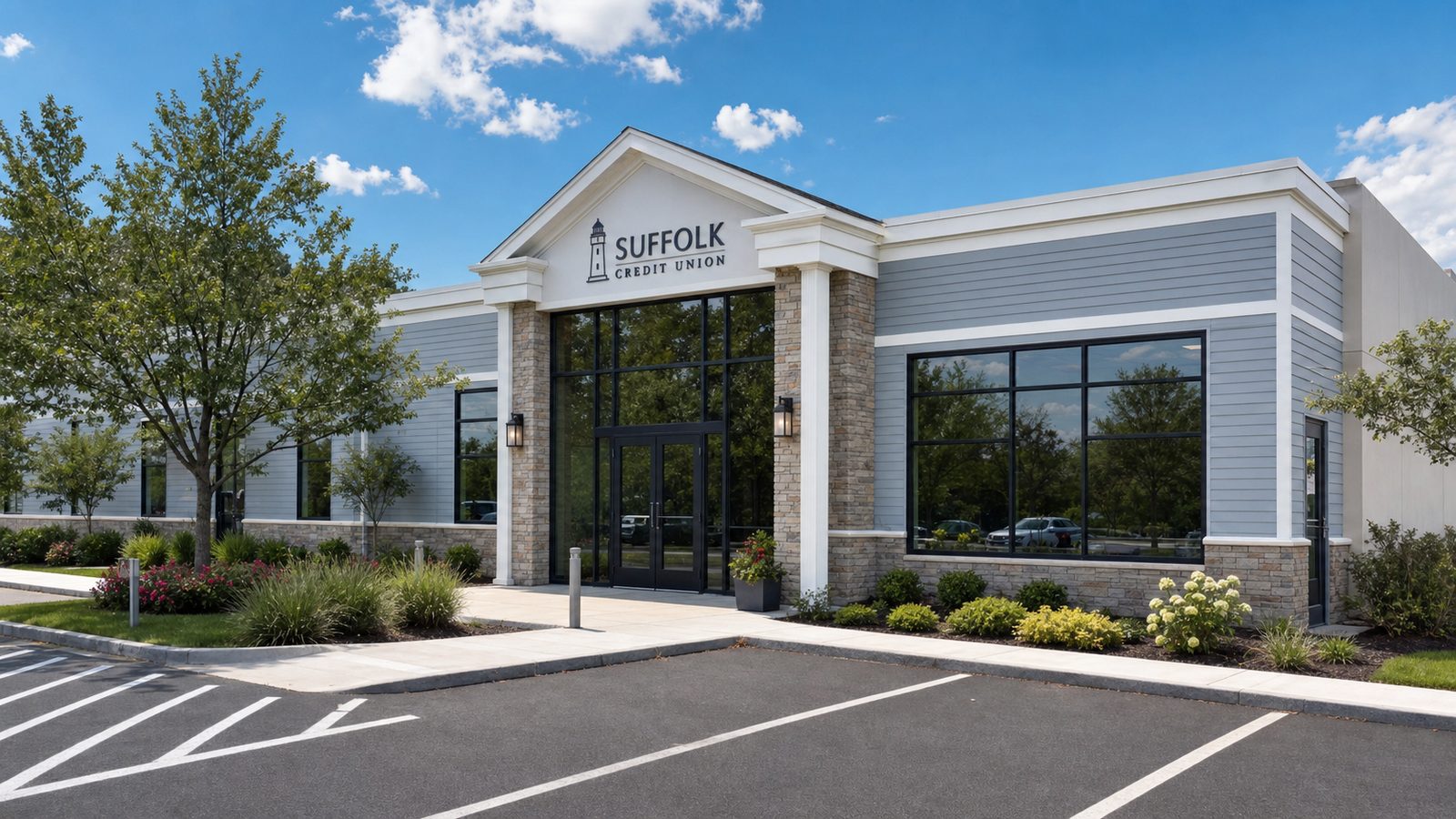
If you manage a facility in Suffolk County, Long Island, you already know the challenge: you need a cleaning program that is consistent, auditable, and built for real foot traffic—not a vendor who “looks busy” but can’t prove outcomes. GreenPoint Maintenance Services Corp provides fixed-price commercial cleaning across the tri-state area, and we support Long Island accounts with the same proof-driven quality controls we use in NYC. If you’re evaluating vendors in Hauppauge, Melville, Brentwood, or along the LIE corridor, call 844-814-0810 or email info@greenpointms.com to schedule a walkthrough and get a written scope and fixed price.
Why Suffolk County facilities buy commercial cleaning differently than NYC
Suffolk County properties tend to spread out: office parks near Route 110, light industrial corridors near the Long Island Expressway (I-495), and healthcare offices clustered around major hospital networks. That changes staffing, supply staging, and the timing of service. A good program accounts for longer travel between sites, mixed-use buildings, and seasonal spikes (sand/salt in winter, pollen in spring). GreenPoint plans routes and staffing so your cleaning is consistent even when occupancy shifts.
Buyer intent in Suffolk also leans heavily toward predictability: you want a flat monthly number, clear inclusions/exclusions, and a quality system that makes it easy to report up to ownership. GreenPoint Maintenance Services uses fixed pricing (no hourly billing and no hidden fees) paired with documentation so you can defend the spend with evidence, not anecdotes. To start, schedule a walkthrough at 844-814-0810.
Service areas and local landmarks we routinely plan around
Local SEO matters, but real operations matter more. Suffolk County cleaning plans should consider where your people actually travel and where your visitors enter. We commonly design scopes around hubs like the Long Island Rail Road (LIRR) Ronkonkoma Branch stations (e.g., Ronkonkoma, Deer Park, Brentwood), major roadways like Sunrise Highway (NY-27) and the Northern State Parkway connections, and business clusters near Hauppauge Industrial Park and Melville’s Route 110 corridor.
For retail and public-facing facilities, we also plan for peak patterns near major destinations (mall traffic, medical appointment blocks, school dismissal waves). The goal is a service schedule that keeps restrooms, touchpoints, and floors within an agreed standard during the hours people actually use the space. If you want a Suffolk County scope built around your building’s traffic, call GreenPoint at 844-814-0810 for a walkthrough.
What “commercial cleaning” typically includes (and what you should force into writing)
Facilities teams get burned when a proposal is vague. Your scope should list tasks, frequencies, and measurable standards by area: lobbies, elevators, stairwells, restrooms, breakrooms, conference rooms, open office areas, private offices, loading areas, and trash/recycling rooms. It should also define supply responsibilities (paper goods, liners, soap), floor care expectations, and who owns specialty work like high dusting or post-construction cleanups.
GreenPoint Maintenance Services writes scopes that are easy to audit and compares them against industry norms so you’re not under-scoped (leading to complaints) or over-scoped (leading to waste). If you’re benchmarking frequency standards, see our guide on [cleaning frequency standards by facility type](/blog/cleaning-frequency-standards-by-facility-type/) and use it during procurement discussions.
Proof-driven quality: how StockPoint verification reduces “I think it was cleaned” disputes
A cleaning program is only as good as its verification. GreenPoint uses StockPoint to capture timestamped, GPS-tagged photos and service checklists tied to your site. For many facilities, we also incorporate ATP testing to validate that high-touch surfaces and restrooms are being cleaned to a measurable hygiene target—not just wiped quickly. That documentation supports faster issue resolution, fewer repeat complaints, and clearer communication with tenants or department heads.
If you’ve never used ATP as part of QA, start with the basics in [what ATP bioluminescence testing means for cleaning](/blog/what-is-atp-bioluminescence-testing-cleaning/) and then decide where objective verification makes sense (restrooms, breakrooms, exam rooms, shared equipment). GreenPoint uses proof points to protect both the client and the onsite team: expectations are clear and performance is visible.
Local compliance and risk controls: OSHA, SDS, and chemical storage basics
Even in a standard office environment, the cleaning closet is a risk zone if it isn’t controlled. OSHA’s Hazard Communication requirements (often implemented via SDS/GHS labeling) matter because mismanaged chemicals create employee safety risks, tenant exposure concerns, and liability. GreenPoint trains staff on chemical handling and uses documented processes for storage and labeling so your facility doesn’t inherit avoidable compliance risk.
If you oversee multiple sites, align your vendor on a consistent chemical safety playbook; it’s easier to audit and easier to defend. Our deeper dive on [OSHA cleaning chemical safety (GHS/SDS)](/blog/osha-cleaning-chemical-safety-ghs-sds/) explains what you should expect in training, labeling, and onsite documentation.
Staffing stability matters: turnover drives quality failures and tenant complaints
The hidden driver of “our cleaning keeps slipping” is staffing churn. Industry data frequently ties turnover to inconsistent execution, missed details, and weak accountability. GreenPoint focuses on retention and standardized training because the same team learning your site is one of the biggest levers for consistent outcomes. We maintain a 98% client retention rate because we treat cleaning like an operations program, not a commodity.
When you evaluate vendors, ask who supervises the account, how issues are tracked, and what happens when an employee is absent. GreenPoint’s approach pairs on-site training with verification so coverage doesn’t automatically mean quality loss. To talk staffing models and get a fixed-price proposal, call 844-814-0810.
Green cleaning that still performs: Green Seal products and indoor air quality considerations
Many Suffolk County offices and medical buildings want greener products but worry about performance. GreenPoint uses Green Seal certified products where appropriate and aligns product selection to surfaces, dwell times, and soil loads so “green” doesn’t become “ineffective.” This is especially important for shared spaces where indoor air quality and occupant comfort affect satisfaction and productivity.
If IAQ is a stakeholder priority, integrate HEPA filtration, dust control, and properly scheduled floor care into the scope. Our article on [indoor air quality and commercial cleaning](/blog/indoor-air-quality-commercial-cleaning/) is a good reference for the operational habits that reduce airborne dust and odors without overusing harsh chemicals.
Cost expectations in Suffolk County: what drives pricing and how to compare bids
Cleaning cost isn’t just square footage. Pricing shifts with restroom count, floor type, entry matting, trash volume, public access hours, and whether you need daytime porter service. The fairest comparisons come from matching scopes line-by-line and making sure quality controls are comparable (supervision, inspections, documentation, and response time).
If you need a framework to avoid “cheap bid, expensive problems,” use our guide to [commercial cleaning cost per square foot](/blog/commercial-cleaning-cost-per-square-foot/) and then ask vendors to confirm assumptions in writing. GreenPoint’s fixed pricing is designed to eliminate surprise extras; you’ll know what’s included before service starts.
A practical Suffolk County walkthrough checklist (what we look at on day one)
A walkthrough should produce a scope you can validate. GreenPoint reviews: traffic flow (main entrances, side doors, loading docks), touchpoint density (door hardware, elevator buttons, shared equipment), restroom usage patterns, breakroom layout, floor types (VCT, tile, carpet), and waste handling (recycling rules, compactor timing). We also note any tenant requirements, after-hours access constraints, and security procedures.
We then convert that into a written scope with frequencies, expected outcomes, and a verification plan. If you want a quote you can take to procurement with confidence, call 844-814-0810 or email info@greenpointms.com and request a Suffolk County commercial cleaning walkthrough.
Need commercial cleaning in Suffolk County, Long Island with documented quality? GreenPoint Maintenance Services Corp delivers fixed-price scopes, Green Seal products, and StockPoint verification (timestamped, GPS-tagged photos and optional ATP testing). Call 844-814-0810 or email info@greenpointms.com to schedule a walkthrough and get a proof-driven proposal.