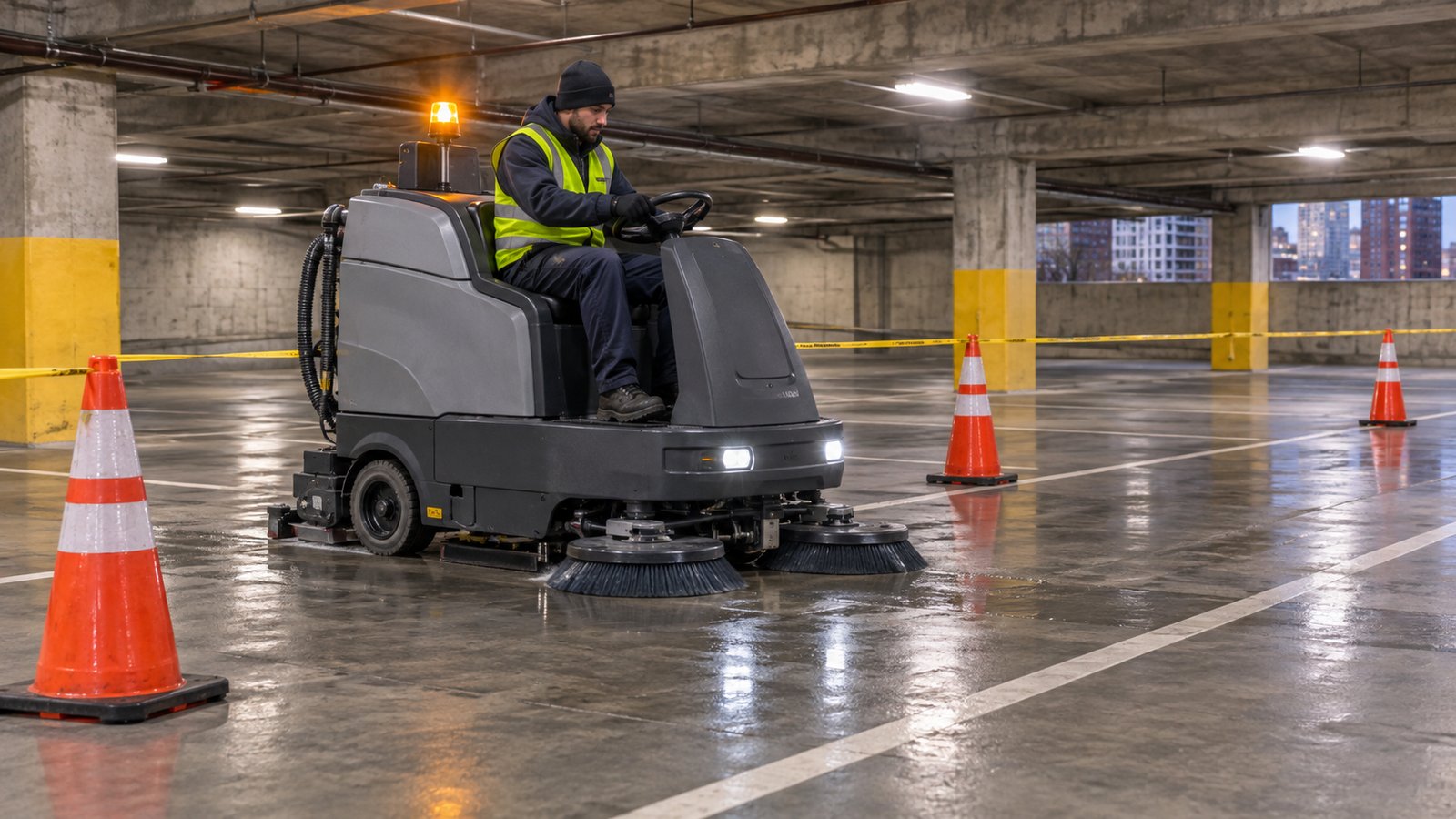
Parking garages collect grit, litter, leaves, tire residue, dust, and vehicle-related drips while cars and pedestrians continue to move through the same space. A vendor must coordinate access, traffic control, equipment, drainage boundaries, and worker safety, not simply promise to sweep. For NYC property managers, a useful garage cleaning contract specifies floors and levels, operating hours, exclusions, incident response, and how completion is documented. GreenPoint Maintenance Services provides commercial cleaning proposals built around a written scope and JaniTrack verification for selected tasks.
Start with a garage condition and traffic map
Before asking for a price, map each level, ramp, pedestrian route, stairwell, elevator lobby, payment area, loading zone, and waste location. A garage near Yankee Stadium in the Bronx, Barclays Center in Brooklyn, Citi Field in Queens, or a Midtown Manhattan office district may experience very different traffic peaks and event surges. Mark areas that remain open at all times, hours when sections can be closed, low-clearance points, and equipment restrictions. Identify the facility manager who can authorize temporary closures and the security contact for after-hours access.
Record the surface type and visible conditions, including standing water, deteriorated coatings, oil or fluid drips, leaves, loose debris, blocked drains, damaged expansion joints, and areas with poor lighting. These observations help separate cleaning work from structural or mechanical repairs. A contractor can report visible maintenance issues, but should not be expected to repair a drain, concrete defect, electrical component, or vehicle leak under a janitorial line item. GreenPoint's walkthrough can document scope boundaries and help the property manager route out-of-scope findings to the right maintenance provider.
Define routine cleaning and periodic projects
A routine scope may include litter pickup, sweeping or vacuuming approved areas, cleaning elevator lobbies, removing waste, and addressing selected visible spills under an agreed response procedure. Periodic work might include machine scrubbing, pressure washing, high dusting, or seasonal leaf removal, each with its own access, water, equipment, and runoff requirements. Specify the cleaning level, task frequency, square footage or zone, and inspection method. Avoid broad wording such as 'deep clean garage' unless the contractor lists the equipment, surfaces, water handling, and closure plan.
Garage cleaning is not the same as sweeping every surface to a spotless finish. Some concrete may be stained or damaged; a floor coating may require a specific cleaning method; and certain marks may come from an active leak that needs repair. Define the expected appearance and the response for stains that cannot be removed by routine work. A facility can borrow quality-rating concepts from the ISSA clean standards and appearance levels guide, then adapt them to garage conditions and safety priorities.
Control vehicle and pedestrian movement
A garage remains an active traffic environment even when a section is being serviced. The written work plan should show how vehicles are rerouted, what signs and barriers are used, who confirms a lane closure, how pedestrians reach elevators, and what happens if a driver ignores the controls. Set a maximum working area that can be isolated without compromising the garage's required access or emergency routes. The property manager should confirm the closure plan with the building's safety and operations contacts before work begins.
OSHA's workplace-safety requirements are relevant to hazard communication, personal protective equipment, training, and safe work practices; specific controls depend on the task, equipment, and site assessment. Ask the vendor how it evaluates moving vehicles, low visibility, ramps, exhaust exposure, slippery surfaces, noise, and electrical hazards. Confirm high-visibility clothing, spotters, radios, lighting, and emergency contacts where the work plan requires them. GreenPoint supervisors can review access and work sequencing during a walkthrough, but the garage operator must approve facility-specific traffic controls.
Set boundaries for spills, drains, and water use
Oil, fuel, coolant, battery fluid, and other vehicle-related releases can require a specialized response beyond routine janitorial cleaning. The contract should define which small, known spills the contractor is trained and equipped to handle, which materials trigger stop-work, and who contacts the facility's environmental or emergency-response provider. Never instruct a cleaner to hose a spill toward a floor drain. The property should confirm applicable discharge, stormwater, sewer, and waste-handling requirements with the relevant NYC and state authorities or a qualified environmental professional.
If machine scrubbing or pressure washing is proposed, identify water source, containment, recovery, drying time, runoff route, and reopening conditions before scheduling. A wash method that sends contaminated water into a storm drain or creates a slick ramp can cause environmental and safety problems. Document the approved method and keep the person authorized to stop work available during the job. GreenPoint's commercial cleaning audit checklist includes questions managers can adapt for vendors, while garage-specific water and discharge rules must be confirmed for the actual site.
Compare NYC garage vendor proposals fairly
Give each bidder the same level map, service windows, task frequency, closure assumptions, waste instructions, spill protocol, water-use restrictions, and periodic-work requirements. Ask for a fixed recurring price and a separate schedule for approved projects or emergency response. Check whether equipment, labor, supervisor inspections, disposal, and consumables are included. Square footage is useful for organizing the scope, but ramps, columns, parking density, access restrictions, and the need to work around open vehicles can change labor and equipment needs substantially.
Ask for insurance certificates, safety training records, equipment details, staffing coverage, references, and a plan for reporting damage or incidents. Clarify whether the vendor is responsible for cones, barriers, traffic staff, water recovery, and notifications to tenants or garage users. GreenPoint uses fixed pricing rather than hourly billing, with no hidden fees; each proposal should still identify assumptions and exclusions in plain language. GreenPoint Maintenance Services is MBE-certified and reports 98% client retention, but a buyer should confirm fit through references, the written scope, and a site walkthrough.
Use digital verification without confusing it with safety
Inspection points might include litter in pedestrian paths, stairwell and elevator-lobby condition, completion of assigned sweeping zones, proper removal of approved waste, and closure of a periodic task. Define what counts as a pass, who reviews exceptions, and how quickly a correction must be made. JaniTrack can give GreenPoint clients task records, selected timestamped GPS-tagged photos, and a live dashboard. Use photos to document service conditions without capturing license plates, faces, security screens, or other sensitive information unless the facility has approved the data collection and retention rules.
Digital records show that an event was documented; they do not prove a garage is safe to reopen or that an environmental release has been remediated. The property manager or designated safety authority must approve reopening after the required inspection and controls. If ATP testing is used for a specific surface protocol, explain what is sampled and how the result will be interpreted; it is an indicator of residual organic material, not a comprehensive test for vehicle contaminants. GreenPoint can demonstrate the JaniTrack dashboard during a quote discussion at 347-332-9348.
Plan service for New York weather and event traffic
Seasonality affects garage housekeeping across the five boroughs. Winter brings tracked-in salt, slush, and grit; spring can bring pollen and debris; autumn leaves can collect near ramps and drains; and summer event calendars can change traffic in neighborhoods around stadiums, theaters, and transit hubs. Set seasonal tasks in advance and align them with the garage's busiest days. Do not allow a cleaning schedule to interfere with emergency access, required egress, or the facility's own snow and ice management plan.
A Manhattan garage near Grand Central or Penn Station may need a narrow overnight work window, while a residential garage in Staten Island or Queens may prioritize low-disruption daytime work. The exact plan should follow observed occupancy, building rules, and local operating requirements. GreenPoint's winter facility maintenance checklist for the Northeast can help teams plan seasonal coordination. Call 347-332-9348 to arrange a walkthrough and identify the right balance between recurring cleaning, periodic projects, and event-driven needs.
For the first service cycle, schedule a site orientation with the garage manager, security lead, and cleaning supervisor. Confirm emergency contacts, radio or phone procedures, permitted storage, wash-water controls, lane-closure approvals, and the process for a vehicle or pedestrian entering a controlled zone. After the initial visits, review the task record and walk a sample level together. Adjust the plan if actual debris patterns differ from the walkthrough, but document the revision and identify whether it is a routine clarification or a billable scope change. This startup review can correct unsafe assumptions before they become routine and makes ongoing inspection more consistent across levels.
When the garage serves a residential or office tower, include communications in the startup plan. Decide who posts a notice, how long before work users should be informed, whether a temporary parking restriction is needed, and who handles a complaint from a driver who arrives during a closure. For public or event garages, coordinate with security and operations staff so the cleaning crew is not mistaken for a traffic-control authority. These small details reduce disruption and make it easier to compare actual performance against the schedule that the property approved.
Frequently asked questions
Q: How often should an NYC parking garage be cleaned? A: Frequency depends on vehicle volume, number of levels, open hours, weather, debris load, and the operator's own maintenance program. Many garages use recurring litter and sweeping service with periodic machine cleaning, then add seasonal or event-driven work. A walkthrough should set frequencies by zone rather than applying one schedule to the entire structure.
Q: Can a cleaning contractor pressure-wash a garage floor? A: Only after the site and contractor define water use, containment, recovery, drying time, traffic closure, and lawful discharge or disposal. Some surfaces or conditions are not suitable for pressure washing. The property should confirm environmental requirements and authorize a documented work plan before any water-intensive project.
Q: Should janitorial staff clean oil or fuel spills? A: The contract should specify the types and sizes of spills staff are trained and equipped to handle. Unknown, hazardous, or significant releases should trigger isolation and escalation to the facility's designated response provider. Do not hose contaminants toward a drain or assume routine floor cleaning is an environmental response.
Q: What should a garage cleaning quote include? A: Request a level-by-level scope, service schedule, vehicle and pedestrian controls, spill boundaries, water and runoff plan, equipment and staffing details, insurance, periodic-task pricing, documentation, and correction process. GreenPoint Maintenance Services can conduct a walkthrough and prepare fixed-price terms. Call 347-332-9348 or email info@greenpointms.com.
Book an NYC parking garage cleaning walkthrough with GreenPoint Maintenance Services at 347-332-9348. Get a fixed-price scope with JaniTrack task records and timestamped GPS-tagged photo verification for approved work zones.