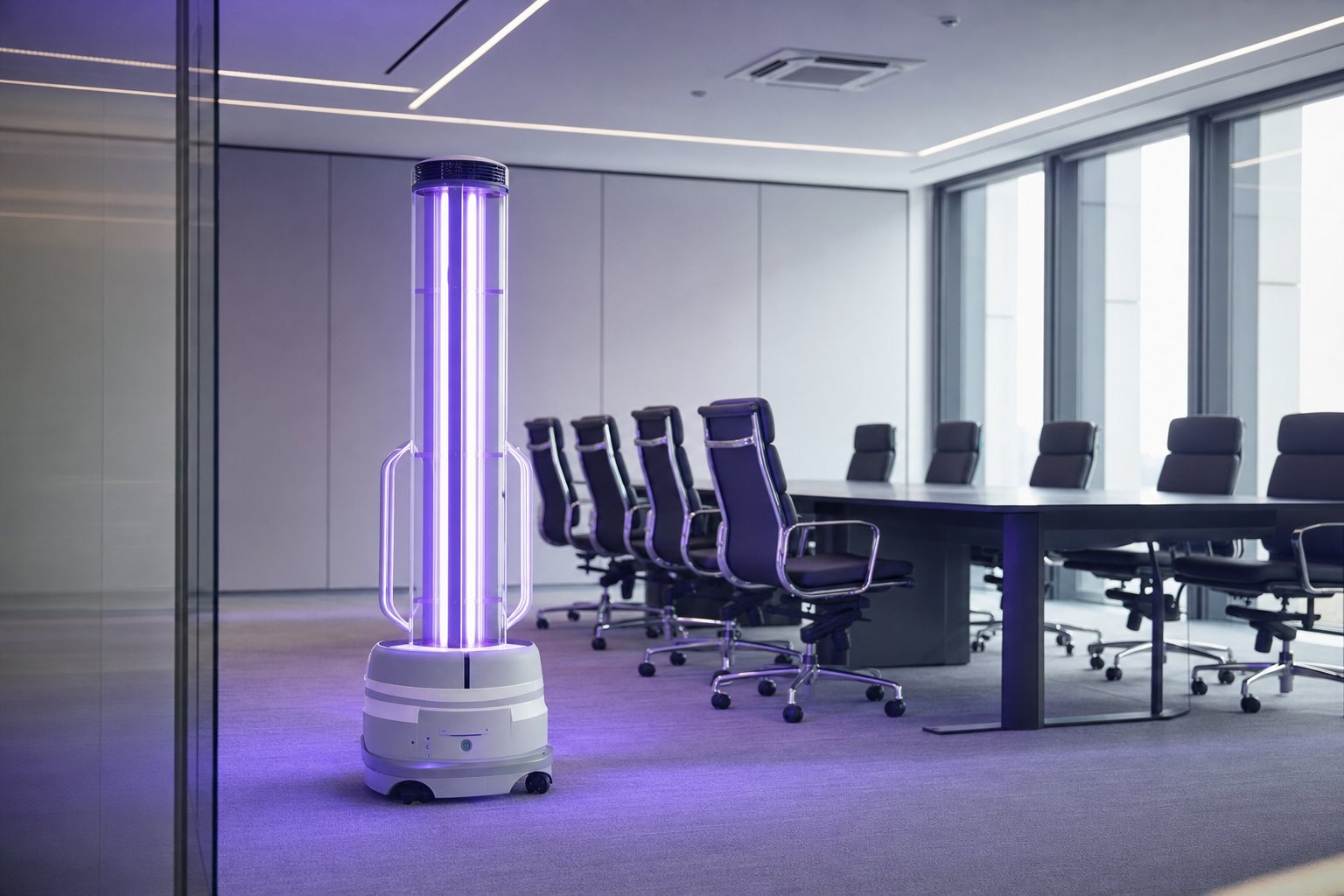
UV-C devices can be useful in a commercial cleaning program, but they are not a magic substitute for removing soil, following disinfectant labels, or managing occupied spaces. Facility managers in Manhattan, the Bronx, Brooklyn, Queens, Staten Island, Westchester, Long Island, New Jersey, Connecticut, Pennsylvania, and Florida need to evaluate dose, shadowing, room geometry, maintenance, safety interlocks, and labor before buying a device. GreenPoint Maintenance Services helps teams fit emerging technology into a documented scope with Green Seal certified products, StockPoint proof, and fixed pricing. Call 844-814-0810 to schedule a technology and cleaning walkthrough.
What UV-C does and does not do
UV-C refers to ultraviolet light in a germicidal range that can inactivate microorganisms when the target receives a sufficient dose for a sufficient time. The device, wavelength, distance, reflectivity, airflow, and organism all affect performance. A light aimed at an already-clean surface is not equivalent to a validated room treatment, and a shadowed area may receive little or no dose. GreenPoint treats UV-C as one control in a hierarchy: remove soil, clean the surface, apply an approved disinfectant when required, then use UV-C only where the equipment and protocol justify it.
The buyer should ask for independent performance data, operating instructions, service intervals, lamp or emitter life, interlock design, and the exact claim being made. “Kills germs” is not a useful procurement specification. A healthcare-adjacent clinic, school, hotel, warehouse, or office near Hudson Yards will have different occupancy and risk assumptions. GreenPoint can document the intended room, cycle, access rule, and acceptance check rather than allowing a device to become an untracked gadget. Call 844-814-0810 for a site review.
Choose the right device category for the room
Commercial UV-C tools generally fall into several categories: enclosed cabinet or conveyor units, upper-room fixtures, in-duct systems, and mobile or whole-room devices. Enclosed equipment may treat selected items inside a controlled chamber. Upper-room systems are engineered to keep exposure out of the occupied zone and require correct installation and airflow. In-duct systems interact with HVAC design and maintenance. Mobile room devices require vacancy, line-of-sight planning, door control, and a restart procedure. GreenPoint helps the facility team define whether the cleaning contractor, engineer, or licensed installer owns each step.
Room geometry is not a detail. A conference room with glass walls and open furniture may behave differently from a restroom with partitions, a patient exam room with equipment, or a warehouse aisle with tall racks. Shadows, dust on the emitter, ceiling height, and reflective surfaces change dose. GreenPoint can pair a device map with routine cleaning instructions and StockPoint task records. For comparison, see [our electrostatic disinfection explained guide](/blog/electrostatic-disinfection-explained/) and [our digital cleaning verification systems guide](/blog/digital-cleaning-verification-systems/).
Make worker and occupant safety non-negotiable
Direct UV-C exposure can injure skin and eyes, so a commercial device needs engineered controls and an enforced operating procedure. The plan should address vacancy, doors, warning signs, remote start, motion sensors, interlocks, keys, failed cycles, and re-entry authorization. Never rely on a cleaner verbally remembering that a device is operating. GreenPoint requires the responsible supervisor to verify the room is clear, record the cycle, and release it only after the equipment indicates completion and the protocol permits entry.
Upper-room and in-duct systems need qualified design and maintenance because the safety question depends on installation, airflow, height, shielding, and exposure limits. OSHA requirements for general safety, hazard communication, PPE, and training still matter, while the building engineer may control electrical and HVAC work. GreenPoint does not install or modify regulated systems outside its scope. It can clean approved surfaces around the equipment, document observations, and escalate a damaged guard, failed interlock, or contaminated filter. Call 844-814-0810 when your vendor boundaries need to be explicit.
Integrate UV-C with ordinary cleaning technique
The most common mistake is expecting light to clean a dirty surface. Soil and organic material can shield microorganisms, and a UV cycle cannot remove dust, grease, fingerprints, or biofilm. GreenPoint’s sequence is practical: collect waste, remove visible soil, clean the surface with the approved method, apply a labeled disinfectant where required, allow the label dwell time, and use UV-C only as a defined supplemental step. Color-coded microfiber and dedicated tools reduce cross-use during the manual portion.
The scope should name what the device treats and what the cleaner must still do by hand. A restroom may need manual fixture and partition cleaning before a device cycle; a school may need desk and high-touch work regardless of an upper-room fixture; a warehouse may use a system in a controlled office rather than attempting to treat every rack. [Our ISSA Clean Standards and appearance levels guide](/blog/issa-clean-standards-appearance-levels/) helps separate appearance acceptance from a disinfection claim.
Calculate ROI from risk, labor, and maintenance
UV-C ROI is not just the purchase price divided by the number of rooms. Build a five-year model that includes equipment, installation, training, vacancy time, cycle duration, energy, emitter replacement, calibration or performance checks, storage, insurance review, and supervisor oversight. Compare those costs with the labor saved, the response time improved, the rooms treated, and the risk reduction the owner actually values. A device that treats four rooms per night but requires 45 minutes of setup and 30 minutes of vacancy may be less useful than a faster manual protocol.
GreenPoint can help separate recurring cleaning from technology operation in a fixed-price proposal. A 50,000-square-foot office near 42nd Street may need daily touchpoint service and only targeted UV-C in selected rooms; an outpatient site in White Plains or a school in Queens may use a different frequency. StockPoint records the device cycle, location, exceptions, and manual cleaning completion so the manager can review utilization instead of assuming ROI. Call 844-814-0810 for a site-specific estimate.
Account for local building and schedule realities
A device program must fit access rules. Midtown towers may require freight reservations and security escorts; Brooklyn and Queens properties may have event or transit surges; Staten Island and Long Island sites may have longer drive windows; Westchester and Connecticut campuses may close sections of a building after hours. New Jersey facilities near PATH, Newark Penn, or Jersey City waterfronts often control cart movement and badge access. GreenPoint writes cycle windows, room release, storage, and emergency contacts into the work order so the device is not left in a hallway or run during occupancy.
Weather and building systems affect the plan as well. Humidity, construction dust, HVAC shutdowns, and storm-related closures can change how a room is cleaned and whether it can be treated. Florida facilities may have mold-sensitive conditions and hurricane protocols, while Northeast sites may have winter access delays. GreenPoint coordinates with engineering and security, documents exceptions in StockPoint, and never represents a device as a replacement for ventilation maintenance or a licensed infection-control decision.
Verify the process and communicate the limits
A credible program reports process evidence and boundaries. GreenPoint can use StockPoint for timestamped GPS-tagged photos, cycle records, room status, supervisor inspections, and corrective actions. The dashboard can show whether a cycle was completed, whether the room was released, and whether manual cleaning was logged. Optional ATP testing may help evaluate selected surfaces before or after a process change, but ATP does not measure UV dose and should not be presented as proof that a room was disinfected by light.
Train occupants and managers on what the technology means. A short sign or FAQ should explain that the device is supplemental, rooms must be vacant during certain cycles, and cleaning requests still matter. GreenPoint Maintenance Services uses evidence-based language and avoids unsupported kill-rate claims. GreenPoint’s 98% client retention and MBE/MWBE certifications provide procurement confidence, while the actual performance comes from a clear scope, trained staff, and consistent review. Call 844-814-0810 to plan the pilot.
A pilot should have a written stop rule. GreenPoint recommends pausing the device when a safety interlock fails, an emitter is damaged, the room cannot be cleared, the cycle record is missing, or the measured process no longer matches the manufacturer instructions. The supervisor routes the issue to the owner or engineer and returns the room to the manual cleaning plan. This is not a failure of innovation; it is how a facility protects people while learning whether the technology belongs in the permanent scope.
Procurement teams should also ask who owns end-of-life equipment and data. Lamps, emitters, batteries, controllers, and electronic components may have disposal requirements that differ from ordinary janitorial waste. GreenPoint can record the device asset number, service date, cleaning status, and exception in StockPoint, but the owner and installer should define calibration and disposal responsibility. A five-year budget that omits those obligations is not a real ROI model. Call 844-814-0810 for a pilot checklist.
A disciplined pilot also protects the credibility of the cleaning team. GreenPoint reports what the device did, what manual cleaning did, and what remains outside the scope. That distinction matters when a building engineer, infection-prevention adviser, insurer, or tenant asks for evidence. A clear record prevents sales language from becoming an operational promise and gives leadership enough information to expand, revise, or stop the program. Call 844-814-0810 when the pilot needs a documented decision gate.
FAQ: UV-C disinfection in commercial facilities
Q: Can UV-C replace routine commercial cleaning? A: No. UV-C does not remove soil, dust, grease, or waste, and it may not reach shadowed areas. GreenPoint treats it as a supplemental control after manual cleaning and any labeled disinfection required by the site.
Q: Is UV-C safe in an occupied office? A: Direct exposure controls are essential. Device type matters: mobile room units generally require vacancy and interlocks, while upper-room or in-duct systems require qualified design and maintenance. GreenPoint follows the manufacturer and building safety procedure and does not run a mobile device around occupants.
Q: What should be included in a UV-C ROI calculation? A: Include equipment, installation, training, vacancy time, cycle time, maintenance, emitter replacement, verification, storage, and supervisor labor. Compare those costs with rooms treated, labor saved, response time, and the risk reduction the owner values.
Q: Can GreenPoint operate UV-C devices in NYC, New Jersey, Connecticut, Pennsylvania, and Florida? A: GreenPoint can integrate approved devices into cleaning scopes across those service areas when the owner provides safe equipment and a defined operating protocol. Call 844-814-0810 to schedule a walkthrough.
Q: How do we document UV-C use? A: StockPoint can record room, time, cycle status, photos, exceptions, and release checks. That evidence supports process review, but it does not replace manufacturer validation, engineering records, or regulatory guidance.
Evaluate UV-C with evidence, not hype. Call GreenPoint Maintenance Services at 844-814-0810 for a commercial facility walkthrough and fixed-price integration plan. GreenPoint combines manual cleaning discipline, StockPoint verification, Green Seal certified options, and 98% client retention.