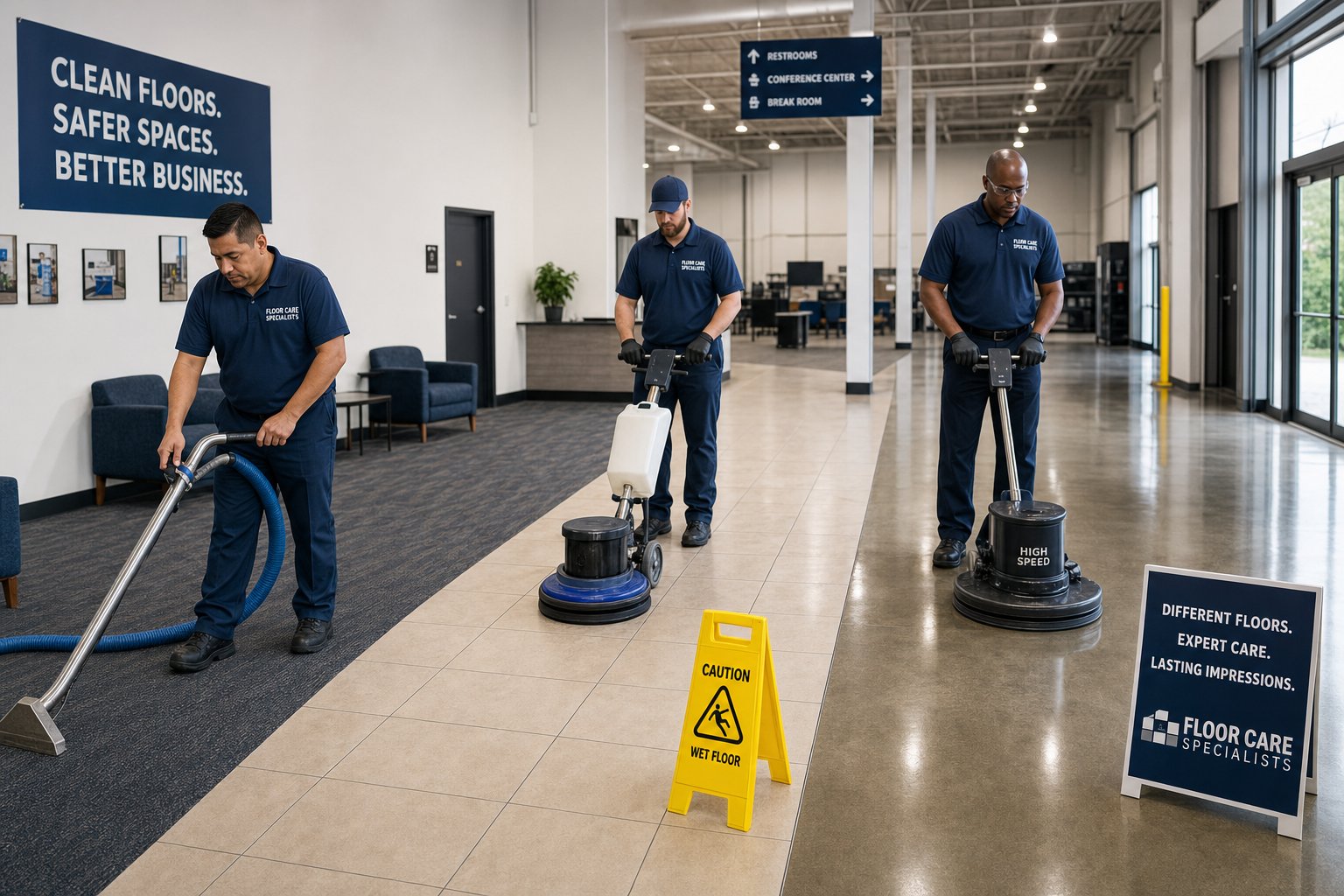
A floor-care program is not a single annual strip-and-wax visit. Carpet, VCT, ceramic tile, terrazzo, polished concrete, and resilient sheet flooring respond differently to traffic, soil, moisture, and chemicals. The right plan protects the asset, reduces slip risk, and keeps a facility presentable between restorative services. GreenPoint Maintenance Services builds floor programs around square footage, entryway soil load, traffic lanes, finish condition, and the owner's replacement horizon. This approach works for Midtown offices, Bronx schools, Brooklyn retail, Queens warehouses, Westchester campuses, Long Island medical offices, New Jersey industrial sites, Connecticut corporate buildings, Philadelphia facilities, and Florida properties exposed to sand and humidity.
Inventory the Floor Before Choosing a Method
Begin with a room-by-room inventory: material, age, finish, condition, traffic, furniture density, and moisture exposure. A 20,000-square-foot open office with low-pile carpet needs different care from a 6,000-square-foot lobby with polished concrete and a restaurant-adjacent tile corridor. Record transitions, stair nosings, mat wells, drains, and areas where carts turn. GreenPoint labels each zone so a cleaner does not apply a resilient-floor chemical to natural stone or use an aggressive pad on a finish that should be preserved.
The [VCT floor care strip, seal, and wax guide](/blog/vct-floor-care-strip-seal-wax-guide/) and [carpet cleaning methods compared](/blog/carpet-cleaning-methods-compared/) explain method selection in more detail. A walkthrough is essential because drawings rarely show actual soil paths. GreenPoint can measure square footage, identify the dirtiest 10% of traffic lanes, and set a sequence that protects tenants while work happens around elevators, loading docks, and transit-driven arrival peaks.
Carpet: Control Soil at the Entry First
Carpet maintenance starts outside the carpet. Correctly sized entrance matting can capture a substantial portion of tracked soil before it reaches the pile, but mats must be vacuumed, extracted, and replaced on a schedule. Daily vacuuming in traffic lanes, edge detailing, and prompt spot treatment protect appearance; interim encapsulation or hot-water extraction is selected according to fiber, backing, drying conditions, and soil load. GreenPoint logs the method and drying plan so a facility is not reopened with damp carpet.
Set benchmarks by traffic rather than calendar alone. A Manhattan lobby with winter salt, a Brooklyn school entry, a Newark distribution office, and a Fort Lauderdale property with sand may all need more frequent entry care than private offices. GreenPoint tests a small area before broad treatment and uses Green Seal certified products where compatible. Call 844-814-0810 to compare a carpet maintenance schedule against replacement cost, complaints, and tenant expectations.
VCT and Resilient Floors: Protect the Finish
VCT and similar resilient floors need soil removal, neutral cleaning, burnishing only when appropriate, and periodic restorative work. Over-wetting can drive moisture into seams; excess finish can create a dull, slippery, or uneven film. Define the appearance level, traffic lanes, finish system, pad type, and expected dry time before approving a recurring program. A 50,000-square-foot office might use daily auto-scrubbing in the lobby, routine damp mopping in secondary corridors, and a phased restorative cycle rather than closing the entire floor at once.
GreenPoint's supervisors inspect gloss, black marks, edge buildup, and finish wear with the client, then separate routine care from a periodic project. This prevents a contract from hiding restoration inside an unrealistic nightly checklist. The [commercial cleaning cost per square foot guide](/blog/commercial-cleaning-cost-per-square-foot/) can help a manager compare labor, materials, equipment, and downtime instead of accepting a low bid that excludes floor care.
Tile, Stone, and Concrete Need Different Controls
Ceramic and porcelain tile require attention to grout, edges, and soil trapped in texture. Natural stone may be sensitive to acids and aggressive detergents, while polished concrete needs dust control and the correct maintenance product to avoid haze. Always identify the substrate and manufacturer's limitations before selecting a degreaser or abrasive pad. GreenPoint uses color-coded tools and zone controls to reduce cross-use, and the account plan identifies when a specialist or building engineer should be involved.
Concrete in loading docks, garages, and industrial areas often needs oil-spot response, mechanical scrubbing, dust management, and safe traffic control. In Philadelphia, Queens, and New Jersey logistics sites, dock soil can overwhelm a lobby-focused plan. Florida humidity can extend drying time. GreenPoint can schedule work in low-occupancy windows, place signage, and document completion with StockPoint photos so a facility manager can see which zones were treated and when.
Design Frequencies with Square-Foot and Traffic Benchmarks
Use square footage to estimate labor, but use traffic to set frequency. A common planning model is to separate daily touch-up and soil removal, weekly detailed work, monthly machine cleaning, quarterly project work, and annual assessment. The actual cadence may be daily vacuuming with quarterly extraction for office carpet, daily auto-scrubbing for a grocery-adjacent tile corridor, or nightly care for a hospital entry. GreenPoint converts the inventory into route minutes, equipment windows, consumable assumptions, and a fixed-price scope.
Do not promise the same finish everywhere. High-visibility areas may justify a 95% appearance target, while back-of-house zones may prioritize safety and soil control. ISSA appearance levels offer a shared vocabulary for that conversation. GreenPoint Maintenance Services will review the target with a facility manager at 844-814-0810, including whether the client supplies equipment, whether furniture moves are included, and what happens when weather creates an unusual soil event.
Safety, Compliance, and Occupant Protection
Floor work is a safety operation as well as an appearance service. Use wet-floor signs, barricades, cord management, appropriate PPE, ventilation, and documented chemical instructions. OSHA's Hazard Communication Standard requires employees to understand chemical hazards and access safety data; a contract should state who supplies SDS information and who trains staff. For schools and healthcare locations, schedule disruptive work outside occupied windows and follow site-specific rules. Never leave a machine, cord, or wet area in a path of travel.
GreenPoint's plan includes a pre-task review, room release, dry-time check, and supervisor signoff. StockPoint can attach timestamped, GPS-tagged photos to the work record, while an exception note explains why a section was deferred. If a building has accessibility concerns, coordinate routes and temporary closures with the site contact. A manager can call 844-814-0810 for a walkthrough that includes ADA routes, elevator access, loading areas, and tenant communication.
Measure Results and Control Total Cost
Measure floor care through appearance scores, complaint counts, slip incidents, spot recurrence, labor hours by zone, chemical usage, and the interval between restorations. A useful indicator is cost per occupied square foot per month, not just the nightly invoice. If entry soil is reduced with better matting, extraction frequency may fall. If black marks recur because of a wheel type, changing the source may outperform adding labor. GreenPoint reviews trend data with clients so the plan evolves rather than becoming an annual guess.
A fixed-price proposal should list included frequencies, equipment, materials, emergency response, furniture movement, and periodic projects. GreenPoint uses Green Seal certified products where appropriate and avoids hidden fees or hourly-billing ambiguity. Call 844-814-0810 or email info@greenpointms.com to schedule a no-obligation walkthrough. GreenPoint can also compare the program with an in-house model using the [commercial cleaning versus in-house custodial guide](/blog/commercial-cleaning-vs-in-house-custodial/).
Pilot the Program Before Committing to a Full Cycle
A short pilot can prevent an expensive floor-care mistake. Select one carpet zone, one resilient-floor zone, and one hard-surface zone with different traffic levels. GreenPoint documents the starting condition, tests the planned method, measures dry time, and records occupant feedback. A pilot is especially useful when a New York lobby, New Jersey warehouse, or Florida property has mixed substrates that were installed at different times.
Use the pilot to confirm equipment access, noise limits, storage, mat placement, staffing, and final appearance. Then lock the frequency and restoration assumptions into the contract. GreenPoint can schedule this review at 844-814-0810 and show how StockPoint photos support closeout without turning the program into an unnecessary technology purchase.
Keep a Floor Register and Replacement Horizon
Create a floor register with material, manufacturer if known, installation date, finish history, last restoration, problem areas, and the expected replacement horizon. That record protects the building when staff or vendors change. GreenPoint uses the register to avoid repeating incompatible methods and to decide when a restorative project no longer makes economic sense. A floor that is nearing replacement may need safe soil control rather than an expensive cosmetic cycle.
Review the register quarterly with the property manager. Note areas affected by furniture moves, leaks, construction, salt, sand, or new tenant traffic. A manager can call 844-814-0810 to have GreenPoint update the register during a floor-care walkthrough. The result is a program that protects assets and supports a more accurate capital-planning conversation.
Commercial Floor Care FAQ
Q: How often should carpet be professionally cleaned? A: It depends on traffic, fiber, entry matting, and appearance target. Many offices use routine vacuuming with quarterly or semiannual restorative cleaning, while high-traffic entries need more frequent interim work. GreenPoint confirms the interval after inspecting soil and drying conditions.
Q: Should every VCT floor be stripped and waxed annually? A: Not necessarily. A well-maintained finish may need targeted restorative work, while over-stripping can consume labor and shorten the useful life of the system. GreenPoint evaluates wear, buildup, gloss, and traffic before recommending a cycle.
Q: Can cleaning happen during business hours? A: Daily vacuuming and spot work often can, but machine scrubbing, extraction, and finish work need controlled windows, signage, and dry-time planning. GreenPoint coordinates with tenants, schools, warehouses, and building security.
Q: How are floor-care prices calculated? A: Square footage is a starting point; material, frequency, traffic, equipment, furniture, access, and project timing matter. Call 844-814-0810 for a fixed-scope walkthrough rather than comparing hourly rates alone.
Q: Does GreenPoint serve facilities outside New York City? A: Yes. GreenPoint Maintenance Services works across New York, New Jersey, Connecticut, Pennsylvania, and Florida, with local route planning and StockPoint documentation where the program requires it.
Q: What information should a floor-care vendor receive? A: Provide floor inventory, square footage, traffic patterns, finish history, access windows, moisture concerns, furniture rules, and the desired appearance level. GreenPoint can verify the information during a walkthrough before setting the frequency and fixed price for the property.
Protect your carpet, tile, VCT, and concrete with a floor-care walkthrough from GreenPoint Maintenance Services. Call 844-814-0810 or email info@greenpointms.com for fixed pricing, Green Seal certified products, StockPoint proof, and a plan designed to extend asset life without hidden fees.