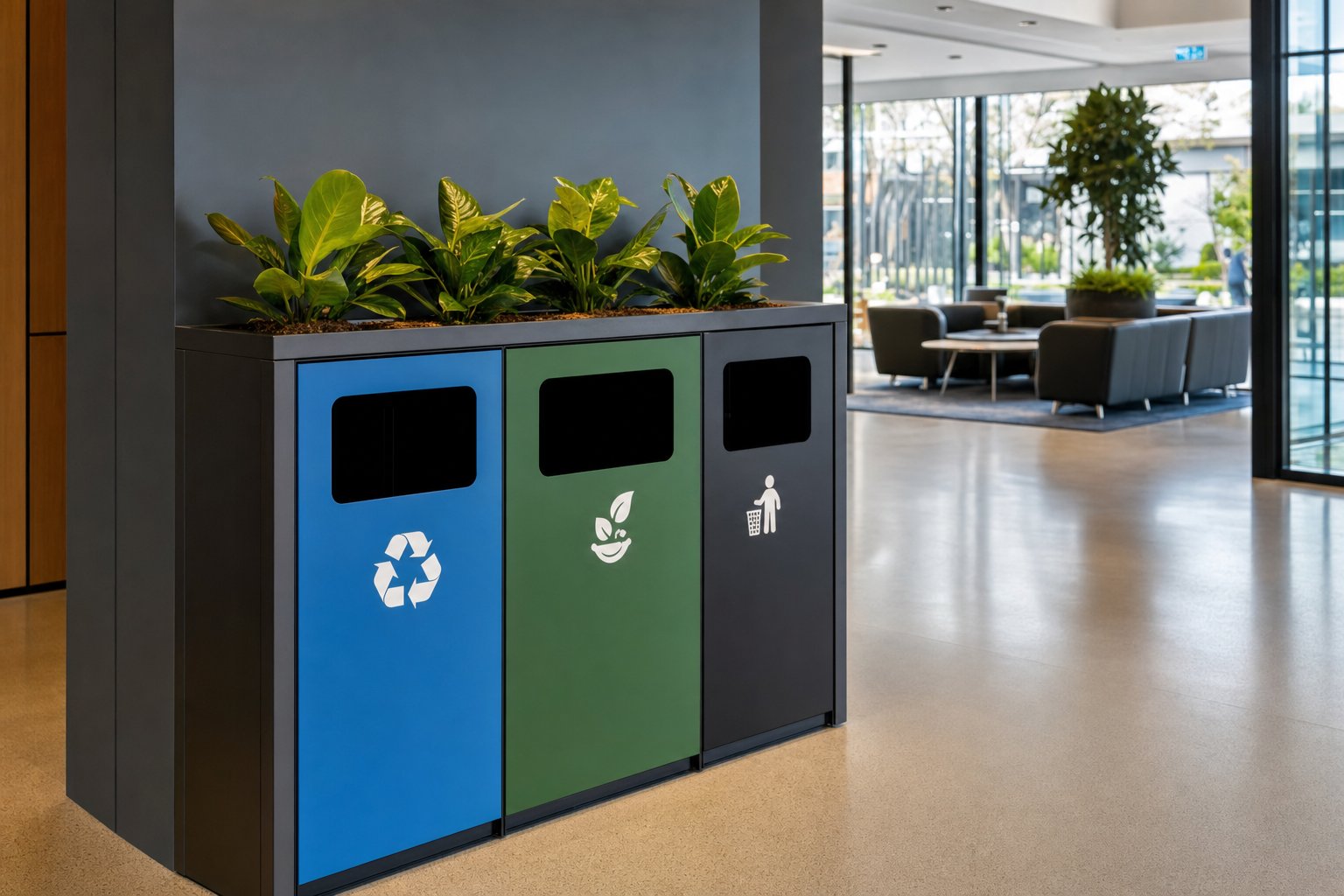
Waste-stream management is a facilities process, not just a set of colored bins. Commercial buildings need clear streams, usable collection points, trained occupants, safe routes, contamination controls, vendor coordination, and records that show what happened after a bag left the floor. This guide covers offices, schools, retail, warehouses, medical-adjacent properties, and mixed-use buildings across Manhattan, Brooklyn, Queens, the Bronx, Staten Island, Westchester, Long Island, New Jersey, Connecticut, Pennsylvania, and Florida. GreenPoint Maintenance Services can map the program, staff it, and verify execution with StockPoint. Call 844-814-0810 to schedule a waste walkthrough.
Start with a waste audit and a simple stream map
A waste audit should identify what the building generates, where it is generated, who handles it, how often containers fill, and what the contracted hauler accepts. GreenPoint maps landfill, mixed recycling, cardboard, organics or compost, confidential paper, e-waste, batteries, lamps, universal waste, and any regulated or specialized material. A 100,000-square-foot Midtown tower may have a central loading dock and tenant pantry waste; a Queens school may have cafeteria organics and classroom paper; a warehouse in New Jersey may have packaging and pallet material. The map should follow the actual route from desk or kitchen to final staging.
Keep ordinary cleaning collection separate from decisions that belong to the owner, hauler, or licensed specialist. GreenPoint can empty labeled containers, clean the enclosure, report contamination, and document overflow. It does not claim that a janitorial crew decides whether an unusual material is regulated. [Our commercial cleaning glossary](/blog/commercial-cleaning-glossary-terms/) and [our green cleaning commercial buildings guide](/blog/green-cleaning-commercial-buildings-guide/) help managers align language before procurement. Call 844-814-0810 for a baseline audit.
Design collection points people will actually use
Bins work when they are close to the behavior they are meant to capture. A recycling station next to a printer needs paper capacity; a pantry needs food-scrap, liquid, and landfill options; a loading dock needs a safe cardboard route; a restroom may need a distinct hygiene-waste procedure. GreenPoint recommends labels with words and examples, not color alone, and places containers where employees already stop. The manager should confirm liner type, capacity, pickup timing, and whether the hauler accepts the proposed material before printing signage.
Transit and neighborhood patterns matter. An office near Grand Central, Penn Station, Fulton Center, Atlantic Terminal, Newark Penn, Stamford Station, or Philadelphia’s Center City stations may have delivery and commuter peaks that fill bins before the evening round. Brooklyn sites near DUMBO or Barclays Center can experience event surges; Long Island City and Astoria properties may have construction packaging; Florida buildings may see humidity and storm-related cardboard issues. GreenPoint builds high-volume checks into the scope and can add a day porter at 844-814-0810.
Control contamination with training and feedback
Contamination is often a design problem before it is an employee problem. If a recycling bin accepts every material, or a compost label uses unfamiliar terms, people guess. GreenPoint uses photos and plain-language examples, then gives occupants a route for questions. Cleaners inspect for obvious contamination during scheduled rounds, close liners without mixing streams, and report repeat problem areas. A monthly dashboard can show which floors or kitchens need a signage or education change rather than simply increasing labor.
A facility manager should define the threshold for a contaminated load, the corrective action, and the hauler notification. GreenPoint can stage a rejected material separately when safe, photograph the condition, and alert the designated contact. StockPoint connects the location, timestamp, photo, and resolution to the recurring record. For a broader verification model, see [our quality assurance commercial cleaning program guide](/blog/quality-assurance-commercial-cleaning-program/) and schedule a quote at 844-814-0810.
Coordinate kitchens, food halls, schools, and tenant events
Food waste changes quickly, so kitchens and event spaces need a shorter inspection interval than ordinary office bins. GreenPoint can remove organics on a defined schedule, clean and dry collection containers, report leaks or pests, and coordinate with the food-service operator on accepted materials. A catering kitchen or food hall near Union Square, Downtown Brooklyn, or Newark may need after-event resets and a dock plan. A school cafeteria in Queens or Westchester may need service around lunch periods and summer closure cleaning. The contract should say whether the cleaning vendor, food operator, or hauler owns each step.
Do not combine recycling education with food-contact cleaning without clear tool separation. GreenPoint uses color-coded microfiber and dedicated equipment for waste rooms, kitchens, restrooms, and offices. Product selection and dilution follow the approved method, with Green Seal certified options where appropriate. [Our cleaning for catering kitchens and food halls guide](/blog/cleaning-for-catering-kitchens-food-halls/) can help a food-service manager identify the handoffs. Call 844-814-0810 to plan an event and recurring program.
Make loading docks and waste rooms safe
The waste route is a workplace. Carts should not block exits, electrical panels, fire equipment, accessible paths, or vehicle lanes. Floors need to remain reasonably dry and free of broken glass, leaking bags, and loose cardboard. GreenPoint can define cart staging, PPE, spill supplies, cleaning frequency, and an escalation path for damaged compactors or overflowing containers. Staff should not reach into an unknown bag or handle sharps, chemicals, or regulated waste outside their training and scope.
Local building logistics affect cost and safety. Manhattan high-rises may have limited dock windows and shared compactors; New Jersey warehouses may have truck traffic and larger equipment; Connecticut campuses may have multiple buildings; Philadelphia properties may coordinate municipal pickup; Florida sites may need hurricane staging and humidity control. GreenPoint records dock access, elevator rules, route hazards, and hauler schedules in the operating plan. [Our fire-code cleaning chemical storage guide](/blog/fire-code-cleaning-chemical-storage/) is useful when chemicals and waste share a service area.
Measure diversion without making unsupported claims
A credible waste report distinguishes collection from verified diversion. Track pounds or volume by stream when the hauler provides reliable data; otherwise report container counts, pickup frequency, contamination observations, and documented hauler acceptance rather than inventing a diversion percentage. GreenPoint can reconcile tenant or cafeteria observations with pickup tickets and StockPoint photos. The building owner and waste vendor control final disposition; GreenPoint should not claim that every blue bag was recycled merely because it left the floor.
Useful monthly metrics include landfill volume, recycling volume, organics volume, contamination incidents, overflow count, missed pickups, response time, training completion, and cost per occupied square foot. A 50,000-square-foot building can compare results before and after a station redesign or schedule change. GreenPoint’s fixed pricing separates routine collection from approved special work, while its 98% client retention reflects ongoing review. Call 844-814-0810 for a waste-stream dashboard and walkthrough.
Use StockPoint to close the loop
StockPoint can record collection rounds, timestamped GPS-tagged photos, waste-room inspections, contamination notes, supply issues, and corrective actions. The manager can see whether a bin was overflowing because the frequency was too low, the hauler missed a pickup, an event changed occupancy, or the station was placed badly. The record also helps train new staff because the route and acceptance standard are visible rather than held in one supervisor’s memory.
GreenPoint Maintenance Services reviews the program with the property, tenant, food-service, and waste-vendor contacts on an agreed cadence. It can recommend larger bins, different liner sizes, additional pantry rounds, signage changes, or a new staging route. GreenPoint’s MBE/MWBE certifications and SAM.gov registration support institutional procurement, but operational proof is what keeps the program credible. Email info@greenpointms.com or call 844-814-0810 to start.
Occupant behavior improves when the building reports feedback. GreenPoint can publish a monthly floor-level note such as “cardboard contamination fell from 18 observed incidents to 7 after the pantry station moved,” provided the figures are based on documented observations. Specific feedback is more useful than a generic sustainability poster. The property can test one change at a time—bin placement, label wording, pickup timing, or food-scrap capacity—and use StockPoint notes and hauler records to decide whether the change worked.
Closeout matters after a renovation, holiday event, or tenant move. GreenPoint can add temporary cardboard collection, extra pantry rounds, post-event waste-room cleaning, and a final contamination check as approved line items. Once the surge ends, the team returns to the normal route and removes temporary carts so they do not obstruct life-safety paths. This keeps the recurring budget honest while still giving the building a reliable response when volume changes. Call 844-814-0810 to schedule a seasonal waste review.
The contract should name the evidence needed for a monthly review: pickup ticket, contamination photo, overflow note, route completion, and owner decision. GreenPoint can keep those records together in StockPoint so a sustainability lead and property manager see the same facts. When the hauler changes an accepted material, the register and signage are updated before the next shift. Call 844-814-0810 to build the review cadence. The same review can flag a missed pickup before odors, pests, or tenant complaints spread to the next floor. GreenPoint keeps the change visible and assigns a due date.
FAQ: commercial waste-stream management
Q: What waste streams should a commercial building separate? A: Common streams include landfill, mixed recycling, cardboard, organics or compost, confidential paper, e-waste, batteries, lamps, and special or regulated materials. The final list depends on the building use, hauler, municipality, and owner policy.
Q: How do we reduce recycling contamination? A: Map what the hauler accepts, place bins near the behavior, use labels with words and examples, train occupants, inspect repeat problem areas, and report contamination with a corrective action. GreenPoint can use StockPoint to track locations and trends.
Q: Can a cleaning company guarantee that waste is recycled? A: No. The hauler and final processor control disposition. GreenPoint can collect labeled streams, document conditions, reconcile available pickup records, and avoid unsupported diversion claims.
Q: How often should compost and food-waste containers be serviced? A: Frequency depends on volume, temperature, humidity, pests, occupancy, and pickup timing. Busy kitchens and event spaces may need multiple checks per day, while a small office pantry may need a daily round. GreenPoint sets the interval during a walkthrough.
Q: Can GreenPoint manage waste streams across NYC, NJ, CT, PA, and Florida? A: Yes. GreenPoint can map local dock, hauler, weather, transit, and occupancy realities across those markets and provide fixed-price cleaning support with StockPoint proof. Call 844-814-0810 to schedule a walkthrough.
Make every waste stream visible and accountable. Call GreenPoint Maintenance Services at 844-814-0810 for a commercial waste audit and fixed-price operating plan. GreenPoint brings practical sorting controls, Green Seal certified options, StockPoint verification, and 98% client retention.