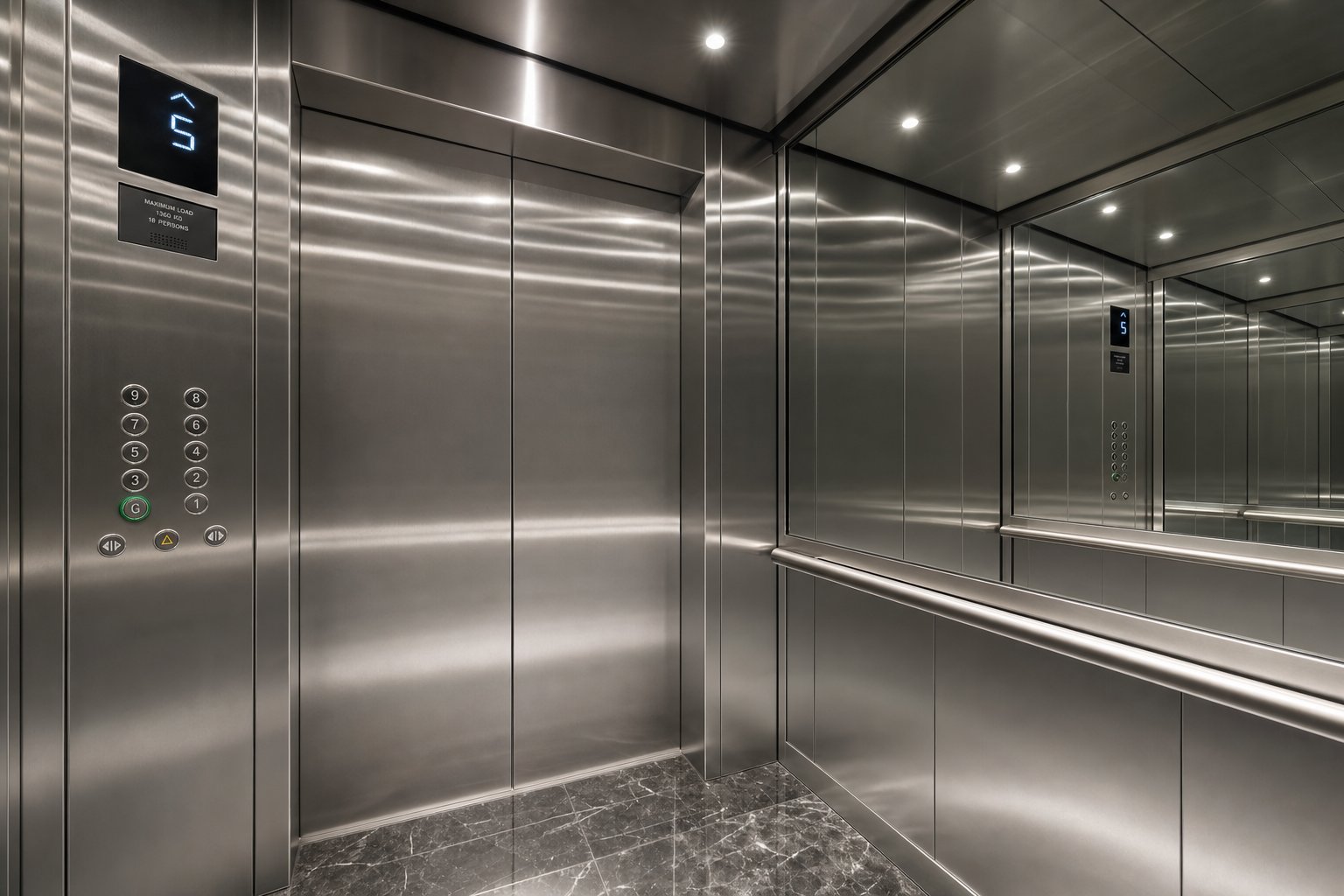
Elevators and escalators are ‘shared infrastructure’—everyone touches them, nobody owns them, and they quietly drive tenant perception of your building. If you’re searching for "elevator cleaning protocols" in NYC, the goal is not just "make it shiny." It’s to reduce grime, fingerprints, odors, and high-touch pathogen transmission—without damaging stainless steel finishes, button panels, or escalator components. GreenPoint Maintenance Services builds elevator and escalator hygiene into commercial cleaning programs across NY, NJ, and CT, using verification (JaniTrack) so building teams can prove performance. For a walkthrough, call 347-332-9348.
Why vertical transportation is a high-risk, high-visibility zone
Elevator cabs and escalator handrails concentrate touch events. In Manhattan and Downtown Brooklyn towers, a single elevator bank can serve hundreds to thousands of daily rides; the same call buttons and door edges are touched continuously. Add the fact that elevator cabs are small, enclosed spaces with constant hand contact, and you have a prime zone for both appearance degradation (fingerprints, smears, scuffs) and hygiene risk. A good program treats elevators and escalators as their own scope, with defined touchpoints and cadence—similar to the planning framework in [restroom cleaning best practices for high traffic](/blog/restroom-cleaning-best-practices-high-traffic/).
Elevator touchpoint list: what should be cleaned vs disinfected
Start by separating soil removal from disinfection. Cleaning targets: stainless steel panels, mirrors, baseboards, cab thresholds, floor corners, and door tracks where grime accumulates. Disinfection targets: call buttons, in-cab button panels, handrails, door edges/push points, and any shared touchscreens (if present). Disinfection should follow label contact times and should not be performed as a quick spray-and-wipe. GreenPoint builds this clean-then-disinfect sequence into the scope and can document completion through JaniTrack. For buildings with heavy commuter peaks (near Grand Central, Penn Station, PATH hubs, or major subway transfer stations), a mid-day high-touch refresh is often worth the added spend.
Stainless steel and brushed metal: avoiding streaks and damage
Stainless steel elevator interiors look premium—until the cleaning method creates streaks. The biggest mistakes are using overly harsh chemicals, cleaning against the grain, and leaving residue that attracts new fingerprints. A best-practice approach uses the correct neutral cleaner, microfiber technique, and a final dry buff. Disinfectants can also leave residue; that’s why GreenPoint defines which products are used on which surfaces and trains techs to keep high-touch panels hygienic without degrading appearance. If you’re evaluating vendors, use the vetting questions in [how to choose a commercial cleaning company](/blog/how-to-choose-commercial-cleaning-company/) and ask specifically about elevator finish care.
Escalator handrail hygiene: the part everyone touches
Escalator handrails are continuous-touch surfaces. Good hygiene requires consistent wipe-down at peak times and careful product selection to avoid degrading the rubber/vinyl surface. In retail centers and transit-adjacent lobbies, handrails can accumulate oils and grime that make them look dull and feel sticky—an immediate perception hit. GreenPoint often recommends a defined cadence: daily wipe-downs with a compatible cleaner, plus scheduled disinfection where risk profile warrants. For complex sites, we map touchpoints and align them to a proof-driven QA process.
Cadence benchmarks: daily, mid-day, and weekly ‘reset’
A common tri-state pattern for Class A and high-traffic commercial buildings is: (1) daily cleaning of cab interiors (panels, mirrors, floors) as part of nightly janitorial; (2) daily disinfection of buttons and handrails; (3) a mid-day high-touch wipe in peak commuter buildings; and (4) a weekly reset to address corners, thresholds, and detail work that doesn’t fit in a nightly sprint. The staffing implications tie to building size and traffic; you can benchmark labor planning using [cleaning staffing ratios and square footage](/blog/cleaning-staffing-ratios-square-footage/). GreenPoint uses fixed pricing rather than hourly billing so these cadences are predictable. Call 347-332-9348 for a walkthrough and scope.
Verification and accountability: proving the work got done
Elevator banks are a classic ‘grey zone’ where everyone assumes someone else handled it. That’s why GreenPoint uses JaniTrack verification—timestamped, GPS-tagged photos and a live dashboard—to confirm that elevator detail tasks and high-touch disinfection were completed on schedule. If your building has multiple shifts (day porter + night crew), verification prevents gaps at handoff. The approach mirrors modern best practices described in [digital cleaning verification systems](/blog/digital-cleaning-verification-systems/).
Local NYC details: salt, slush, and winter floor protection
NYC winters create unique elevator and lobby problems: salt and slush from sidewalks quickly destroy floor appearance and increase slip risk at thresholds. A strong program includes matting strategy, frequent spot mopping near elevator banks, and a winter cadence plan aligned to storms. GreenPoint incorporates seasonal adjustments based on [winter facility maintenance checklist northeast](/blog/winter-facility-maintenance-checklist-northeast/) so elevator thresholds and lobbies stay safe and presentable during high foot traffic.
Why elevators are the single most important high-touch zone in any tall building
A typical Class A office tower elevator sees 1,500-3,500 touch events per car per day across buttons, handrails, and walls. Concentrated, repeated touching by hundreds of occupants makes elevator interiors arguably the highest-leverage hygiene zone in a building—a single missed cleaning cycle on elevator buttons can re-seed surface contamination across the entire tenant base within hours. The right elevator protocol disinfects high-touch zones (buttons, handrails, door frames at hand height) at minimum twice per day during business hours, with a full clean at end of day. GreenPoint Maintenance Services builds this cadence into every commercial high-rise contract, with JaniTrack photo verification of each midday touch so building management has evidence of the work. For broader context, see [commercial cleaning Manhattan vendor guide](/blog/commercial-cleaning-manhattan-vendor-guide/).
Materials matter: cleaning brushed steel, mirrored panels, and rubber buttons without damage
Elevator interiors are often finished with materials that don’t tolerate aggressive cleaning chemistry. Brushed stainless requires neutral cleaners and grain-direction wiping to avoid streaking; mirrored panels need ammonia-free glass cleaner to prevent etching of low-iron glass; rubber and silicone buttons can be degraded by quat-based disinfectants over months of repeated application. GreenPoint Maintenance Services trains every elevator-zone crew member on material-specific products: a neutral pH cleaner for the brushed surfaces, accelerated hydrogen peroxide or hypochlorous acid for the buttons (gentler and equally effective against the major respiratory and enteric pathogens), and a streak-free glass cleaner for mirrored sections. The wrong product in the wrong place is the leading cause of premature elevator interior refinishing costs.
Escalator cleaning: the part most janitorial scopes get wrong
Escalators have three cleaning zones that are commonly mismanaged: (1) the comb plates and step treads, which trap grit and need frequent dry vacuuming with a HEPA crevice tool to avoid abrading the steps; (2) the moving handrails, which need a specialized handrail cleaning system to clean both sides as the rail moves; (3) the balustrades and skirts, which need neutral cleaner applied to a microfiber rather than sprayed directly (to prevent liquid from entering the mechanism). Crews without escalator-specific training often either skip the comb plates entirely or use water-based cleaning that damages the drive. GreenPoint Maintenance Services trains specific crew members on escalator protocols and uses approved handrail cleaning systems for high-traffic public buildings. For more on high-traffic zones generally, see [restroom cleaning best practices: high traffic](/blog/restroom-cleaning-best-practices-high-traffic/).
Frequency benchmarks for NYC office, retail, and transit buildings
Suggested cadence based on building type: (1) Class A office tower (1,000+ daily occupants per elevator bank)—high-touch wipe-down 2-3x daily, full interior clean nightly, deep clean weekly; (2) Mixed-use or retail with elevator (500-1,500 daily users)—high-touch wipe-down 1-2x daily, full interior clean nightly; (3) Smaller office building (under 500 daily users)—high-touch wipe-down daily, full interior nightly. Escalators: dry vacuum and handrail wipe at minimum daily during business hours; deep clean (comb plates, balustrades) weekly. Public-facing retail and transit buildings should add midday escalator wipe cycles. GreenPoint Maintenance Services can adjust frequency seasonally—respiratory virus season typically calls for an extra midday cycle on elevators for 8-12 weeks. Call 347-332-9348 to discuss a seasonal protocol.
Coordinating with the elevator service contractor
Elevator and escalator cleaning is one of the few facility tasks that requires explicit coordination with another contractor—the elevator service company. Two practical rules GreenPoint follows: (1) any deep cleaning that requires car-out-of-service time is scheduled during the elevator contractor’s scheduled maintenance windows rather than separately, which avoids double-shutdowns and tenant complaints; (2) any cleaning chemistry change is shared with the elevator service contractor in writing so warranty implications can be confirmed. This kind of coordination is rare in the industry and is one of the reasons high-touch elevator programs succeed long-term.
Verification and reporting for elevator and escalator zones
GreenPoint Maintenance Services treats elevator and escalator zones as sentinel areas for quality reporting. Every midday touch is documented with a JaniTrack timestamped photo of the cleaned button panel and handrail. Weekly ATP testing is performed on a rotating sample of button panels in healthcare, education, and government buildings, with target threshold under 250 RLU. Monthly reporting shows the trend, which gives building management hard evidence that the program is working—or specific data on where it needs adjustment. For broader verification context, see [digital cleaning verification systems](/blog/digital-cleaning-verification-systems/).
FAQ: elevator and escalator cleaning protocols
Q: How often should elevator buttons be disinfected? A: Daily in most commercial buildings; in commuter-heavy sites, add a mid-day high-touch refresh during peak periods. Q: What causes streaks on elevator stainless steel? A: Wrong chemistry, cleaning against the grain, and leaving residue; a proper microfiber/buff process reduces streaking. Q: Can disinfectants damage elevator finishes? A: Yes—some can leave residue or discoloration; vendors should specify compatible products and technique. Q: Who is responsible: tenant cleaner or building cleaner? A: It depends on lease and scope; the safest operational approach is to define elevator bank responsibilities explicitly and verify completion. Q: How do we measure cleaning quality? A: Combine visual inspection with documented checklists; some facilities add ATP testing for objective spot checks on touchpoints.
Want elevator and escalator hygiene you can prove? GreenPoint Maintenance Services delivers fixed-price scopes, JaniTrack verification, and high-touch disinfection programs built for NYC foot traffic. Call 347-332-9348 or email info@greenpointms.com to schedule a walkthrough and get a quote.