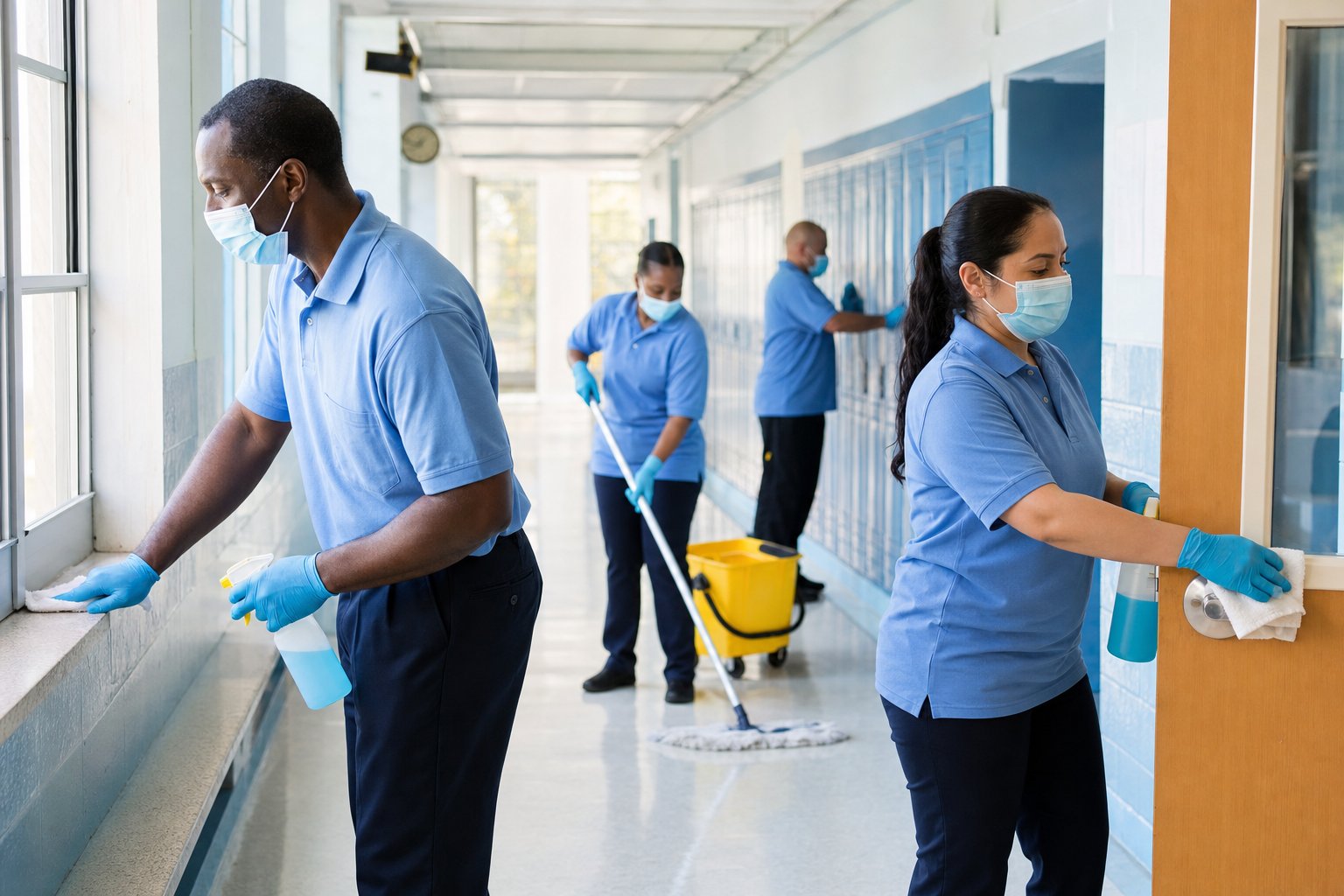
Back-to-school cleaning in New York is a reopening project, not just a final vacuum before the first bell. A NYC DOE facility, a charter school in the Bronx, a college building in Manhattan, and a Long Island campus each need a plan for classrooms, buses or loading areas, restrooms, cafeterias, gyms, and high-touch surfaces. GreenPoint Maintenance Services creates a pre-opening checklist, traffic-based frequencies, and StockPoint verification while following the school’s own health and safety policies. Call 844-814-0810 to schedule a walkthrough and receive fixed pricing with no hourly billing or hidden fees.
Why fall cleaning needs a written reopening plan
Late summer is the best time to identify dust, pest attractants, damaged floor finish, empty dispensers, and forgotten storage before students return. A reopening scope should list every instructional and support zone, its current condition, the required service, and the person who accepts it. GreenPoint starts with a 10-point walkthrough covering entrances, classrooms, restrooms, cafeteria, kitchen handoff, gym, nurse area, offices, waste rooms, and exterior thresholds.
The plan should distinguish one-time deep cleaning from recurring school service. A 40,000-square-foot elementary school might need detailed floor and furniture work before opening, then daily restrooms, waste, cafeteria, and touchpoints with classroom service at an agreed frequency. GreenPoint Maintenance Services puts the scope and exclusions in writing, then uses StockPoint evidence. Call 844-814-0810 before summer access windows disappear.
NYC, borough, and campus logistics
School cleaning happens inside a local operating calendar. A Manhattan campus near 125th Street may coordinate with subway traffic and shared elevators; a Bronx school near Fordham Road may have arrival queues and community-program use; a Brooklyn site may share a gym with evening groups; and a Queens building may have construction or delivery conflicts. GreenPoint maps entrances, security, loading, alarms, accessible routes, and the handoff between school staff and cleaners.
New York City Department of Education facilities have procurement, safety, and building procedures that must be followed by the school and its vendors. GreenPoint does not replace NYC DOE policy or the school’s medical and emergency protocols; it aligns the cleaning route to the written site rules. GreenPoint serves Staten Island, Westchester, Long Island, NJ, CT, PA, and FL as well. Call 844-814-0810 to schedule a local walkthrough.
High-touch surfaces and classroom traffic
High-touch work should follow how students and staff move. Door pulls, push bars, desk edges, chair backs, faucet levers, drinking-fountain buttons, handrails, light switches, shared keyboards, copier controls, and playground gates may need different frequencies. GreenPoint uses a task list that identifies the surface, product, method, and frequency instead of promising to “sanitize the building.” Green Seal certified products are used where suitable, following label dilution, contact time, ventilation, and PPE.
A classroom with 25 students and shared manipulatives does not have the same demand as an office used by four administrators. The school should decide which toys, devices, food-contact areas, and teaching materials remain under staff control. GreenPoint can document a blocked room or an item not authorized for cleaning. Review [school cleaning checklists for custodial staff](/blog/school-cleaning-checklist-custodial-staff/) and call 844-814-0810 for a traffic-based quote.
Allergen and dust priorities
Fall reopening can expose accumulated dust in vents, ledges, shelves, storage rooms, and under furniture. Cleaning can reduce settled soil and tracked particulate, but it cannot guarantee an allergen-free school or replace ventilation, maintenance, or medical accommodations. GreenPoint works high to low, vacuums with equipment selected for the surface, cleans approved returns or grilles when included, and reports visible moisture, leaks, or damaged materials to the facility lead.
Pollen, construction dust, and tracked soil can collect at entrances from Flushing to Westchester. Mat placement, frequent vacuuming, and vestibule checks keep abrasive material from spreading into classrooms. GreenPoint can coordinate with HVAC and maintenance teams when filters or ventilation need attention. The [HEPA filtration in commercial cleaning](/blog/hepa-filtration-commercial-cleaning/) guide explains the limits and benefits. Call 844-814-0810 if a school needs a pre-opening dust assessment.
Restrooms, cafeterias, and food-contact boundaries
Restrooms and cafeterias are visible indicators of readiness. A school route should include fixtures, partitions, dispensers, touchpoints, floors, drains or visible residue, tables, and waste, with daytime checks based on student volume. Kitchen food-contact surfaces may require a separate product and process controlled by food-service staff. GreenPoint uses color-coded tools so restroom equipment does not enter a cafeteria or classroom pantry, and the scope defines who handles dishes, kitchen equipment, and stored food.
A 600-student building may need more than one restroom inspection during the day, especially during lunch and dismissal. StockPoint can show the check, timestamp, location, and exception without photographing students. If paper, soap, or liners run out repeatedly, the supervisor can change the restocking threshold. For high-traffic restroom benchmarks, read [restroom cleaning best practices](/blog/restroom-cleaning-best-practices-high-traffic/) and call 844-814-0810.
Floor care, salt, and wet-weather readiness
Autumn turns into winter quickly in New York. Leaves, rain, salt, and grit can shorten floor-finish life and create slip risks at school entrances. GreenPoint recommends a mat-care plan, frequent entry checks, prompt spill response, and floor methods matched to VCT, resilient flooring, tile, stone, and carpet. Wet-floor signage and unobstructed accessible routes are essential; the school’s safety lead determines incident procedures and emergency response.
Do not wait for the first snow to decide who moves mats, checks vestibules, or calls for extraction. GreenPoint can price periodic carpet and floor work separately from nightly service and document completed areas in StockPoint. Review [winter facility maintenance for Northeast buildings](/blog/winter-facility-maintenance-checklist-northeast/) and call 844-814-0810 to set a fall baseline.
StockPoint proof for school administrators
School leaders need evidence that is fast to review and safe around children. StockPoint can record assigned tasks, timestamps, GPS-tagged photos of approved areas, supply exceptions, and corrective actions. GreenPoint configures photo rules to avoid students, names, classroom screens, and confidential records. A principal or facilities director can see whether the gym, corridor, restroom, or entrance was serviced without inspecting every room personally.
The record should drive correction. If a restroom misses a daytime check, GreenPoint can adjust staffing; if a classroom is repeatedly blocked by after-school use, the handoff can move; if floor soil spikes at one entrance, mat care can increase. ATP testing may trend selected nonporous surfaces when requested, but it is not a sterility claim. GreenPoint’s 98% client retention reflects this operating feedback loop. Call 844-814-0810 for a dashboard walkthrough.
Staffing, safety, and school-year continuity
Ask a school cleaning partner how it covers absences, trains staff, handles chemicals, responds to bodily-fluid incidents, and communicates a room that cannot be entered. OSHA’s [Hazard Communication Standard](https://www.osha.gov/hazcom) supports labels, training, and accessible SDS information. The school must maintain its own exposure-control, emergency, and student-health procedures. GreenPoint’s scope identifies authorized tasks, PPE, product contact time, sharps boundaries, and escalation contacts.
Continuity matters after the first week. GreenPoint uses supervisor inspections, color-coded microfiber, approved product lists, and fixed pricing with no hourly billing or hidden fees. GreenPoint Maintenance Services is MBE/MWBE certified in New York programs and registered in SAM.gov, supporting institutional procurement. Email info@greenpointms.com or call 844-814-0810 with enrollment, square footage, hours, and program use so the quote reflects real traffic.
Implementation checklist for facility managers
Before service begins, confirm the square footage, room list, occupancy pattern, access windows, floor materials, restrooms, waste route, supply storage, emergency contacts, and the person who approves scope changes. A strong kickoff also records the baseline condition with approved photos, identifies restricted areas, and sets the inspection cadence. GreenPoint turns those facts into a route card and a StockPoint checklist so a substitute cleaner can follow the same instructions as the regular crew. This preparation usually prevents more cost than it adds because the team avoids rework, duplicate products, and unclear handoffs.
Set a 30-day review rather than waiting for an annual renewal. The facility lead and GreenPoint supervisor can compare completed tasks, exceptions, complaints, supply use, and any seasonal or occupancy change. If the building adds a tenant, classroom, exam room, event schedule, or new floor finish, the scope can be revised before quality slips. GreenPoint offers fixed pricing for the agreed recurring program, and a manager can call 844-814-0810 or email info@greenpointms.com to schedule the walkthrough and document the next decision.
Keep the final scope accessible to the people who actually run the building: the property manager, security desk, maintenance lead, program director, and vendor supervisor. Each person should know the normal route, the escalation path, and which conditions require a pause. GreenPoint can review the scope in plain language at kickoff, then retain the approved version in the service record so changes are deliberate rather than passed along by memory.
That shared reference is especially valuable when occupancy, weather, or a renovation changes the normal route. A short written update is easier to audit than an informal hallway instruction. It also gives the next supervisor a reliable starting point when staff, rooms, or schedules change during the school year, and helps administrators explain exactly what was purchased to a board, owner, or procurement team. It keeps the first week focused on students rather than avoidable cleaning confusion.
Frequently asked questions
When should a New York school begin fall cleaning? Start the walkthrough and scope several weeks before reopening so repairs, access, products, and one-time floor or carpet work fit the summer window. GreenPoint can phase the work by building zone.
Does GreenPoint clean NYC DOE facilities? GreenPoint can discuss commercial school cleaning and follow the facility’s procurement, access, and safety requirements. The school or DOE remains responsible for its own policies and approvals.
How often should school high-touch areas be cleaned? Frequency should follow traffic and the school’s health plan. Entrances, restrooms, cafeteria touchpoints, and shared equipment may need multiple checks, while low-use offices may need less frequent service.
Can cleaning eliminate allergens? No. Cleaning reduces settled dust and tracked soil, but ventilation, moisture control, building maintenance, and individual medical accommodations also matter. GreenPoint reports conditions it cannot correct through janitorial work.
How do I get a back-to-school quote? Call 844-814-0810 or email info@greenpointms.com with the address, square footage, enrollment, floors, operating calendar, and after-school use. GreenPoint will schedule a walkthrough and provide fixed pricing.
Get the building ready before the first bell. Call GreenPoint Maintenance Services at 844-814-0810 for a walkthrough and fixed-price quote; GreenPoint combines school-ready checklists, StockPoint proof, and 98% client retention.