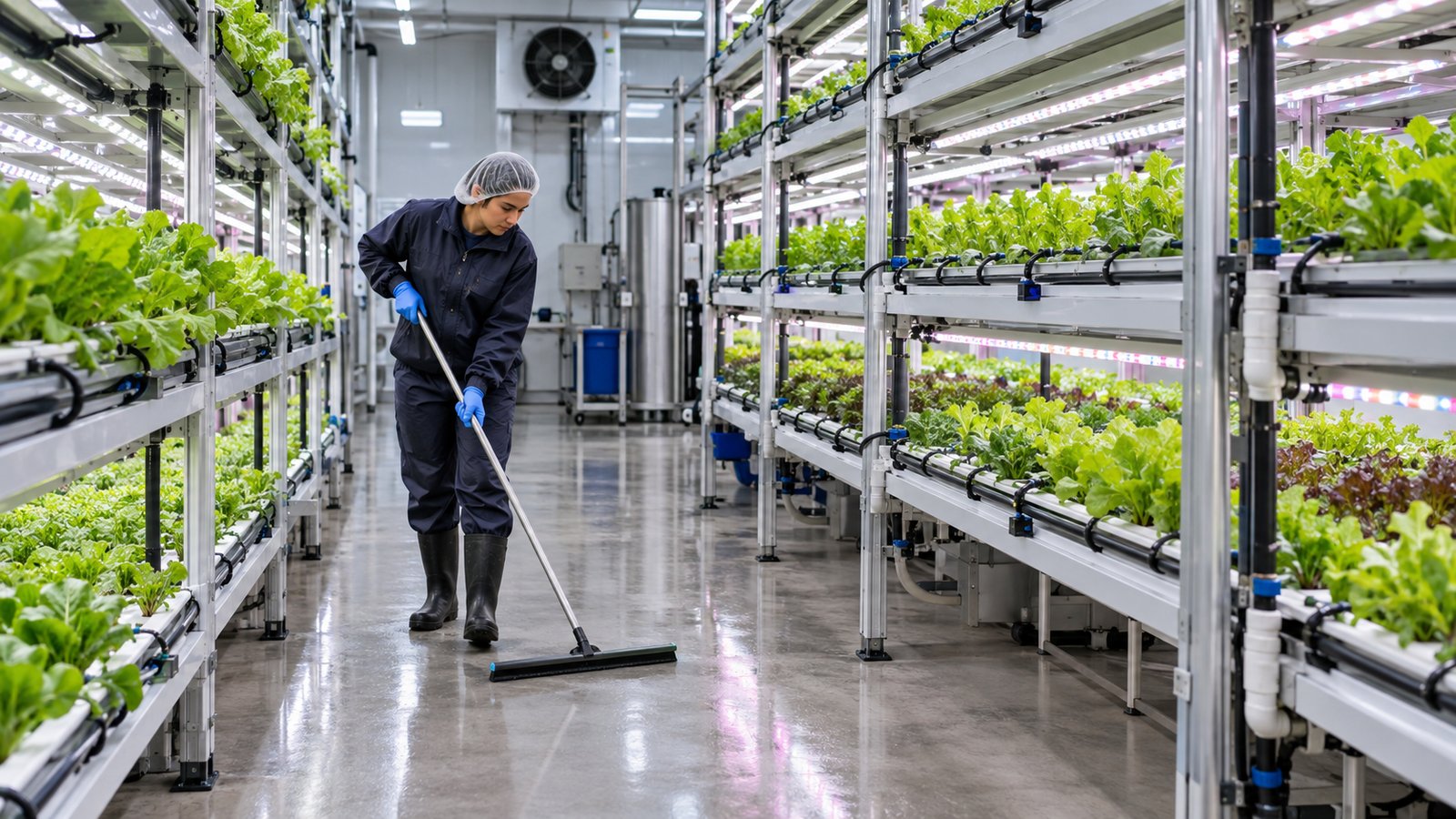
An indoor vertical farm combines controlled growing conditions with production equipment, irrigation, packaging, and worker circulation. Cleaning must protect crop zones and environmental controls while removing soil, standing water, packaging debris, and routine waste. The facility’s food-safety plan and crop protocol should decide which surfaces can be cleaned, which products are allowed, and when a room is released. GreenPoint Maintenance Services Corp works with commercial facilities across New York, New Jersey, Connecticut, Pennsylvania, and Florida; vertical agriculture teams should treat a vendor walkthrough as a joint operations and food-safety review, not a generic office-cleaning estimate.
Draw clean zones around crops and production
Create a current map of propagation, grow racks, harvest, wash or pack, cold holding, employee welfare, mechanical, and waste areas. Mark crop-contact surfaces, irrigation lines, reservoirs, sensors, electrical enclosures, and any equipment that the cleaning contractor may not touch. The map should identify barriers, gowning points, handwashing locations, footbaths if used, and the approved route for staff and supplies. GreenPoint asks the facility to name the owner for each zone and define whether a room is active, between crop cycles, or in a controlled shutdown before work begins.
The contractor should receive a task list that distinguishes housekeeping from production sanitation. Removing cardboard from a corridor, cleaning a staff restroom, or damp-mopping an approved floor is not the same as sanitizing a harvest surface or disinfecting a water system. Those specialized tasks may require process validation or a food-safety plan beyond routine janitorial service. GreenPoint Maintenance Services documents that boundary in the proposal and does not infer permission to move crops, adjust irrigation, or handle growing media.
During a walkthrough, ask the farm team to identify what counts as a room release and who can grant it on each shift. Some sites may require product removal, protective covers, or a production pause before cleaning begins. The vendor should record any access denial and reschedule only after the designated farm contact confirms that conditions are ready.
Control water, humidity, and slip risks
Water is a process input, but uncontrolled water can create hazards. A cleaning plan should specify approved floor methods, where liquids may drain, how standing water is removed, and how a surface is dried before workers return. Avoid overspray near electrical equipment, control panels, sensors, outlets, or crop trays. Report leaks, condensate, blocked drains, and unusual pooling to the farm’s operations lead instead of attempting equipment repair. The facility should set the work window and area-release procedure so cleaning does not disrupt environmental settings or create a moisture excursion.
In a high-humidity grow room, small spills and condensation may recur at doorways, beneath racks, or near irrigation connections. Use a documented observation log to distinguish a routine cleanable condition from a maintenance issue that needs engineering attention. Mark wet floors without blocking egress or cart routes, and do not leave cords or equipment where they could contact water. GreenPoint can include moisture observations and corrective-action notes in JaniTrack, enabling a site manager to see patterns by room and visit rather than relying on an informal verbal handoff.
If moisture recurs, record the room, approximate location, operating condition, and whether a nearby door or irrigation cycle was active. The goal is to give the farm engineer useful context, not to diagnose the source. A clear escalation path helps staff contain a slip risk promptly while keeping refrigeration, irrigation, and humidity equipment under the control of qualified facility personnel.
Approve chemicals, tools, and crop-zone entry
The farm’s food-safety or quality lead should approve each product and its use before the first shift. Review the label, dilution, contact time, rinse requirement, surface compatibility, ventilation, and storage location. A product marketed as plant-based or green is not automatically approved for a crop environment. Maintain a current product inventory and prohibit substitutions unless the designated approver signs off. The [EPA disinfectant registration guide](/blog/epa-disinfectant-registration-guide/) explains why a product’s label and intended use matter; the farm must determine whether a specific product belongs in its program.
Keep tools dedicated to their zones. Color-coded microfiber, marked squeegees, and separate mop heads can reduce cross-transfer when the facility establishes and trains a consistent system. Store clean and used tools separately and never move restroom equipment into crop or pack zones. Staff should follow the farm’s gowning, handwashing, footwear, and personal-item rules. OSHA hazard communication also requires workers to understand chemical hazards and safety information; review the [GHS/SDS cleaning chemical guide](/blog/osha-cleaning-chemical-safety-ghs-sds/) when writing staff instructions. GreenPoint uses approved Green Seal certified products where suitable, subject to customer approval.
The farm should label storage shelves for each tool category and identify how used equipment is contained during transport. Specify who launders reusable cloths, how clean stock is protected, and how damaged tools are removed from service. These practical details matter in compact farms where a single closet may serve several departments and where workers can otherwise bring a tool into the wrong zone by mistake.
Build safe access around racks and equipment
Vertical systems create narrow aisles, overhead irrigation, lift equipment, and places where a dropped tool can damage a crop tray or sensor. Give cleaners a route plan with aisle widths, ladder or lift restrictions, maximum reach, overhead hazards, and clear rules for working around moving conveyors. A janitorial worker should not climb grow racks or use a lift without authorization, training, and appropriate equipment. Before entering an active production area, the team lead should verify that the space is released, the crop is protected as directed, and nearby operators know the work is underway.
Facilities in the Bronx, Long Island City, Brooklyn Navy Yard, Newark, Jersey City, and other dense industrial districts may share loading areas with delivery vehicles and production traffic. Set arrival windows and badge procedures, identify emergency exits, and coordinate waste removal so carts do not cross clean routes. GreenPoint supervisors can prepare site-specific access instructions and review them during onboarding. If the farm operates more than one site, each location should have its own layout and approved product register even when corporate policy is shared.
Plan for deliveries, shift changes, and after-hours building access when choosing a service window. Record who can open the loading door, where workers may park or unload supplies, and whether a security escort is needed. In dense industrial blocks, a late vehicle arrival can disrupt the whole sequence, so the account lead should have a contact for schedule changes and a way to confirm revised access.
Create a verification and corrective-action loop
A verifiable cleaning plan names the task, zone, frequency, responsible role, acceptable result, and record. A supervisor can inspect high-risk transitions, drains, entry floors, break areas, and approved non-product-contact surfaces. JaniTrack supports GreenPoint service logs with time-stamped, GPS-tagged photos and a live dashboard, helping managers confirm which areas were visited and what exceptions were reported. Photos should be limited to approved surfaces and framed to avoid proprietary crop data, employee information, or restricted equipment details.
ATP testing can support a facility’s hygiene-monitoring program if a sampling plan defines the location, frequency, method, and response threshold. It is not a pathogen test and does not prove that crops or a room are sterile. For crop-contact or food-contact surfaces, follow the farm’s validated protocol and retain the records required by its quality system. GreenPoint Maintenance Services can schedule routine inspection, document re-cleaning, and assign maintenance observations without claiming to validate the farm’s entire food-safety program.
A practical audit samples different zones across the week and records the time, surface, result, corrective action, and re-check. Trend review can show whether a problem is tied to a particular shift, tool storage point, or room transition. Share only the information needed by the quality and operations teams, and store photographs or reports according to the farm’s data-retention and confidentiality rules.
Scope staffing and cost for an indoor farm
Square footage alone will not predict cost. A buyer should provide room dimensions, rack layout, floor material, operating hours, number of entries, cleanroom or gowning requirements, task frequency, water restrictions, consumables, and whether the contractor is expected to supply tools. A 10,000-square-foot grow facility with tight aisles and controlled access can take more time than a larger open warehouse. Separate routine cleaning from crop-cycle changeover, high-level work, equipment cleaning, and emergency spill response so bidders price the same package.
Request a walkthrough with operations, quality, safety, and facilities staff. Ask for insurance, training, product approval, backup staffing, incident reporting, and example verification records. GreenPoint Maintenance offers fixed pricing with no hourly billing or hidden fees for an agreed recurring scope, and can quote approved project work separately. For a comparison of scope and labor assumptions, see [commercial cleaning staffing ratios and square footage](/blog/cleaning-staffing-ratios-square-footage/). Call 347-332-9348 to schedule a walkthrough for a New York, New Jersey, Connecticut, Pennsylvania, or Florida indoor agriculture facility.
A bid schedule should state the number of visits, shift duration, planned team size, equipment furnished by each party, and which periodic tasks are included. Request a separate price for crop-cycle changeover or other project work so it does not obscure the recurring janitorial cost. GreenPoint can state assumptions in a fixed-price proposal and review them with the farm before service begins.
Frequently asked questions
Q: Can a janitorial company clean around active crops? A: Only within access limits and methods approved by the farm. The customer should define crop protection, permitted zones, product approvals, and area-release rules before work starts.
Q: Are Green Seal products automatically acceptable for vertical farms? A: No. Certification does not replace review of a product label, surface, crop risk, food-safety plan, or farm-specific approval. The customer’s designated approver controls the list.
Q: What does ATP testing tell a farm manager? A: ATP provides a general indicator from a sampled surface under a defined method. It does not identify a pathogen, establish sterility, or substitute for the farm’s validated verification process.
Q: What should be in a vertical farm cleaning contract? A: Include a zone map, approved products and tools, access and gowning rules, water controls, task schedule, verification records, exclusions, and a change-approval process. Call GreenPoint at 347-332-9348 to schedule a walkthrough.
Need commercial grow facility cleaning in New York, New Jersey, Connecticut, Pennsylvania, or Florida? Call GreenPoint Maintenance at 347-332-9348 or email info@greenpointms.com to schedule a walkthrough with operations and quality staff. GreenPoint offers fixed-scope pricing and JaniTrack service records; all crop-zone products and methods remain subject to farm approval.