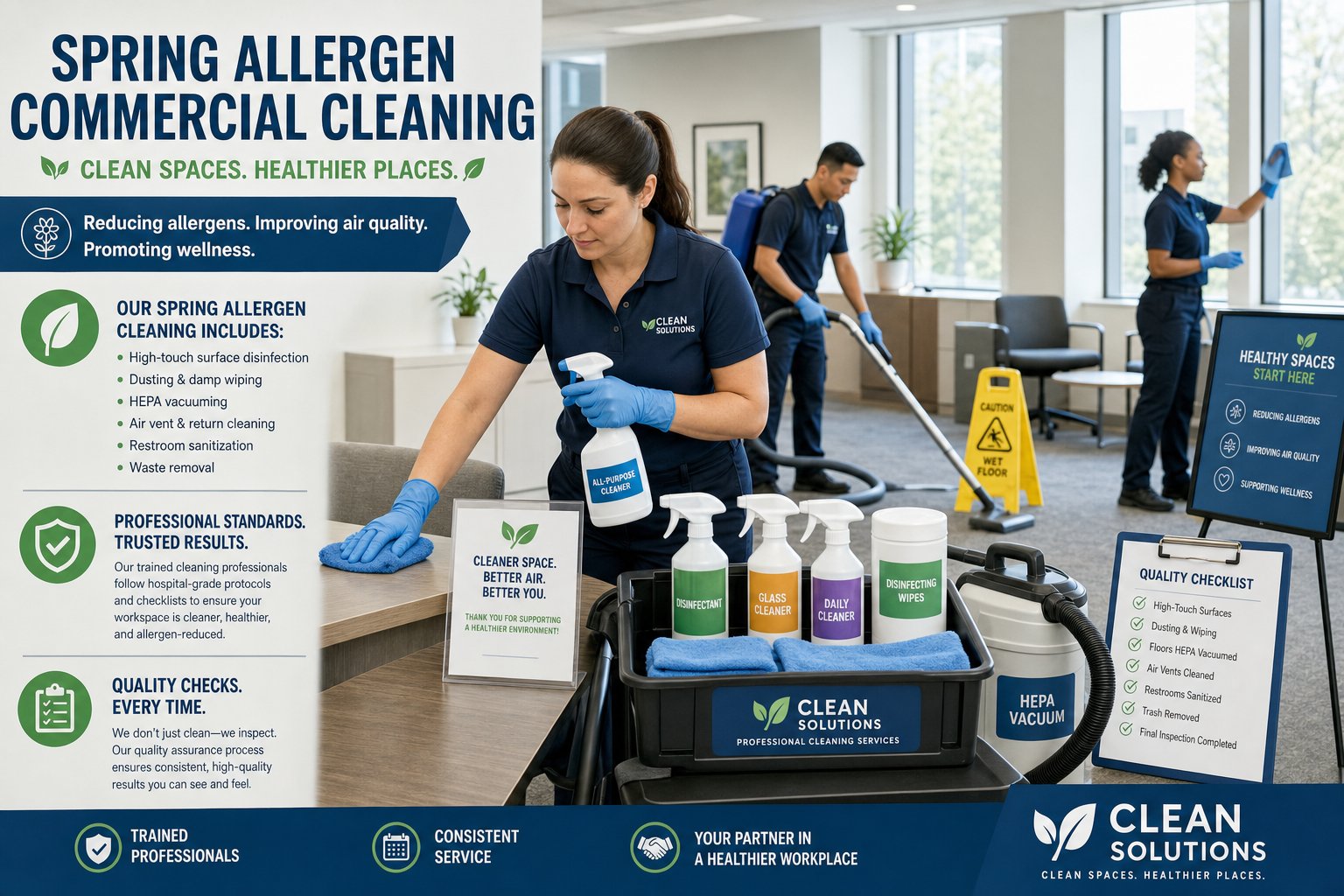
Spring brings longer daylight and fresh air, but it also brings pollen, tracked soil, open-window dust, and allergy complaints into commercial buildings. A spring allergen cleaning plan should remove reservoirs at entries, horizontal surfaces, carpets, upholstery, and ventilation-adjacent areas without stirring settled particles back into occupied spaces. GreenPoint Maintenance Services provides evidence-based seasonal cleaning for properties across NY, NJ, CT, PA, and FL.
Why Spring Needs a Different Cleaning Plan
Pollen arrives on shoes, clothing, deliveries, pets, and outdoor equipment. It collects in vestibules, mat edges, window sills, ledges, carpet fibers, and the tops of partitions. A building that looks clean at 8:00 a.m. can have a new soil load after the morning commute through Times Square, Atlantic Terminal, Newark Penn Station, Stamford, or a suburban park-and-ride. Start with traffic and exposure, not just last year’s calendar.
The plan should distinguish cleaning from medical advice. Facilities cannot promise to eliminate allergies, but they can reduce dust and tracked contaminants, keep moisture under control, and respond to occupant concerns. GreenPoint Maintenance builds a seasonal scope around square footage, occupancy, floor finish, window policy, HVAC coordination, and the locations where complaints cluster.
Audit Entryways and Soil Barriers
The first spring control is the path from sidewalk to occupied space. Inspect walk-off mats, mat wells, thresholds, door tracks, vestibule corners, reception floors, and elevator lobbies. Vacuum mats with equipment suited to the material, remove edge buildup, and schedule extraction or replacement when a mat is saturated. Keep damp mats from becoming an odor or slip problem.
Place high-frequency checks where people actually enter: subway-facing doors in Manhattan, school drop-off entrances in Queens and the Bronx, loading docks in Brooklyn, and waterfront or parking transitions on Long Island and in New Jersey. StockPoint can record route completion and timestamped photos of problem areas. See [commercial cleaning frequency standards by facility type](/blog/cleaning-frequency-standards-by-facility-type/) for a framework for setting the cadence.
Remove Dust Without Redistributing It
Use a top-to-bottom sequence so ledges, blinds, vents, and horizontal surfaces are addressed before floors. Select microfiber tools and vacuum attachments that capture soil rather than flicking it into the air. Avoid dry sweeping in occupied areas when a controlled vacuum or damp method is safer. Protect electronics and follow manufacturer guidance around sensitive equipment.
High-level surfaces should be assessed for safe access, not added casually to a routine route. GreenPoint supervisors identify whether ladders, lifts, or a specialty crew are needed and document the boundary. A spring project may include tops of lockers, light coves, radiator covers, partition caps, and warehouse racking ledges, but only when the facility provides access controls and the method is appropriate.
Deep-Clean Carpets, Upholstery, and Floors
Carpets can hold pollen and fine soil even when daily vacuuming is consistent. Focus on entry lanes, elevator approaches, waiting areas, and under desks where access is limited. Use a pre-vacuum, spot treatment, and extraction or low-moisture method selected for the fiber and drying conditions. Keep occupants off damp areas until the floor is safe and dry.
Hard floors need a different sequence. Remove abrasive grit before mechanical scrubbing, protect floor finish from excess moisture, and schedule VCT, tile, or stone maintenance according to the manufacturer and traffic. GreenPoint can separate recurring janitorial work from periodic floor care in a fixed quote with no hourly billing and no hidden fees. Call 844-814-0810 for a scope based on actual floor types.
Coordinate HVAC and Moisture Checks
Cleaning crews do not replace HVAC technicians, but they can report visible dust accumulation, blocked grilles, leaks, condensation, staining, or damaged insulation. Ask the building engineer to confirm filter and ventilation maintenance, especially after construction or long periods with windows open. Cleaning near supply and return grilles should avoid damaging components or dislodging material into occupied areas.
In the Northeast, spring rain can increase entry moisture and indoor humidity. In Florida, warm humid air and storms can accelerate moisture problems. A practical plan sets a reporting route for leaks and water intrusion, because drying delays can worsen odor and material damage. GreenPoint documents observations and escalates them to the responsible owner rather than making unsupported claims about mold or air quality.
Clean Shared Amenities and Touch Points
Allergen planning should include break rooms, kitchens, fitness rooms, daycare-adjacent areas, conference rooms, printer stations, elevator controls, and restroom fixtures. Remove crumbs and residue, clean touch points according to the approved product directions, and empty waste before odor develops. Keep restroom and food-area tools separated with a color-coded microfiber system.
Occupancy determines frequency. A 24-hour coworking floor in Downtown Brooklyn may need several checks per day, while a lightly occupied office may need a morning route and targeted afternoon inspection. GreenPoint uses complaint patterns and inspection data to adjust the schedule. A facility manager can request a walkthrough at 844-814-0810 and receive a clear set of assumptions rather than a generic seasonal package.
Make the Work Safe for Staff and Occupants
Spring cleaning can involve chemicals, elevated work, wet floors, moving furniture, and powered equipment. Review SDS information, PPE, signage, ventilation, electrical safety, manual handling, and access control. OSHA-aligned training should be clear about when a cleaner stops and reports a hazard. Never mix products, exceed label directions, or treat a visible stain as a diagnosis.
Schedule high-dust or high-noise tasks when the area is empty or when the building can provide controls. GreenPoint supervisors coordinate with security, property managers, school administrators, and tenant contacts. GreenPoint’s 98% client retention comes from respecting the operating reality of each site, including transit schedules, classes, patient appointments, and tenant move-ins.
Use Verification to Prioritize Follow-Up
A seasonal plan should measure more than whether a truck arrived. Track entryway inspection pass rate, mat condition, repeat complaints, carpet project completion, response time, and open maintenance referrals. StockPoint can show timestamped GPS-tagged photos, supervisor findings, and corrective-action status in a live dashboard. The goal is to see whether the plan reduced recurring soil and improved confidence, not to generate photos for their own sake.
GreenPoint Maintenance can add ATP testing in selected touch-point programs when the client chooses a sampling plan. ATP is a process indicator and should be interpreted with context. Combine it with visual inspection, route records, and occupant feedback. A monthly review should identify which areas need extra frequency, a different tool, a mat change, or a building-engineering response.
Adapt the Plan Across the Service Area
New York City facilities face dense pedestrian traffic, tight service windows, and local building-management expectations. Westchester and Long Island sites may have larger parking and landscape transitions. New Jersey and Connecticut properties may need commuter-peak routes around PATH or Metro-North. Pennsylvania facilities need salt and rain controls. Florida properties need humidity and storm recovery planning. GreenPoint maintains one evidence standard while adapting the route to the location.
For schools, coordinate with NYC DOE or local district access, summer calendars, and child-safe product requirements. For medical offices, coordinate with patient traffic and the facility’s infection-prevention plan. For commercial offices, build around tenant communications and conference schedules. Call 844-814-0810 to schedule a site assessment and identify the spring work that should be recurring, periodic, or referred to engineering.
Occupant communication is part of seasonal readiness. Post a simple service calendar, tell tenants when carpet work or high dusting will occur, and provide one channel for reporting a leak, tracked soil, or a recurring dust concern. Avoid promising that a cleaning project will cure an allergy; describe the controllable work instead. The facility can also remind occupants not to prop exterior doors, leave food residue in shared kitchens, or move wet-floor signs. GreenPoint can summarize the spring scope in a one-page handoff and use the inspection record to distinguish a completed cleaning task from a building repair. Managers who want a deeper filtration discussion can pair the plan with [HEPA filtration in commercial cleaning](/blog/hepa-filtration-commercial-cleaning/), while keeping filter selection and HVAC performance with qualified engineering personnel.
Use the first two weeks of the season as a measurement window. Note which entrances have the most visible pollen, which floors show tracked soil fastest, which tenants report recurring dust, and whether weather changes alter the result. Then move effort toward those zones instead of applying the same frequency everywhere. GreenPoint can revise a route, add a targeted porter check, or recommend a periodic carpet project while keeping the rest of the building on its normal schedule.
Keep a short exception list for conditions that cleaning cannot fix alone. Examples include a failed door sweep, damaged mat well, water leak, clogged drain, broken window seal, or HVAC grille that needs engineering access. Assign each item to the building owner and retain the referral number in the seasonal review. GreenPoint’s role is to remove the soil it can safely remove, document what it sees, and make sure a visible building issue is not lost between departments.
For multi-site owners, use the same inspection language across locations but allow each site to set its own frequency. A Manhattan tower may need entry checks after every commuter peak, while a Westchester office may need a stronger focus on parking-lot transitions and landscaped edges. The shared vocabulary makes portfolio reporting easier without pretending that every building has the same exposure or staffing model.
FAQ: Spring Allergen Cleaning
Q: What should be cleaned first in spring? A: Start with entryways, mats, thresholds, elevator lobbies, and high-traffic floors, then move upward to ledges and surfaces so loosened soil is captured by the floor work.
Q: Can commercial cleaning eliminate pollen allergies? A: No. Cleaning can reduce tracked dust and pollen reservoirs, but it cannot guarantee symptom relief or replace medical advice, HVAC maintenance, or occupant controls.
Q: How often should carpets be deep-cleaned? A: It depends on traffic, fiber, soil, and drying conditions. High-traffic entrances may need seasonal or more frequent service; a walkthrough and inspection history should determine the interval.
Q: Does GreenPoint clean around HVAC grilles? A: Yes, within safe janitorial limits. The team can clean accessible surfaces and report dust, leaks, or damage; qualified building personnel handle technical HVAC work and filter changes.
Q: How do I schedule a spring cleaning quote? A: Call GreenPoint at 844-814-0810 or email info@greenpointms.com. Include the building location, approximate square footage, floor types, occupancy, and problem areas.
Schedule a spring walkthrough with GreenPoint Maintenance Services at 844-814-0810. GreenPoint serves NY, NJ, CT, PA, and FL with fixed pricing, Green Seal certified products, StockPoint proof, and a 98% client retention record.